











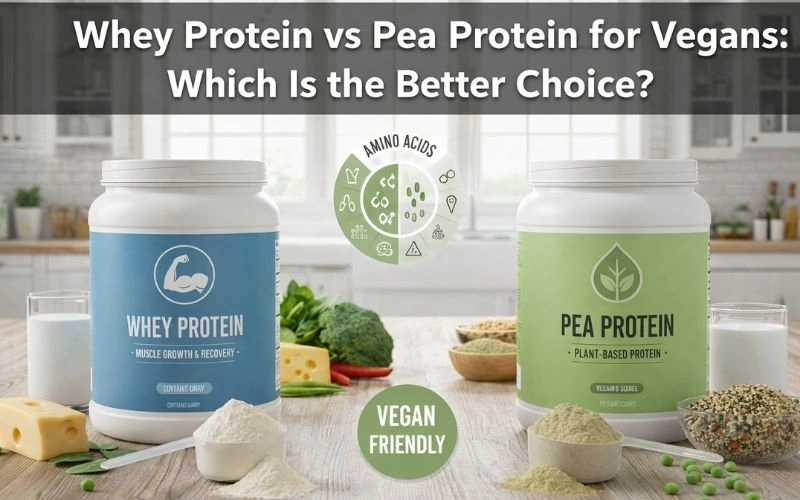
Choosing the right protein supplement can be confusing especially for vegans. With fitness marketing heavily dominated by dairy-based supplements, many plant-based users wonder whether pea protein can truly match whey. This guide breaks down whey protein vs pea protein for vegans using science, practicality, digestion, ethics, and real-world results so you can decide confidently.
Table of Contents
Pea and Whey Protein Compared
At the most basic level, the difference is simple: whey protein comes from milk, while pea protein is extracted from yellow split peas. This single distinction determines everything from vegan suitability to digestion and environmental impact.
Whey protein is popular for fast absorption and muscle recovery, but it is not vegan. Pea protein, on the other hand, is 100% plant-based, making it suitable for vegans, vegetarians, and those avoiding dairy for ethical or digestive reasons.
Nutrition Profiles
Both whey and pea protein are concentrated protein sources, but their overall nutrition profiles differ due to origin and processing.
Whey protein typically contains:
- Very high protein percentage
- Naturally occurring calcium
- Minimal fiber
Pea protein usually provides:
- High protein content
- Small amounts of iron and fiber
- No cholesterol or lactose
For vegans, pea protein fits seamlessly into a plant-based diet without compromising macronutrient goals.
Protein Content
On average, whey protein provides 22–25 g protein per scoop, while pea protein offers 20–24 g, depending on brand and formulation.
Although whey slightly edges out in raw protein density, the difference is nutritionally insignificant for most users especially when daily protein intake is planned properly.
For vegans, pea protein easily meets muscle-building requirements when consumed consistently and in adequate amounts.
What People Use Them For
Both proteins are commonly used for:
- Muscle growth and recovery
- Weight management
- Meeting daily protein needs
- Supporting active lifestyles
However, when comparing whey protein vs pea protein for vegans, dietary compatibility becomes the deciding factor. Vegans rely on pea protein as a practical alternative without sacrificing results.
Effectiveness for Muscle Gain
Whey protein is rich in leucine, a key amino acid for muscle protein synthesis. This has made it the traditional favorite among bodybuilders.
Pea protein contains slightly less leucine, but studies show that when total protein intake is sufficient, pea protein supports comparable muscle gains to whey especially in beginners and intermediate lifters.
For vegans, combining pea protein with resistance training and a balanced diet delivers strong, measurable results without animal products.
Effectiveness for Weight Loss
Protein supports fat loss by increasing satiety and preserving lean muscle mass. Both whey and pea protein perform well in this role.
Pea protein has a slight advantage for vegans because:
- It digests more slowly
- It promotes longer-lasting fullness
- It avoids insulin spikes linked to dairy sensitivity in some users
This makes pea protein particularly helpful for plant-based weight management and appetite control.
Other Factors to Consider
Beyond macros and performance, several practical factors matter especially for vegans.
Digestibility:
Whey can cause bloating, acne, or discomfort due to lactose. Pea protein is naturally lactose-free and gentler on digestion.
Allergies & Sensitivities:
Dairy is a common allergen. Pea protein is soy-free, gluten-free, and generally well tolerated.
Ethics & Sustainability:
Pea protein has a significantly lower environmental footprint than dairy-based whey, using less water and producing fewer emissions, an important factor for ethically driven vegans.
Taste & Texture:
Whey mixes smoothly, while pea protein can be thicker or earthy. However, modern formulations and blending with fruits or nut milk solve this easily.
Is Whey Protein Vegan?
No. Whey protein is derived from milk during cheese production. Even “isolate” or “hydrolyzed” whey remains an animal product.
For anyone following a strict vegan or plant-based lifestyle, whey protein is not suitable making pea protein the clear alternative.
How Much Protein Do Vegans Need?
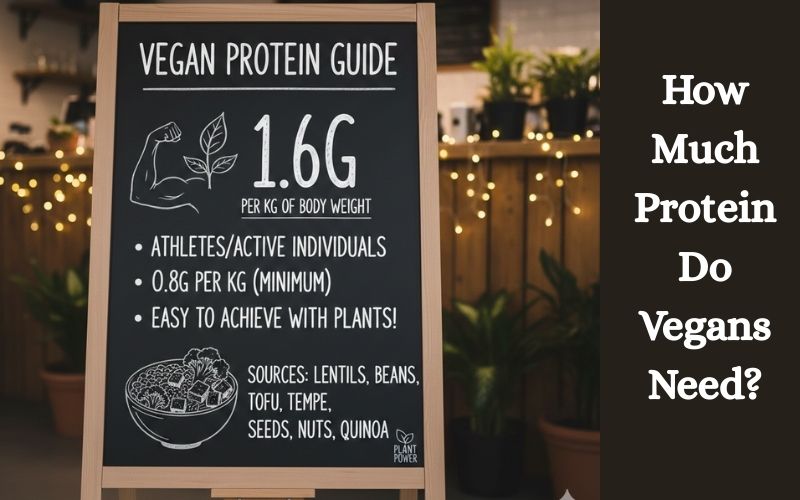
Most active vegans benefit from:
- 1.6–2.2 g protein per kg of body weight for muscle gain
- Slightly less for general fitness and weight loss
Pea protein helps bridge dietary gaps efficiently, especially when whole-food intake fluctuates.
How to Choose a Good Pea Protein
Not all plant proteins are equal. Look for:
- At least 20 g protein per serving
- Minimal added sugar
- Third-party testing
- Clear amino acid profile
- Blended formulas (pea + rice) for completeness
These factors ensure quality, safety, and better results.
Frequently Asked Questions (FAQs)
Is pea protein better than whey protein for vegans?
Yes. Pea protein is completely plant-based and suitable for vegans, while whey protein is derived from milk. Nutritionally, pea protein can deliver comparable muscle and fitness benefits when used consistently.
Can vegans build muscle with pea protein alone?
Absolutely. When total daily protein intake is adequate, pea protein supports muscle growth effectively. Many studies show similar strength and muscle gains compared to whey, especially for beginners and intermediate gym-goers.
Does pea protein contain all essential amino acids?
Pea protein contains all essential amino acids but is slightly lower in methionine. This can be balanced easily by eating other plant foods like rice, lentils, or whole grains alongside it.
Is pea protein easier to digest than whey?
For most people, yes. Pea protein is lactose-free and gentler on the stomach, making it ideal for those with dairy intolerance, bloating issues, or sensitive digestion.
Which protein is better for weight loss: whey or pea protein?
Both support weight loss, but pea protein may keep you fuller for longer due to slower digestion. This makes it particularly useful for vegans aiming to control appetite and calorie intake.
Is pea protein safe for long-term use?
Yes, high-quality pea protein is safe for daily, long-term use when consumed within recommended protein limits. Always choose products that are lab-tested and free from unnecessary additives.
The Bottom Line
When it comes to whey protein vs pea protein for vegans, the answer is clear. Whey may dominate mainstream fitness culture, but it does not align with vegan ethics or dairy-free needs.
Pea protein delivers:
- Strong muscle and weight-loss support
- Excellent digestibility
- Ethical and environmental advantages
- Full compatibility with vegan diets
For vegans, pea protein isn’t a compromise; it’s a smart, science-backed choice that supports performance, health, and values, exploring trusted, high-quality whey protein options at Nutritional World.