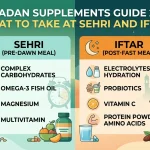














Ramadan changes everything about how a lifter eats, but it does not have to mean losing the muscle you worked all year to build. The real battle is not fought at iftar, it is won or lost at sehri. What you eat in those pre-dawn minutes decides whether your body spends the next 14 to 16 hours preserving muscle tissue or breaking it down for fuel. A well-planned sehri high protein meal plan is the single biggest lever a lifter has during this month.
This guide breaks down exactly how to structure sehri for muscle preservation, what foods and supplements actually help, and how to avoid the common mistakes that leave lifters feeling flat and depleted by the third week of fasting.
Table of Contents
Why Sehri Protein Matters for Lifters in Ramadan
During a normal training day, your muscles get a steady trickle of amino acids every three to four hours. Ramadan removes that trickle for most of the daylight hours. Once your last meal is digested, your body starts looking for amino acids elsewhere, and skeletal muscle is an easy target if protein intake is too low.
This is where a ramadan protein diet built around sehri becomes critical. Eating enough slow-digesting protein before the fast begins gives your muscles a longer supply line of amino acids, which directly supports ramadan muscle preservation. Skip this step and even the most disciplined training plan will not stop gradual muscle loss.

What a Sehri High-Protein Meal Plan Should Look Like
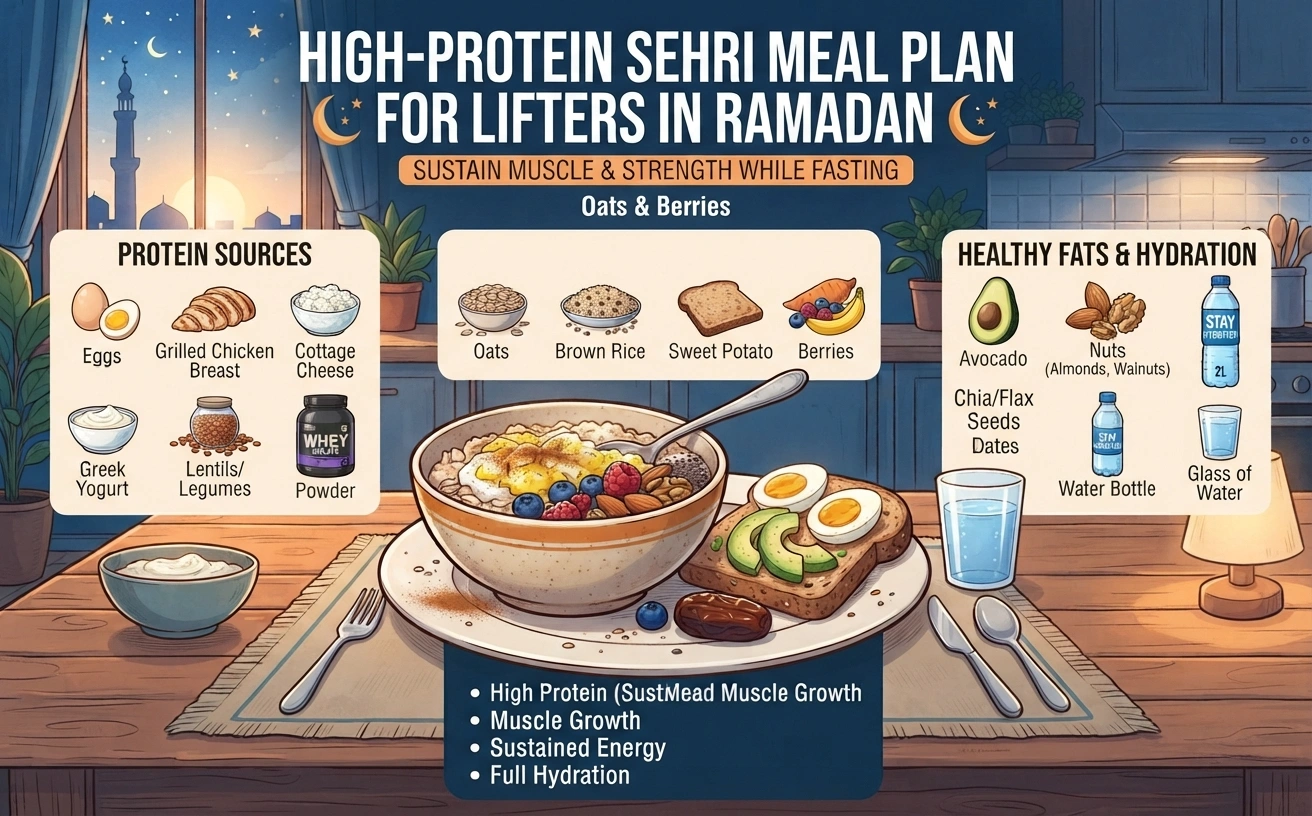
A good sehri plate for a lifter needs three things: protein that digests slowly, complex carbohydrates for sustained energy, and enough fluids and electrolytes to get through a long fast. Aim for 30 to 40 grams of protein at sehri alone, paired with fibrous carbs and healthy fats that slow gastric emptying.
Skip anything fried, overly salty, or sugar-heavy. These foods digest fast, spike thirst, and leave you hungry within a couple of hours. Instead, lean on foods that release energy and amino acids gradually across the fasting window.
Best Sehri Meal Ideas for Muscle Preservation
Some of the most effective sehri meal ideas for Pakistani lifters combine local staples with a few smart additions:
- Eggs and paratha with yogurt: Whole eggs deliver complete protein plus fat, and yogurt adds casein that digests slowly through the morning.
- Oats cooked in milk with a scoop of protein: A reliable base for anyone tracking macros, and it pairs well with a protein shake recipe if you need extra calories to avoid weight loss during the month.
- Mutton yakhni with rice: A traditional recovery meal that is naturally rich in slow-releasing protein and collagen. If you have not tried it as a sehri option, the mutton yakhni high-protein recovery meal breakdown is worth reading.
- Dates with a small serving of whey isolate: Fast-digesting protein is usually saved for post-workout, but a light dose at sehri combined with dates can top up amino acid stores before the fast starts. See how this pairing works in the post-workout iso whey with dates guide.
- Protein pancakes with peanut butter: A filling option for lifters who struggle to eat heavy meals before dawn. Check the protein pancake recipe for a version that holds up well early in the morning.
The Role of Casein and Supplements at Sehri
Casein protein is the standout choice for sehri because it clots in the stomach and releases amino acids over several hours rather than all at once. This matches almost perfectly with the long gap between sehri and iftar. If you are new to this idea, the article on casein protein for overnight recovery explains why the same slow-release mechanism that helps overnight also helps through a Ramadan fast.
Leucine content matters here too. Muscle protein synthesis depends on hitting a leucine threshold, and not every protein source delivers it efficiently. The piece on the role of leucine in preserving lean muscle during fat loss is directly relevant for anyone trying to avoid muscle loss while eating in a shorter window.
If you are unsure how much protein powder to add on top of food, the guide on how much whey protein per day gives a practical range, and whey protein isolate vs concentrate helps you pick the right form depending on how sensitive your stomach is during fasting hours.
Sample Sehri Meal Plan for Lifters
Option 1 (Heavier lifters, bulking phase)
Two whole eggs, one paratha, a glass of milk with oats, and a small bowl of yogurt. Roughly 35 to 40 grams of protein plus slow carbs.
Option 2 (Cutting or maintenance phase)
Boiled eggs, a small portion of mutton yakhni or grilled chicken, a slice of whole wheat bread, and a scoop of casein mixed in milk. Around 40 grams of protein with a lower calorie load.
Option 3 (Time-pressed mornings)
A protein pancake with peanut butter, a banana, and a casein shake. Fast to prepare, still hits the protein target needed for muscle preservation.
Hydration and Creatine Timing During Ramadan
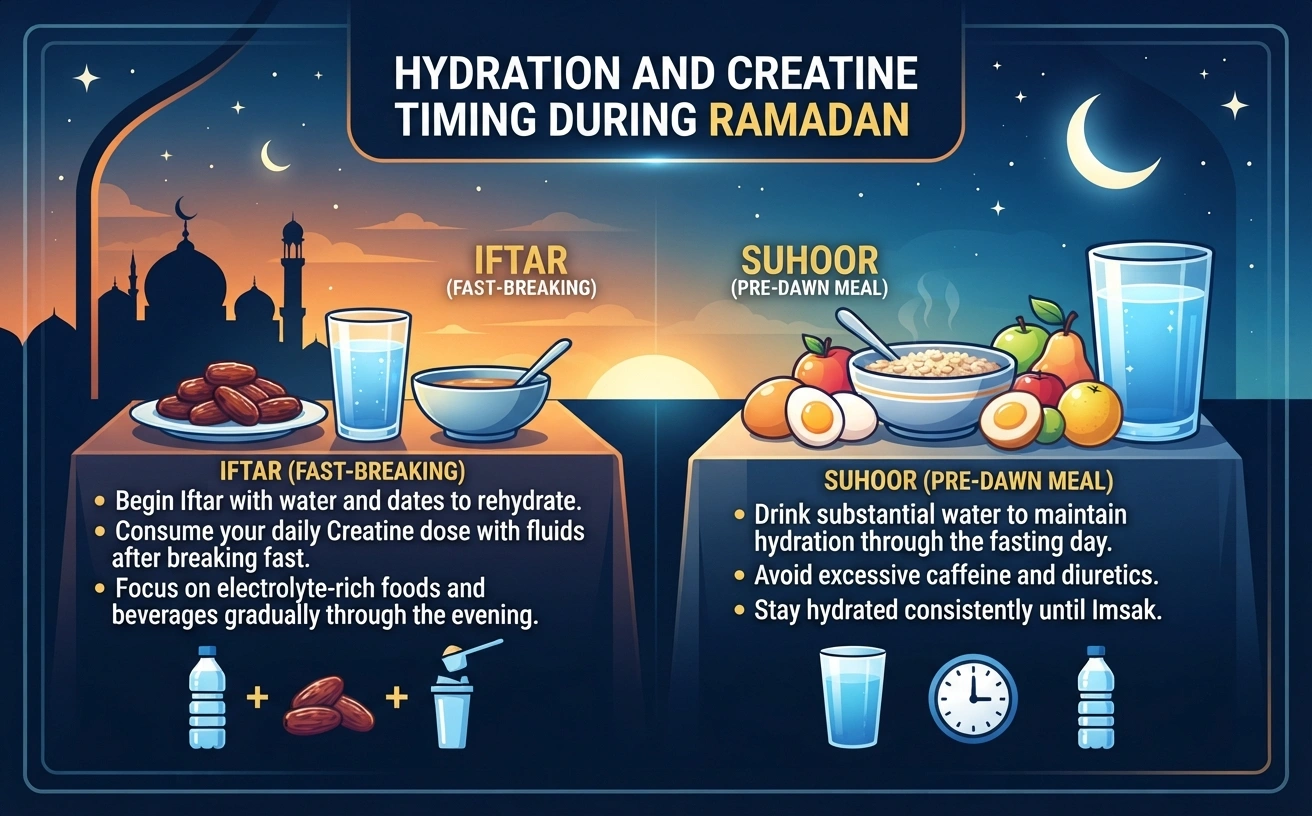
Protein is only half the picture. Dehydration alone can hurt strength and recovery, and Ramadan makes fluid timing tricky. The guide on dehydration’s impact on strength training explains why lifters often underestimate how much performance drops from fluid loss alone, and the broader hydration and fitness guide covers how to spread water intake across sehri and iftar.
Creatine users often ask whether to take their dose at sehri or iftar. Since creatine does not need to be timed around workouts precisely, most lifters simply move their dose to sehri or iftar depending on what is easier to remember consistently. The articles on creatine timing, dosage and loading and creatine loading vs maintenance cover this in detail, and if you are worried about long-term use during a month of altered eating, is creatine safe long term answers that directly.
Fasting, BCAAs, and Common Questions Lifters Ask
Many lifters wonder whether amino acid supplements can be used during the fasting window itself. The short answer is no, since consuming BCAAs or EAAs breaks the fast the same way food does. For a full explanation, read can amino acids break a fast and BCAA during intermittent fasting, which cover the mechanics in more depth. If you are new to structuring meals around a fasting window in general, the benefits of intermittent fasting article is a useful starting point, since Ramadan fasting shares several principles with it.
Common Mistakes to Avoid at Sehri
Many lifters undo their own progress with a few repeated errors. Overeating salty or fried food leads to excess thirst by midday. Skipping protein in favor of only carbs leaves muscle undefended for hours. Relying only on fast-digesting whey at sehri wastes its speed advantage, since casein or whole food protein serves the fasting window far better. New lifters especially benefit from reviewing basics in the supplements for gym beginners guide before adjusting their stack for Ramadan, and anyone choosing supplements for the month should check halal certified food supplements to confirm what they are adding to their sehri routine. You can browse protein, casein, and creatine options directly on the Nutritional World shop.
FAQs
How much protein should I eat at sehri as a lifter?
Aim for 30 to 40 grams of slow-digesting protein at sehri. Combining whole food sources like eggs or yakhni with casein protein gives the longest amino acid release across the fasting hours ahead.
Can I take whey protein at sehri instead of casein?
Whey digests fast and clears within two hours, so it is less ideal alone at sehri. Pairing a small amount of whey with casein or whole food protein gives both a quick and sustained amino acid supply.
Will fasting during Ramadan cause muscle loss for lifters?
Some muscle loss risk exists if protein and training are neglected, but a structured sehri high protein meal plan combined with resistance training largely offsets this. Consistency matters more than any single meal.
Is it safe to take creatine during Ramadan fasting?
Yes, creatine is safe to continue during Ramadan. Most lifters simply shift their dose to sehri or iftar since timing around workouts is not essential for creatine to remain effective.
Can I drink protein shakes during the fasting hours?
No, any food or drink including protein shakes breaks the fast. Protein shakes should only be consumed at sehri or after iftar, never during the fasting window itself.