













Training through Ramadan does not mean your gains have to pause. The real challenge is not effort, it is timing. Sixteen plus hours without food or water changes when and how your body absorbs nutrients, and that changes how you should structure your supplements during Ramadan Pakistan routine.
This guide ties together three of the most useful tools for a Ramadan training cycle, creatine, casein, and l-carnitine, into one simple suhoor to iftar stack plan. If you are new to supplements altogether, start with our best supplements for beginners in Pakistan guide before layering in the Ramadan-specific timing below.
Table of Contents
Why Ramadan Changes Your Supplement Timing
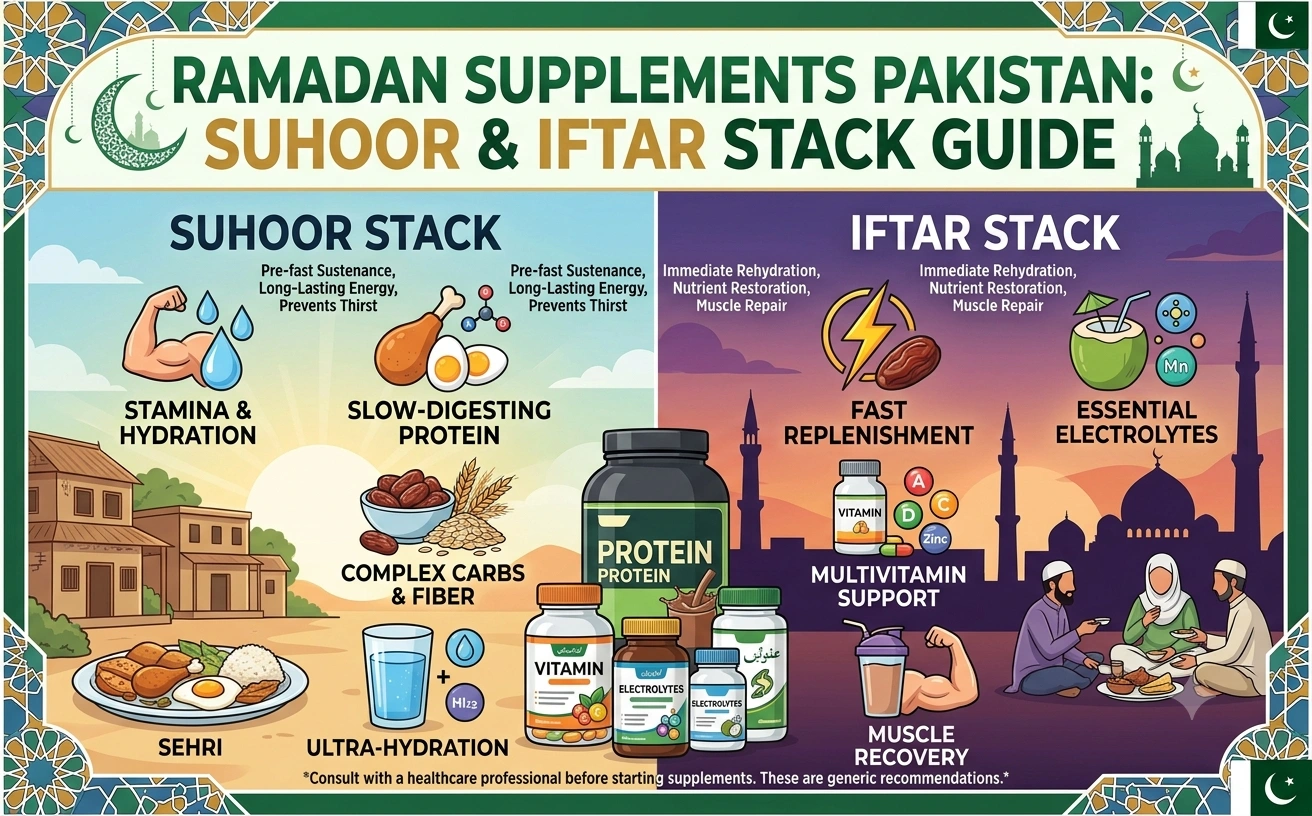
During a normal week you can spread protein and creatine across four or five meals. During Ramadan you have two real windows, suhoor before dawn and iftar after sunset. Everything you take needs to fit into one of these two slots, which is why ramadan fitness supplements planning is less about what to buy and more about when to take it.
Fluid loss is also a bigger factor here than in a typical fast. Check our hydration and fitness guide and the creatine dosage guide for Pakistan’s summer heat if Ramadan falls during hotter months this year, since both hydration and creatine dosing need small adjustments.
The Suhoor Stack
Suhoor is your last chance to load nutrients before the fast begins, so this meal should prioritise anything that supports you through the day, not just the workout.
Creatine monohydrate at suhoor. Creatine does not need to be taken close to training to work, it just needs to be consistent. Taking your creatine monohydrate at suhoor lets it sit in your system through the fasting hours. For dosage specifics, see our guide on creatine timing, dosage, and loading and confirm you are still within the best time to take creatine monohydrate window that suits a fasted day.
Casein protein for slow release. Because suhoor is followed by 16 plus fasting hours, a slow-digesting protein matters more here than a fast one. Micellar casein protein releases amino acids gradually, which is exactly what our article on casein protein for overnight recovery explains in detail. If you are worried about digestive comfort on an empty stomach afterward, read does casein protein cause bloating compared to whey first.
Water and electrolytes. Whatever else you take, suhoor hydration sets the tone for your entire fasting day. Pair your shake with plain water rather than sugary drinks, and keep a shaker bottle on hand so mixing takes seconds.
The Iftar Stack
Iftar is when you refuel, and this is where most of your training-support supplements should land.
Whey protein right after breaking your fast. Once you have had dates and water, a fast-digesting protein helps you catch up on the day’s intake. Our best time to take whey protein breakdown applies well here, and pairing it with carbs from your iftar plate follows the same logic as mixing creatine with your protein shake.
L-carnitine before your post-iftar workout. If you train after iftar, l-carnitine is worth timing around that session rather than suhoor, since its role in fat metabolism works best close to activity. Read l-carnitine benefits and how l-carnitine supports heart and metabolic health for the full picture, and if you are also considering a thermogenic, compare the two approaches in fat burners vs l-carnitine for weight loss in Pakistan.
A second creatine or top-up dose if needed. Most lifters only need one creatine dose a day, but if you split it, the second half fits naturally at iftar. See is creatine monohydrate safe for daily use and creatine and kidney health if you have any health concerns, and note our creatine safe for kidneys in Pakistan piece is written specifically with local diets in mind.
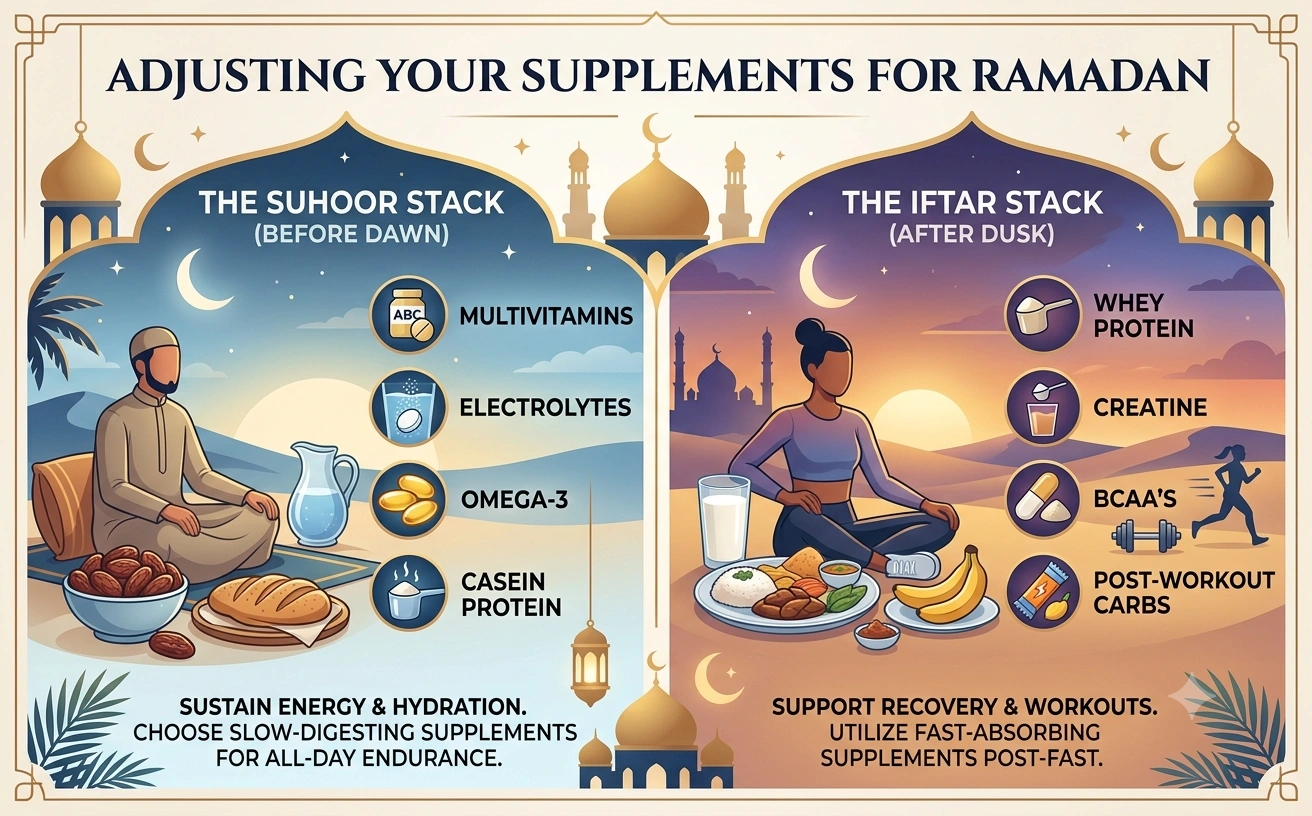
Suhoor Iftar Supplement Timing at a Glance
- Suhoor: creatine monohydrate, casein protein, plain water
- Pre-Iftar workout (optional): l-carnitine
- Iftar: dates, water, whey protein with carbs
- Post-Iftar: second creatine dose if split-dosing, continued hydration
This layout keeps every supplement close to a window where your body can actually use it, instead of taking things randomly and hoping for the best. If you train fasted at all during Ramadan, our note on BCAAs during intermittent fasting and can amino acids break a fast is worth reading before you decide whether to add anything mid-fast at all.
Training Around the Fast
Many lifters in Pakistan choose to train close to iftar so they can eat immediately after. Others prefer a lighter fasted session, which the general research on benefits of intermittent fasting and fasted cardio vs fed cardio can help you decide between. Whichever you pick, keep your pre-workout vs post-workout supplements choices simple this month, since stacking too many stimulants on a fasted stomach rarely goes well.
A Note on Halal Certification
Every product in a Ramadan stack should carry proper halal certification, not just be assumed safe. Check our guide on halal-certified food supplements before adding anything new to your suhoor or iftar routine, and browse the full Nutritional World shop for certified options in creatine, casein, and l-carnitine.
If you are building your full-year plan and Ramadan is just one phase, our roundup of the top supplements every Pakistani needs in 2026 and the beginner vs pro supplement stack guide are good next reads once Ramadan ends.
FAQs
Can I take creatine while fasting in Ramadan?
Yes. Creatine works through consistent daily intake, not exact timing. Take your full dose at suhoor so it is in your system through the fasting hours, and stay hydrated to support its uptake in muscle tissue.
Is casein or whey better for suhoor?
Casein is better for suhoor. It digests slowly and releases amino acids over several hours, which suits the long fasting window ahead, while whey is best saved for the faster refuel at iftar.
When should I take l-carnitine during Ramadan?
Take l-carnitine shortly before a post-iftar workout. It supports fat metabolism during activity, so timing it close to training gets more benefit than taking it at suhoor when you are not exercising yet.
Do BCAAs or amino acids break my fast?
Most scholars and nutritionists advise avoiding calorie-containing supplements, including amino acids, during fasting hours. Save BCAAs, EAAs, and protein shakes for suhoor or iftar rather than taking them mid-fast.
How much water should I drink between iftar and suhoor?
Aim for at least eight to ten glasses spread across the evening and pre-dawn window. Spacing it out, rather than drinking it all at once, helps your body actually retain the fluid through the fasting day.