













Whether you are visiting a supplement store in Lahore, browsing Pakistan’s top supplement store online, or trying to figure out what to buy before you even walk into a gym, the answer is the same: start simple, start verified, and let your training and diet do the heavy lifting while supplements fill the gaps. The debate around Imported Supplements in Pakistan versus local products matters, but for a beginner the priority is always which supplements are worth buying at all before worrying about where they come from.
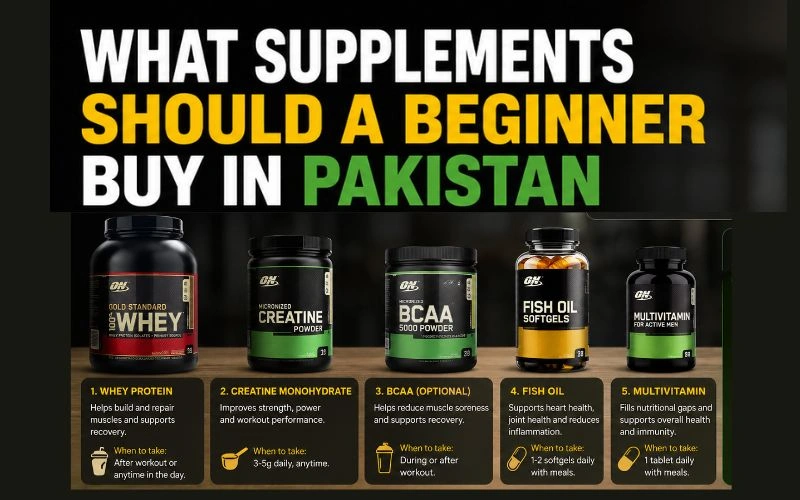
The three supplements every Pakistani beginner genuinely needs are whey protein, creatine monohydrate, and a daily multivitamin. A quality omega-3 is the smart fourth addition. Everything else, the pre-workouts, fat burners, BCAAs, and testosterone boosters, can wait until you have six to twelve months of consistent training and a solid diet foundation behind you.
Table of Contents
Why Most Beginners Overbuy
The first mistake most beginners make in Pakistan’s supplement market is spending money across too many products before they have the training consistency to need them. A supplement is only as effective as the training and diet it is layered on top of. A beginner who trains three times per week and does not hit their protein target through food will gain more from fixing their diet than from adding a BCAA, a fat burner, and a pre-workout to a weak nutritional foundation.
The full beginner supplement guide covers the complete framework for building a supplement routine from scratch. This article focuses specifically on which products are worth buying first and why, so you spend your rupees on what actually moves the needle rather than what gym culture pressures you into thinking you need.
Whether you are a new gym goer in Karachi, a student in Islamabad, or looking for a food supplement in Pakistan for the first time, the supplement market is designed to sell volume and variety. A beginner needs neither. They need three or four well-chosen products used consistently over months.
Supplement 1 Whey Protein
Protein is the single most important nutritional lever for anyone training seriously, and for most Pakistani gym goers, hitting adequate daily protein through food alone is genuinely difficult. A typical Pakistani diet of rice, roti, daal, and modest portions of meat or chicken can fall significantly short of the 1.6 to 2.2 grams per kilogram of bodyweight that active individuals need for muscle growth and preservation.
Whey protein is the most efficient, fastest-absorbing, and most extensively researched protein supplement available. A single 25 to 30 gram serving post-workout contributes meaningfully to daily protein targets without adding unnecessary fat or carbohydrates. For a beginner, one serving per day, either after training or as a gap-filler between meals, is sufficient to bridge the difference between dietary protein intake and the daily target.
Whey concentrate is the most affordable and appropriate starting point for most Pakistani beginners. Whey isolate is the better option for those who are lactose sensitive, since the filtration process removes most of the lactose present in concentrate. Knowing when to take protein matters less than consistent daily use, but post-workout or as a high-protein snack between meals are the most practical timings for most people.
For beginners specifically, avoid flavours with very high sweetener loads in the early weeks. Some people experience digestive sensitivity when they first start using whey, and starting with a simple or lightly flavoured product makes it easier to identify whether any discomfort is from the supplement itself or from other dietary variables.

Supplement 2 Creatine Monohydrate
Creatine is the most well-researched performance supplement in existence and the one with the clearest evidence for strength, power, and muscle mass improvements in beginners. Understanding what creatine monohydrate is removes most of the mystique: it is a naturally occurring compound found in meat and fish that your muscles use to regenerate ATP, the energy currency used during high-intensity effort.
Supplementing with three to five grams of creatine monohydrate daily brings muscle creatine stores to saturation over three to four weeks, allowing you to sustain maximal effort for slightly longer during each set. For a beginner, this translates to one or two extra repetitions per set over time, which compounds into meaningful additional training volume and faster strength development over months of consistent use.
The most common concerns about creatine in Pakistan, primarily the kidney health question, are not supported by the research evidence. Decades of studies confirm creatine is safe for healthy adults at standard doses. The elevated creatinine reading some people notice on blood tests reflects normal creatine metabolism, not kidney damage. You can explore creatine supplements confidently once you understand what the evidence actually says.
There is no need to load creatine, particularly in Pakistan’s summer heat. Three to five grams daily with at least 400 to 500ml of water is sufficient. Take it at any consistent time of day with a meal and you will reach full saturation within three to four weeks. Plain micronised creatine monohydrate from a verified importer is identical in effectiveness to expensive flavoured creatine products at a fraction of the price.

Supplement 3 A Daily Multivitamin
Pakistan has specific micronutrient deficiency patterns that make a daily multivitamin genuinely useful rather than redundant for most active adults. Vitamin D deficiency is widespread despite abundant sunlight, because of sun avoidance, full-coverage clothing, and limited dietary vitamin D sources. B12 deficiency is common even among meat-eaters due to cooking methods and absorption issues. Zinc deficiency is frequent, particularly in high-sweat populations training regularly.
Vitamin D deficiency in Pakistan is directly linked to lower testosterone, impaired immune function, fatigue, and compromised muscle recovery. Correcting it through a well-formulated daily multivitamin covers the deficiency safely and cost-effectively.
A quality multivitamin for a Pakistani gym goer should contain vitamin D3 rather than D2, methylcobalamin rather than cyanocobalamin for B12, and chelated minerals for better absorption. Take it with your largest meal of the day that contains some dietary fat, since vitamins A, D, E, and K are fat-soluble and require fat in the gut for proper absorption.
Do not expect a multivitamin to produce noticeable physical changes the way protein and creatine do. Its value is preventive and cumulative. Over months, consistent micronutrient sufficiency supports better recovery, stronger immune function during heavy training periods, and better hormonal health, all of which create a more productive training environment.

Supplement 4 Omega-3 Fish Oil
Omega-3 is the smart fourth addition to a beginner’s stack and is consistently undervalued because its benefits are systemic and gradual rather than acute and performance-focused. EPA and DHA, the active omega-3 fatty acids found in fish oil, reduce systemic inflammation, support joint health, improve cardiovascular function, and play a direct role in hormonal balance.
Omega-3 supplements are particularly relevant for Pakistani gym goers because the typical Pakistani diet is high in omega-6 fatty acids from cooking oils and relatively low in omega-3 from fatty fish. This imbalance promotes a pro-inflammatory state that slows recovery between sessions and increases joint soreness over time.
Two to three grams of combined EPA and DHA daily from a quality fish oil supplement is the standard evidence-based dose. Take it with a meal to reduce the risk of fish oil burps and improve absorption. For beginners new to fish oil, starting with one gram daily for the first two weeks and increasing to the full dose reduces the likelihood of digestive discomfort during the adjustment period.

What to Skip Until You Have Six Months of Training
The supplement category that absorbs the most beginner money in Pakistan while delivering the least value is the advanced performance stack: pre-workouts, testosterone boosters, fat burners, dedicated BCAA products, and specialty aminos.
None of these are useless. In the right context, with consistent training, an established diet, and specific performance goals, each has a place. But for a beginner with fewer than six months of structured training, none of them outperform the four fundamentals described above.
Pre-workout supplements in particular are heavily marketed in Pakistan’s gym culture and frequently the first purchase a beginner makes. The energy and focus they produce can feel like performance improvement, but they mask fatigue rather than build capacity. A beginner who relies on pre-workout for every session builds stimulant dependency rather than genuine training adaptability.
Fat burners follow the same logic. Without an established caloric deficit through diet and consistent training, no fat burner produces meaningful fat loss. The money spent on a PKR 6,000 to PKR 12,000 fat burner by a beginner is almost always better spent on protein and creatine that directly support the training required for fat loss to occur.
The Importance of Buying from Verified Sources
Knowing which supplements to buy is only half the answer. Knowing where to buy them determines whether the product you receive is what the label claims.
Pakistan’s supplement market, across Lahore, Karachi, Islamabad, and every major city, contains a significant volume of counterfeit, adulterated, and expired product circulating through informal channels. Social media sellers, WhatsApp groups, and smaller shops without verifiable import credentials are the primary routes through which fake products reach consumers.
Spotting fake supplements before purchase involves checking the seal, verifying the batch code on the brand’s official website, inspecting label printing quality, and cross-referencing the price against verified market rates. A product priced significantly below every established store’s rate is almost always not what it claims to be.
For a beginner making their first supplement purchases in Pakistan, the safest approach is to buy from a store with a physical presence, transparent importer credentials, and a verifiable track record. This applies whether you are buying online or in person.
Building Your Beginner Stack by Budget
Not every Pakistani gym goer has the same supplement budget, and a tiered approach allows you to prioritise effectively regardless of what you can spend each month.
If your monthly supplement budget is tight, prioritise whey protein first. Hitting daily protein targets is the highest-leverage nutritional intervention available and produces results faster than any other supplement. Add creatine as your second purchase since it is the most cost-effective performance supplement available in Pakistan at any budget level.
If your budget allows two to three products, add the multivitamin. The cost per day of a quality multivitamin is minimal relative to its protective value across training, recovery, and hormonal health.
If you can extend to four products, add omega-3. The anti-inflammatory and recovery benefits compound significantly over the months of consistent training that follow.
Everything beyond these four is an enhancement rather than a foundation, and enhancements are only worth exploring once the foundation is producing results consistently.
Pakistani Diet Considerations for Beginners
Understanding the dietary baseline most Pakistani beginners are starting from shapes which supplements matter most. A typical urban Pakistani diet tends to be carbohydrate-heavy from rice and roti, variable in protein quality depending on meat access and preparation, high in omega-6 from sunflower and canola cooking oils, and low in several key micronutrients including vitamin D, B12, and zinc.
This specific dietary pattern is why the four supplements recommended here are chosen for Pakistani beginners specifically rather than being generic international advice. The gaps in the typical Pakistani diet are predictable, and a protocol built around whey protein, creatine, a quality multivitamin, and omega-3 addresses the most common gaps directly.
The essential food supplements for Pakistanis framework prioritises this combination because it addresses both the training demands and the dietary realities of the Pakistani gym goer specifically. Supplements work within the context of your diet, not outside it, and no supplement compensates for a diet that is consistently short on total calories or protein.
Frequently Asked Questions
Do I need all four supplements at the same time?
No. Start with protein and creatine, the two that have the clearest and most immediate impact on training results. Add the multivitamin in your second month. Add omega-3 in your third month or alongside the multivitamin if budget allows. This sequential approach prevents supplement overwhelm and makes it easier to identify which product is producing which effect.
Is whey protein safe for daily use in Pakistan?
Yes, for healthy adults. Whey protein is a food-derived supplement with an excellent safety profile at standard doses. The concerns about protein damaging kidneys are not supported by research in people with normal kidney function. One to two servings per day is appropriate for most active adults.
Can I skip whey protein if I eat a lot of meat?
You can, provided your daily protein intake from food consistently reaches your target of 1.6 to 2.2 grams per kilogram of bodyweight. Track your food intake for a week to see whether you are actually hitting that target before deciding whether a protein supplement is necessary. Many Pakistani gym goers who believe they eat enough protein discover they fall short by 40 to 60 grams daily when they track properly.
Which creatine brand is best for beginners in Pakistan?
Any pharmaceutical-grade creatine monohydrate from a verified Pakistani importer is appropriate. Avoid proprietary blends with creatine listed alongside numerous other compounds. Plain micronised monohydrate from an established brand with a verifiable supply chain is all you need. Price per gram of active creatine is the only meaningful differentiator at this stage.
When will I start seeing results from these supplements?
Creatine produces measurable strength improvements in most people within three to four weeks of consistent daily use. Whey protein contributes to body composition changes over weeks to months alongside consistent training. The multivitamin and omega-3 produce gradual and cumulative benefits that become more apparent over three to six months of consistent use. Supplement results are always secondary to training consistency and dietary adequacy.