






You can identify a fake imported supplement by checking its price against the genuine market rate, inspecting the packaging and seal for inconsistencies, verifying the batch number and QR code, and confirming the seller against the brand’s official distributor list. Pakistan’s supplement industry has grown rapidly, with fitness enthusiasts and health-conscious buyers relying heavily on protein powders, creatine products available locally, and pre-workout supplement options, but that growth has also brought a serious counterfeit problem into the market.
Industry estimates suggest a meaningful share of how imported and local supplements differ in the Pakistani market comes down to fake, expired, or grey-channel stock rather than genuine product. Fake supplements do not just waste money, they can put your health at real risk, which is why learning to spot them is a genuinely useful skill for every buyer.
Table of Contents
Types of Fake Supplements in the Market
Not all counterfeit products take the same amount of effort to produce, and understanding the difference tells you how much scrutiny each purchase actually needs.
| Type | How It Shows Up | Level of Risk |
|---|---|---|
| Clearly fake products | Cheap packaging, spelling errors, prices far below market rate | Easy to spot, lower financial risk |
| Highly convincing fakes | Copied packaging, correct branding, only detectable through seals, codes, or testing | Harder to catch, higher financial and health risk |
Clearly fake products are easy to spot even for a first-time buyer, since the visual and pricing cues are obvious the moment you look closely. Highly convincing fakes are far more dangerous, since counterfeiters copy the original packaging closely enough that it looks genuine at first glance, and these require closer checks such as seal inspection, QR code scanning, distributor verification, and even a mixability test. This category is responsible for most of the financial and health harm linked to counterfeit supplements in Pakistan.
Red Flags That Help Identify Fake Imported Supplements
Before making any purchase, it helps to know the warning signs that consistently show up across counterfeit products, regardless of the specific supplement category.

Suspiciously Low Prices
If a price seems too good to be true, it usually is. Genuine imports carry quality assurances behind imported supplements that justify consistent pricing once shipping and customs duties are factored in. If a seller is offering whey protein at half the standard market price, it is most likely fake regardless of how convincing the packaging looks.
Packaging Errors and Poor Printing
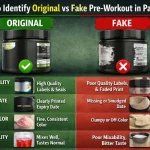
Look closely for blurred graphics, spelling mistakes, and low-quality containers. Genuine brands maintain consistent fonts, accurate colors, and properly applied holograms, so any inconsistency compared to verified images of the authentic product online should raise immediate suspicion.
Incorrect Labels, Batch Numbers, or Expiry Dates
Fake supplements often display missing or incorrect manufacturing details. Always check for the following before purchasing.
- Batch number printed clearly on the container
- Lot code matching the format used by the genuine brand
- Manufacturing and expiry dates that are legible and logically consistent
Once you have these details, cross-check them on the brand’s official website if a verification tool is available, since many global brands now offer this as a standard anti-counterfeiting measure.
Broken Seals or Missing Holograms
Original imported supplements always arrive with proper seals, intact shrink wrap, or security holograms. If the seal is loose, broken, or missing entirely, do not buy the product, even if every other detail appears correct.
Fake QR Codes and Barcodes
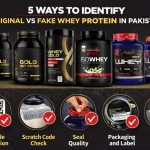
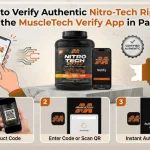
Scan the barcode or QR code with your phone before committing to a purchase. If it fails to scan, shows mismatched product details, or redirects to a suspicious or unrelated website, the product is almost certainly fake. Brands like Optimum Nutrition and MuscleTech often provide dedicated QR verification tools through their official websites or apps specifically to combat this problem.
Taste, Texture, and Mixability Issues
A well-made product like Combat Protein Powder mixes evenly without clumps and holds a consistent taste from batch to batch. Fake powders often taste overly sweet, bitter, or noticeably chemical-like, and may form lumps or produce excessive foam when shaken, both of which point toward poor or counterfeit manufacturing.
Market Challenges Behind Fake Supplements in Pakistan
Understanding why counterfeit supplements are so widespread helps explain why vigilance matters so much for every buyer. A few structural issues in the market have allowed fakes to thrive in recent years.
- Rising import duties: Higher taxes on legitimate imports have pushed many sellers toward grey-channel sourcing, opening the door for counterfeit products to enter the supply chain undetected.
- Smuggling through grey channels: Supplements that enter the country this way bypass quality checks entirely, making it practically impossible to guarantee authenticity at the point of sale.
- Lack of official distributors: Global brands like Optimum Nutrition, Dymatize, and MuscleTech do not maintain official representation in Pakistan for every product line, which makes it easier for counterfeits to be pushed into local markets without resistance.
How to Verify Supplement Authenticity
Once you know the warning signs, the next step is learning the practical verification methods that confirm whether a product is genuine, and each one takes only a few extra minutes.
Check the Brand’s Official Website
Most global supplement brands list their authorized distributors directly on their official website. Visit the brand’s site and confirm whether the seller you are buying from appears on that authorized list before completing your purchase.
Contact the Brand Directly
If you remain in doubt after checking online, email the manufacturer directly with the store name and the product code printed on the packaging. Most brands respond promptly with confirmation on whether the seller is legitimate, which is particularly useful for higher-value purchases.
Look for Certifications and Licensing
Authentic supplements typically carry one or more of the following certifications, each signaling a different layer of quality assurance.
- NSF certification, confirming third-party testing for banned substances and label accuracy
- Informed-Sport certification, commonly required for competitive athletes
- GMP certification, confirming the facility follows recognized production standards
- Halal certification, essential for Muslim consumers who want assurance a supplement meets Islamic dietary requirements
In Pakistan specifically, also look for DRAP import approvals, since checking DRAP approved products confirms the item has cleared the country’s own regulatory checks.
Buy from Trusted Supplement Stores Only
Always purchase from verified, reputable supplement stores with an established track record and visible social proof. At Nutritional World, you can check customer reviews, confirm verified store locations, and review brand partnerships before completing any purchase, particularly for higher-priced imported products.
Why Official Distributor Partnerships Matter
Official distributor partnerships are one of the strongest signals of authenticity available to Pakistani consumers, and it is worth understanding why this matters before making a purchase.
When a brand has a formal, publicly listed distribution agreement in a country, it means the products entering that market have passed through an accountable supply chain with the manufacturer’s direct involvement. That accountability is exactly what disappears when a product moves through grey-channel importers or unofficial resellers instead. If a brand has no authorized distributor in Pakistan, the safest approach is to avoid risky third-party sellers entirely and confirm directly with the manufacturer before buying.
Checklist for Identifying Fake Imported Supplements
With all the verification methods covered above, it helps to have a single, quick-reference list you can run through before any purchase, especially from a new or unfamiliar seller.
- Compare the price against current market averages for that specific product
- Inspect packaging quality, logo accuracy, and font consistency
- Verify batch numbers, lot codes, and expiry dates against the brand’s standard format
- Check for sealed lids and intact holograms before opening
- Scan QR codes or barcodes using your phone for instant confirmation
- Test mixability, texture, and taste once opened, if possible
- Look for recognized certifications including NSF, GMP, Halal, and Informed-Sport
- Purchase only from trusted, established supplement stores with verifiable reviews
- Confirm distributor information directly on the brand’s official website
- Email the brand directly whenever you remain unsure about a specific seller
Why Authenticity Matters Beyond Just Price
Buying fake supplements is not simply a matter of wasted money. Counterfeit products often contain inconsistent or contaminated ingredients, incorrect dosages, or harmful fillers that can interfere with training progress and, in more serious cases, pose genuine health risks. This matters even more for supplements taken daily over long periods, such as multivitamins or protein powders, where repeated exposure to a poor-quality product compounds over time.
This concern extends to specific categories where ingredient purity is especially critical. Understanding spotting genuinely organic whey protein helps buyers apply the same level of scrutiny to a category frequently targeted by counterfeiters due to its popularity, and it is also worth distinguishing genuine from fake whey protein using the same checks. Athletes relying on creatine for performance should also be aware of comparing creatine pricing across brands, since unusually cheap creatine is one of the most commonly counterfeited categories locally.
Newcomers to supplementation should be especially cautious, since they may be less familiar with what genuine packaging and pricing typically look like. Reviewing supplement basics for beginners alongside this authenticity checklist offers a safer starting point for anyone new to the market.
Protect Your Health and Money
Counterfeit supplements are a serious problem in Pakistan’s fitness market. They put your health at risk, waste your hard-earned money, and ultimately work against your training progress rather than support it. The best way to stay safe is by checking prices, inspecting packaging carefully, verifying seals, scanning QR codes, and confirming distributor details before you buy.
Always buy from trusted stores, look for recognized certifications, and stay updated with the authenticity tools each brand provides. Staying aware and cautious with every purchase is what ensures every scoop you consume is genuine, safe, and effective.
Frequently Asked Questions
How can I tell if a supplement is fake just by looking at the packaging?
Check for blurred graphics, spelling mistakes, inconsistent fonts, and low-quality printing compared to verified images of the genuine product. Also inspect the seal, shrink wrap, and any holograms, since these are usually the first details counterfeiters get wrong.
Why are imported supplements in Pakistan so often counterfeited?
Higher import duties have pushed many sellers toward grey-channel sourcing, and the lack of official distributors for several major global brands has made it easier for counterfeit products to enter local markets without proper quality checks.
Can scanning a QR code really confirm if a supplement is genuine?
Yes, in most cases. Major brands such as Optimum Nutrition and MuscleTech provide QR verification tools that confirm product authenticity instantly. If the code fails to scan, shows mismatched information, or redirects to an unrelated website, treat the product as fake.
What certifications should I look for on an authentic supplement?
Look for NSF certification, Informed-Sport certification, GMP compliance, and Halal certification where relevant. In Pakistan, also check for DRAP import approval, which confirms the product has passed the country’s own regulatory review.
Is it safe to buy supplements from online marketplaces in Pakistan?
Online marketplaces can be safe if the specific seller has a verifiable track record, genuine customer reviews, and confirmed distributor status. It is safer to purchase from established supplement stores with physical addresses rather than unknown third-party sellers offering unusually low prices.
What should I do if I have already bought a fake supplement?
Stop using the product immediately and avoid consuming it further, since the ingredient content cannot be verified as safe. Contact the seller for a refund where possible, and report the issue to the brand directly using the contact details on their official website.