














Delayed onset muscle soreness is something almost every physically active person experiences, but it hits differently as the body ages. Older adults often find that post-exercise soreness lasts longer, feels more intense, and takes a greater toll on their ability to train consistently. BCAAs, or branched-chain amino acids, have long been discussed as a tool for reducing DOMS in athletes. But how well does that evidence translate to older adults, whose physiology, recovery capacity, and muscle protein metabolism differ meaningfully from younger trainees.
Why DOMS Affects Older Adults More Severely
Muscle soreness after exercise is caused by microscopic damage to muscle fibers, particularly during eccentric contractions where the muscle lengthens under load. This damage triggers an inflammatory response that peaks between 24 and 72 hours after training, producing the stiffness and tenderness that define DOMS. In younger adults, this cycle tends to resolve relatively quickly with adequate rest and nutrition. In older adults, the same process unfolds more slowly and with greater overall disruption.
The biological reasons for this are well established. Aging is associated with reduced satellite cell activity, which limits the muscle repair response. Inflammation clears more slowly due to changes in immune function, and protein synthesis in response to exercise stimuli becomes less efficient, a phenomenon known as anabolic resistance. This is the broader context within which BCAA supplementation in older adults needs to be evaluated, and it connects directly to discussions around amino acids for older adults and how their role evolves with age.
- Satellite cells, responsible for muscle repair, decline in both number and responsiveness with age
- Anabolic resistance means older muscles require more protein stimulus to achieve the same synthetic response
- Post-exercise inflammation resolves more slowly, prolonging soreness duration in people over 50
- Reduced blood flow efficiency in aging muscle further slows the delivery of repair nutrients to damaged tissue
Table of Contents
What BCAAs Actually Do During Muscle Recovery
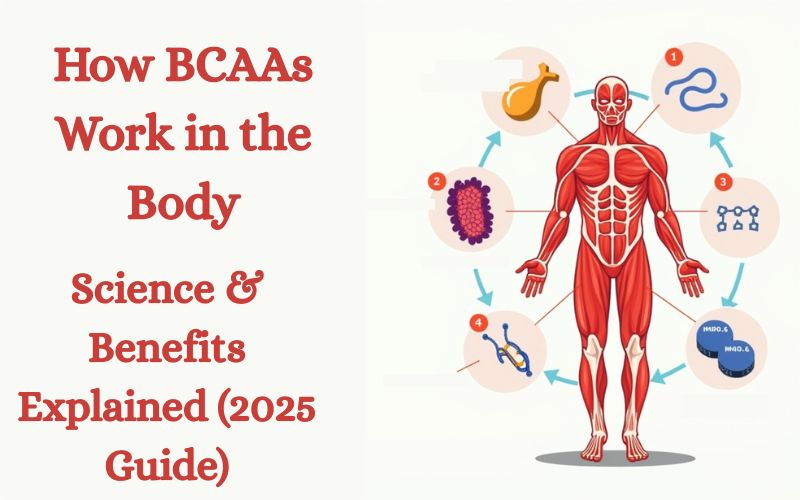
To understand how BCAAs address DOMS specifically, it helps to understand what they do mechanistically during the recovery window. The three branched-chain amino acids, leucine, isoleucine, and valine, perform distinct but complementary roles when muscle damage has occurred. Leucine is the most studied of the three and acts as a direct activator of the mTOR pathway, which governs muscle protein synthesis. When muscle fibers are damaged and need repair, leucine signals the rebuilding process to begin.
Isoleucine supports glucose uptake by muscle cells, making energy more available during the recovery period. Valine competes with tryptophan for entry into the brain, which helps reduce the central fatigue signals that can make post-exercise soreness feel more psychologically draining. Together, these three amino acids work on both the structural repair of muscle tissue and the metabolic environment surrounding that repair. The detailed mechanisms are worth reading about in the article on how BCAAs work in the body, which covers this in considerable depth.
- Leucine activates mTOR to initiate muscle protein synthesis during the repair phase after exercise damage
- Isoleucine improves glucose uptake in recovering muscle cells, supporting energy availability for repair processes
- Valine reduces central nervous system fatigue signals, making recovery feel less debilitating
- BCAAs also reduce the production of creatine kinase and lactate dehydrogenase, both markers of muscle damage
Research on BCAAs and DOMS
Multiple studies have examined whether BCAA supplementation reduces DOMS severity and duration. The evidence across younger adult populations is fairly consistent: taking BCAAs before or after resistance exercise reduces perceived soreness, lowers markers of muscle damage in blood tests, and shortens the time needed before full training capacity is restored. The effect size is moderate but meaningful, particularly for people doing high-volume or high-intensity training.
The picture for older adults is more nuanced. Research in this age group is less abundant but points in the same direction with a few important caveats. Older adults appear to benefit from BCAA supplementation for DOMS, but the dosing requirements may be higher due to anabolic resistance. A dose that produces a measurable anti-soreness effect in a 25-year-old may be insufficient for a 60-year-old doing the same exercise. This parallels findings discussed in the guide on reducing DOMS with amino acids, which covers practical dosing considerations across different populations.
Dosing BCAAs for Older Adults
Standard BCAA product serving sizes typically range from 5g to 10g per dose, with the industry-standard 2:1:1 leucine to isoleucine to valine ratio. For most healthy adults this delivers somewhere between 2.5g and 5g of leucine per serving. Research on older adults and muscle protein synthesis suggests that the leucine threshold required to trigger a meaningful anabolic and anti-catabolic response is higher in this group, often cited at around 3g of leucine per dose as a minimum.
This means an older adult using a standard 5g BCAA serving at a 2:1:1 ratio is getting approximately 2.5g of leucine, which may fall slightly below the effective threshold. Choosing a higher-dose product, using a larger serving, or selecting a formula with a 4:1:1 ratio to boost leucine content becomes relevant here. Some practitioners recommend that older adults consider complete EAA supplementation rather than
BCAAs alone, as the full spectrum of essential amino acids provides a stronger stimulus for muscle protein synthesis. This distinction is explored clearly in the article on BCAA vs EAA for recovery, which is essential reading for anyone making this decision.
- Aim for at least 3g of leucine per serving, which often means choosing a 10g BCAA dose at a standard 2:1:1 ratio
- Consider EAA products that include all nine essential amino acids for a more complete recovery signal
- Taking BCAAs within 30 minutes post-exercise captures the window of heightened muscle sensitivity to amino acids
- A second dose before bed may extend the anti-catabolic effect through the overnight recovery period
BCAAs and Sarcopenia
DOMS management is one piece of a larger puzzle for older adults who are trying to maintain or build muscle. Sarcopenia, the progressive loss of muscle mass and strength that accompanies aging, is one of the most clinically significant aspects of growing older. It increases fall risk, reduces metabolic rate, impairs functional independence, and worsens recovery from illness or surgery. BCAA supplementation, when used consistently as part of a higher protein diet and resistance training program, contributes to slowing this process.
The anti-catabolic effect of BCAAs is particularly relevant here. During periods of caloric restriction, illness, or even just the elevated stress of more intense exercise, the body can break down muscle protein for fuel. BCAAs, especially leucine, suppress this breakdown by maintaining the mTOR signal and reducing muscle proteolysis. For older adults who are already losing muscle at a baseline rate due to aging biology, this protective effect has compounding value over time. This connects to the broader strategies outlined in amino acids for reducing workout fatigue and the discussion of high calorie supplements for older adults for those who also need to address total energy intake.
Pairing BCAAs with the Right Training Approach
Supplementation works best when the training approach is appropriate for the population. Older adults tend to experience more severe DOMS when they introduce new exercises, increase volume too quickly, or return to training after a break. A gradual progression model that introduces eccentric load incrementally gives the muscle tissue time to adapt before it is stressed beyond its current recovery capacity.
Low-impact exercise options can also reduce the severity of initial DOMS while still delivering meaningful stimulus for muscle retention and strength maintenance. The article on low impact exercises for joint pain is particularly relevant for older adults who may be dealing with joint discomfort alongside general muscle soreness. Combining appropriate exercise selection with consistent BCAA use addresses DOMS from both the training and nutrition sides simultaneously.
- Introduce new exercises or increased volume gradually to keep DOMS at a manageable level
- Prioritize compound movements that build functional strength with lower eccentric stress per session
- Take BCAAs before sessions involving significant eccentric load to pre-load the anti-catabolic response
- Pair BCAA use with adequate total protein intake of at least 1.6g per kg of body weight daily for older adults
Additional Recovery Strategies That Work Alongside BCAAs
BCAAs are one part of a recovery ecosystem, not a standalone solution. For older adults dealing with DOMS, the most effective approach combines amino acid supplementation with several complementary strategies. Sleep quality is one of the most powerful recovery tools available and is frequently underestimated. Growth hormone release, which drives tissue repair, occurs predominantly during deep sleep stages. Poor sleep quality directly undermines the recovery benefits that BCAAs initiate at the cellular level.
Hydration also plays a meaningful role. Muscle tissue that is even slightly dehydrated clears inflammatory metabolites more slowly and experiences more pronounced soreness. Adequate daily water intake, particularly in the hours surrounding exercise, supports the faster resolution of DOMS symptoms. Antioxidant nutrition from whole foods or targeted supplementation addresses the oxidative component of exercise-induced muscle damage. The article on antioxidants and their role in recovery expands on this layer of recovery nutrition, which pairs well with a BCAA strategy.
- Prioritize 7 to 9 hours of quality sleep to maximize growth hormone secretion and tissue repair
- Maintain consistent hydration before, during, and after exercise to support metabolic waste clearance
- Include antioxidant-rich foods or supplementation to reduce oxidative damage from high-intensity sessions
- Consider omega-3 supplementation, which has anti-inflammatory properties that complement BCAA recovery benefits
BCAAs vs Full Protein Supplements for Older Adults with DOMS
A question that comes up frequently in this context is whether older adults are better served by a dedicated BCAA product or a complete protein supplement like whey protein, which naturally contains BCAAs alongside the full spectrum of essential amino acids. The answer depends on the specific use case. For intra-workout or immediate post-workout use, free-form BCAAs absorb faster than protein digestion allows, making them more practical in that timing window.
For overall daily protein intake and muscle maintenance, a high-quality whey protein or similar complete protein supplement may deliver more comprehensive benefits. Whey protein naturally contains approximately 20 to 25 percent BCAAs by weight alongside the other essential amino acids that support full muscle protein synthesis. The article on whey protein for older adults addresses this decision specifically in the context of sarcopenia and aging muscle, and is directly relevant for older adults deciding how to structure their supplement approach. Many older adults benefit from using both: BCAAs around training and a complete protein source at meals throughout the day.
Halal Considerations for Older Adults Choosing BCAA Products
For older Muslim adults in Pakistan, product sourcing is an important layer of the supplement decision. Not all amino acid products carry verified halal certification, and the sourcing of animal-based amino acids in particular requires scrutiny. Vegan fermented BCAA options avoid these concerns entirely, while animal-derived products should carry clear certification from a recognized halal authority.
The guide on halal amino acid products in Pakistan is an essential reference for navigating this market. It covers what to look for on labels, which certifications are recognized, and which product categories carry the most sourcing risk. Pairing this knowledge with an understanding of what BCAAs do for DOMS and aging muscle means older adults can make supplement choices that are both physiologically appropriate and religiously compliant.
- Look for clear halal certification logos from recognized Pakistani or international halal authorities
- Vegan fermented BCAAs carry no animal sourcing concerns and are generally permissible
- Whey-based amino acid products require dairy sourcing verification to confirm halal compliance
- Collagen-based amino acid products carry the highest risk of non-compliant sourcing and require extra scrutiny
Practical BCAA Protocol for Older Adults Managing DOMS
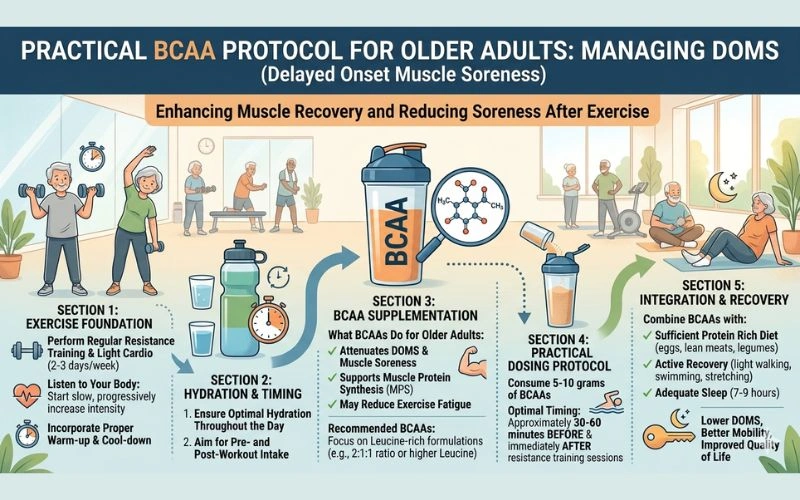
Translating all of this into a practical daily approach makes the information actionable. An older adult looking to use BCAAs specifically to manage DOMS and support consistent training, a structured protocol helps ensure the supplementation is working as effectively as possible.
The timing windows that matter most are pre-exercise, intra-workout for longer sessions, and immediately post-exercise. Pre-exercise dosing helps blunt the catabolic spike that occurs during training. Post-exercise dosing initiates the repair signal while muscle sensitivity to amino acids is at its peak.
For older adults doing resistance training three to four times per week, consistent use at these windows will produce more noticeable results than occasional or irregular supplementation.
- Take 10g of BCAAs 20 to 30 minutes before resistance training sessions involving significant eccentric load
- For sessions longer than 60 minutes, sip an additional 5g during the session to maintain amino acid availability
- Consume 10g of BCAAs within 30 minutes of completing training to initiate the repair response
- Ensure total daily protein intake is at least 1.6 to 2.0g per kg body weight to support the BCAA effect
- Maintain consistent use for at least four to six weeks to assess the full impact on soreness and recovery time
What Older Adults Should Take Away from All of This
BCAAs do help with DOMS and muscle soreness in older adults, but the relationship is not as simple as it is in younger populations. The unique physiology of aging muscle means dosing, timing, and complementary nutrition all matter more. Higher leucine intake, consistent use around training sessions, and pairing BCAAs with adequate total protein gives this supplementation strategy its best chance of delivering meaningful results.
For older adults who are serious about staying active, managing soreness effectively is not just about comfort. It is about maintaining the training consistency that drives long-term health outcomes.
Every session that gets cut short or skipped because of unmanageable soreness represents a missed opportunity for strength, metabolic health, and functional independence. BCAAs, used correctly, are a practical and well-supported tool for keeping that consistency intact. A broader look at building a supplement foundation that works for this life stage, the guide on top food supplements every Pakistani needs in 2026 is a useful place to continue.