













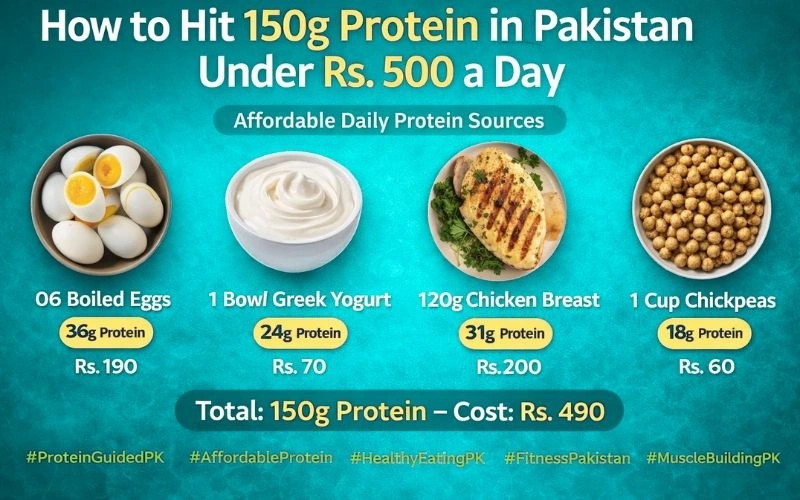
Getting enough protein in Pakistan feels expensive until you realize it genuinely does not have to be. With smart food choices and a small amount of daily planning, reaching 150 grams of protein on a budget under Rs. 500 is completely achievable. This article breaks it all down in real, practical terms that work for Pakistani kitchens, local markets, and everyday routines.
Whether you are a student training on a tight budget, a working professional trying to eat better, or someone just starting their fitness journey, this guide gives you a repeatable and affordable framework that does not rely on expensive supplements.
Table of Contents
Why 150g Protein Per Day Is the Target Worth Chasing
Before building a food plan, it is worth understanding why 150 grams specifically is the target and what it does for your body. Setting a clear goal with clear reasoning behind it makes it far easier to stay consistent on the days when it would be simpler to skip.
For most active adults, especially those training, recovering from workouts, or trying to build lean muscle, protein intake in the range of 1.6 to 2.2g per kilogram of body weight is what research consistently supports. For a 75kg person, that translates to approximately 120 to 165 grams per day, putting the 150g target squarely in the middle of the evidence-based recommendation range.
Protein does far more than build muscle. It keeps you full for longer, actively supports fat loss by increasing your metabolic rate through its higher thermic effect, maintains bone density, and keeps your immune system functioning effectively. People who consistently hit their protein targets retain more muscle during a calorie deficit, recover faster between training sessions, and report better energy throughout the day. The wide-ranging health benefits of consistent protein intake extend well beyond the gym and are relevant for anyone trying to improve their body composition or general health.
The Real Budget Challenge in Pakistan
Rs. 500 per day sounds tight when you first consider it, particularly if you have been thinking about meeting your protein target through supplements alone. A single scoop of imported whey protein can cost anywhere between Rs. 300 and Rs. 600 depending on the brand. Relying entirely on supplements for your protein is neither sustainable nor necessary, and the good news is that whole food sources available in every Pakistani market can do the heavy lifting here far more cost-effectively.

Eggs: The Foundation of Any Budget Protein Plan
Of all the protein sources available in Pakistan, eggs offer the most consistent combination of quality, affordability, and versatility. Building your daily protein plan around eggs as its anchor is the single most effective decision a budget-conscious Pakistani can make.
A single large egg contains approximately 6 to 7 grams of protein, and a dozen eggs typically costs between Rs. 180 and Rs. 230 depending on the city and season. That gives you roughly 72 to 84 grams of protein from one dozen eggs at one of the lowest cost-per-gram rates of any food in the Pakistani market.
- 4 eggs at breakfast: approximately 26g protein, cost Rs. 60 to 80
- 3 eggs as a mid-day meal addition: approximately 19g protein, cost Rs. 45 to 60
Eggs are also extremely versatile. Boiled, scrambled, in an omelette with onion and tomato, or even blended into a shake, they adapt to virtually any meal format. The amino acid profile of eggs is among the most complete of any food source, making them a protein that your muscles can actually absorb and use at a very high rate.
Chicken: The Primary Protein Workhorse
After eggs, boneless chicken is the most reliable and cost-efficient animal protein available to Pakistani consumers at a budget that still allows high daily intake. Understanding exactly how much protein each portion delivers helps you plan meals without guesswork.
Boneless chicken currently runs between Rs. 550 and Rs. 650 per kilogram in most Pakistani markets. Approximately 150 grams of cooked chicken breast provides 35 to 38 grams of protein at a cost of roughly Rs. 100 to Rs. 110. A 200g portion at lunch or dinner delivers close to 50 grams of protein and sits comfortably within a Rs. 500 daily budget when paired with eggs, daal, and dahi across the other meals.
Paired with daal or a simple sabzi, a chicken-based meal becomes a filling, balanced, and cost-effective source of both protein and micronutrients. Rotating a high-protein slow-cooked bone broth into your weekly plan on rest days or after heavy sessions can also add variety while delivering meaningful protein and joint-supporting nutrients at a moderate cost.
Daal: Pakistan’s Most Underrated Protein Source
Most Pakistani households already have one of the most effective budget protein foods sitting in their pantry and using it strategically is one of the simplest ways to increase daily protein without increasing spending.
Masoor daal, moong daal, and chana daal each provide roughly 8 to 9 grams of protein per 100g cooked serving. A full portion of daal at one meal, paired with roti, adds another 18 to 22 grams of protein depending on serving size, at a cost of only Rs. 20 to Rs. 40 per serving. Daal also delivers dietary fiber, iron, folate, and complex carbohydrates, making it one of the most nutritionally complete budget foods available in any Pakistani market.
- Masoor daal (1 cup cooked): 18g protein, approximately Rs. 30
- Chana daal (1 cup cooked): 20g protein, approximately Rs. 35
Including at least one daal serving per day is one of the most cost-effective protein decisions you can make. It pairs naturally with roti, rice, or eggs and blends into virtually any existing Pakistani meal pattern without requiring significant changes to your cooking routine.
Dahi: The Cheap Protein Source Most People Overlook
Plain dahi is consistently underestimated as a protein source in Pakistani fitness culture, yet it earns its place in any high-protein budget plan through its combination of protein content, low cost, and digestive benefits.
200 grams of dahi provides roughly 7 to 9 grams of protein. More importantly, it costs under Rs. 50 for that portion in most cities, making it one of the cheapest protein additions available. Dahi also contributes to gut health through its probiotic content and supports the digestion and absorption of other protein sources consumed throughout the day. Understanding how gut health directly impacts athletic performance and nutrient absorption makes the case for including dahi daily even stronger, particularly for those training regularly.
A Complete Sample Rs. 500 Daily Protein Plan
Knowing the individual food sources is useful, but seeing exactly how they come together across a full day makes the plan practical and immediately actionable. The following breakdown is based on approximate current market rates in Karachi and Lahore and demonstrates how 150 grams of protein is achievable on a daily budget of Rs. 500 or less.
Breakfast
- 4 boiled eggs: 26g protein, Rs. 70
- 1 glass of milk (250ml): 8g protein, Rs. 35
Mid-Morning Snack
- 1 cup dahi with a pinch of salt: 8g protein, Rs. 45
Lunch
- 200g chicken karahi or stewed chicken: 48g protein, Rs. 110
- 1 cup masoor or chana daal: 18g protein, Rs. 30
Afternoon Snack
- 2 boiled eggs: 13g protein, Rs. 35
Dinner
- 150g chicken or 1 cup chana: 30 to 35g protein, Rs. 90
- 1 cup dahi or lassi: 8g protein, Rs. 40
Total: approximately 155 to 165g protein at a total daily spend of Rs. 455 to Rs. 490.
This plan hits the target without any supplements and stays within the Rs. 500 limit on most days. It is built entirely from foods available in every Pakistani market and requires no specialist sourcing or unusual cooking methods.
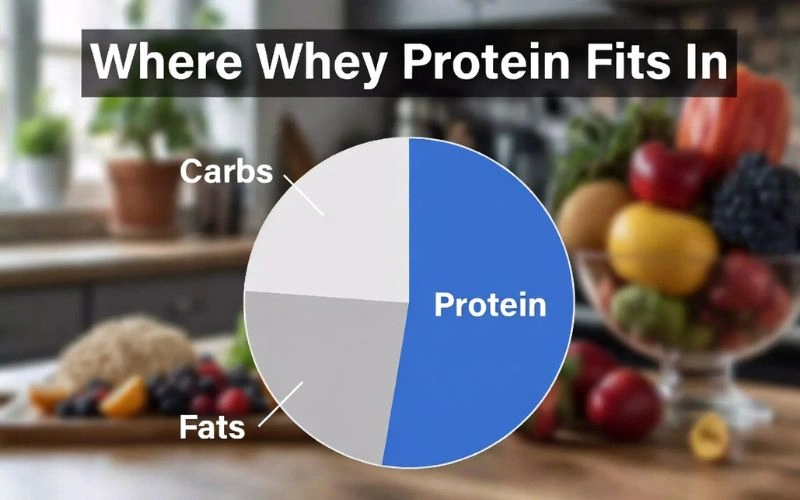
Where Whey Protein Fits Into a Budget Nutrition Plan
Supplements have a legitimate role even in a budget-focused plan, but only when they are used in the right way and for the right reason. Understanding where whey protein adds genuine value prevents you from spending money on it unnecessarily while also knowing when it is worth including.
There is absolutely a place for whey protein in a budget plan, but only as a supplement to whole foods, not as a replacement for them. A single 30g scoop of a mid-range whey protein adds 22 to 25 grams of protein. On days when whole food options are limited, when you are short on time, or when travel or work prevents a full meal, one scoop bridges the gap quickly and conveniently without a large cost impact.
For budget-conscious buyers in Pakistan, mid-range domestic or imported options can reduce the daily supplement cost to under Rs. 100 per scoop. The key is treating whey as a top-up tool used on days when the food plan falls short, rather than the foundation of your protein intake. For those deciding between product types, understanding how isolate and concentrate differ in absorption and lactose content helps you pick the version that matches both your budget and your digestive tolerance. Isolate costs more but digests faster with less lactose, while concentrate is more affordable and still highly effective for the majority of users.
Protein Timing: How Much Does It Matter on a Budget?
Protein timing is a topic that attracts significant attention in fitness communities, but its importance is frequently overstated for people who have not yet nailed the fundamentals of total daily intake. Getting the basics right matters far more than optimizing the clock.
That said, distributing your protein across meals rather than concentrating it in one or two sittings does provide a measurable benefit. Rather than eating 80 grams in one meal and 20 grams across the rest of the day, spreading intake more evenly at roughly 30 to 40 grams per meal keeps muscle protein synthesis elevated consistently throughout the day and improves overall protein utilization.
For those who do supplement, when you consume whey protein relative to your training session matters somewhat, with post-workout being the most commonly supported timing. For whole food eaters on a budget, simply ensuring every main meal contains a meaningful protein source is sufficient to capture most of the timing benefit without additional complexity.
- Include protein in every main meal: eggs, chicken, daal, or dahi at every sitting.
- Do not skip the evening meal protein since your body carries out most muscle repair during overnight sleep.
- Pre-sleep protein such as a cup of dahi or a casein-based shake supports overnight muscle preservation and recovery by providing a slow-digesting amino acid source during the extended overnight fast.
Common Mistakes That Keep Pakistani Gym-Goers Under Their Protein Target
Reaching 150 grams daily is not just about knowing the right foods. It is about identifying the habits and meal patterns that consistently keep people short of their target and replacing them with better defaults. Most shortfalls are not caused by lack of affordable options but by deeply embedded meal patterns that prioritize carbohydrates over protein.
The most common issue is that Pakistani meals tend to be heavily carbohydrate-focused and protein-light. A plate of biryani or roti with a salan where the gravy is generous but the chicken minimal gives you perhaps 15 to 20 grams of protein at best. Simply increasing the meat or egg portion within existing meals can make a dramatic difference to the daily total without requiring any new foods or cooking methods.
The second most common gap is breakfast. Many Pakistanis start the day with paratha, chai, or bread, all of which are low in protein and high in refined carbohydrates. Swapping even part of that routine for three to four eggs changes the entire protein trajectory of the day. For a practical overview of how to calculate your ideal daily protein target and distribute it sensibly across meals, getting the numbers right before worrying about supplements or timing is always the most effective starting point.
Affordable Supplements Worth Considering Alongside a Food-First Plan
A budget protein plan built on whole foods can be meaningfully enhanced by a small number of low-cost, well-researched supplements. These additions are not essential, but they provide measurable support for those who are training consistently and want to get more from the protein they are already consuming.
Creatine monohydrate is one of the most extensively researched and cost-effective performance supplements available anywhere. A 3 to 5 gram daily dose improves strength output during training, which means your muscles experience greater mechanical stress and the protein you consume gets directed toward more meaningful muscle adaptation. A basic creatine monohydrate supplement in Pakistan costs relatively little per serving and lasts for months at the standard dosage.
BCAA supplementation can also support recovery on days when your whole food protein intake falls slightly short of target, particularly for those doing intense training sessions that require faster recovery between workouts. BCAAs are not a substitute for total daily protein, but they provide a practical bridge on days when the food plan is disrupted.
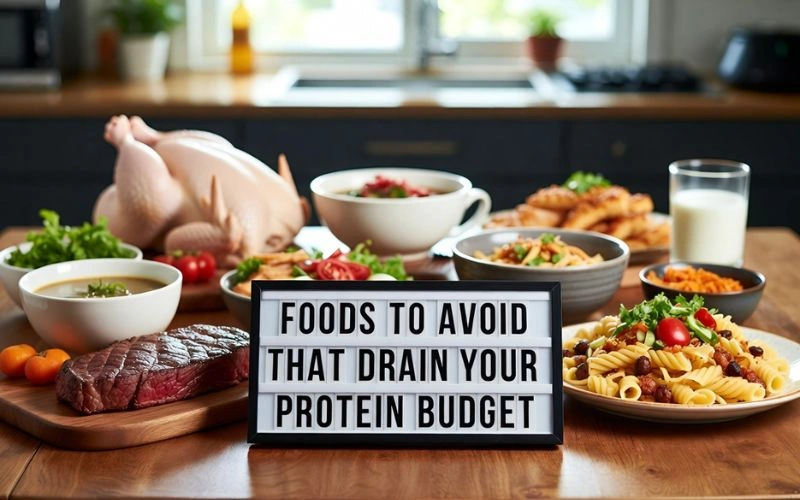
Foods That Drain Your Protein Budget Without Delivering Enough Value
Not all protein sources offer the same return on investment per rupee spent. Identifying the lower-value options helps you redirect your budget toward the foods and supplements that consistently deliver more protein per rupee.
- Red meat (beef and mutton): High protein content but expensive per gram of protein delivered. Best used two to three times per week as a variety option rather than a daily staple on a tight budget.
- Canned tuna: Good protein quality, but the pricing in Pakistani markets makes it significantly less cost-effective than eggs when evaluated on a per-gram protein basis.
- Protein bars: Convenient for on-the-go use but costly relative to the protein they provide. The current protein bar pricing in Pakistan puts most options well above Rs. 200 per bar for approximately 20 grams of protein, which is far more expensive per gram than eggs or chicken.
Eggs, chicken, and daal remain the three most cost-effective pillars of a high-protein diet in Pakistan. Building your daily plan around these three and supplementing intelligently around them with dahi, milk, and occasional whey is the most sustainable and affordable approach to consistent high protein intake.
Making a 150g Protein Plan Sustainable Long-Term
Hitting 150 grams of protein once is straightforward. Doing it consistently, every day, on a budget, while managing work, study, and family commitments is where most people eventually struggle. The solution is removing daily friction by making protein-rich eating as automatic and low-effort as possible.
Meal prepping makes the biggest difference in long-term consistency. Boiling a batch of eggs, cooking chicken in bulk two to three times per week, and keeping cooked daal ready in the fridge removes the decision fatigue and preparation time that causes people to skip protein sources when they are busy or tired. The same weekly preparation approach used in batch cooking for weekly weight gain meal plans applies equally well to high-protein eating on a budget. A few hours on the weekend can make the entire following week significantly more consistent.
It is also important to ensure that the chase for protein does not come at the expense of your overall nutritional balance. Following a structured approach to balanced macronutrient intake ensures you are still consuming adequate carbohydrates and healthy fats alongside your protein, since your body needs all three macronutrients to perform, recover, and maintain hormonal balance effectively.
Hitting 150 grams of protein daily in Pakistan under Rs. 500 is not just theoretically possible. It is repeatable, practical, and well within reach for anyone willing to plan their meals with intention. Eggs, chicken, daal, and dahi are your four food pillars. Whey protein, creatine, and BCAAs are the optional finishing layer on top of a solid food foundation. Start with the food plan, stay consistent for four to six weeks, and the results in strength, body composition, and energy will make the approach self-reinforcing.
Frequently Asked Questions
These are the most common questions from Pakistani users trying to hit high protein targets on a limited daily budget.
Q1: Is it really possible to get 150g of protein under Rs. 500 per day in Pakistan?
Yes, and the sample plan in this article demonstrates it clearly. Using eggs, chicken, daal, and dahi as your foundation, you can consistently reach 155 to 165 grams of protein for Rs. 455 to Rs. 490 per day. The key is building your meals around these four high-protein, budget-friendly staples rather than relying on supplements or expensive protein sources.
Q2: Do I need whey protein to hit 150g of protein per day in Pakistan?
No. The sample plan in this article reaches 155 to 165 grams of protein without any supplement at all. Whey protein is a useful convenience tool on days when whole food intake falls short, but it is not a necessity when eggs, chicken, daal, and dahi are consistently part of your daily meals.
Q3: Which is the cheapest protein source per gram in Pakistan?
Eggs consistently offer the lowest cost per gram of protein in the Pakistani market. A large egg provides 6 to 7 grams of protein at a cost of approximately Rs. 17 to 20 per egg, which translates to under Rs. 3 per gram of protein. Daal is the next most cost-effective option, followed by boneless chicken breast.
Q4: How should I spread 150g of protein across the day?
Aim for roughly 30 to 40 grams per meal across three to four meals rather than concentrating most of your protein in one sitting. This distributes amino acid availability more evenly throughout the day and supports muscle protein synthesis more effectively than two large protein-heavy meals with long gaps in between.
Q5: Can vegetarians in Pakistan hit 150g of protein on a Rs. 500 budget?
It is more challenging but achievable with deliberate planning. Eggs, dahi, milk, paneer, and a variety of daals are the primary vegetarian protein sources in Pakistan. Combining multiple daal servings with four to six eggs per day and generous portions of dahi can reach 100 to 120 grams of protein. Hitting 150 grams consistently without meat or fish is difficult on this budget without some form of protein supplementation to close the gap.
Q6: What is the single most impactful change a Pakistani can make to increase daily protein intake?
Replacing a low-protein breakfast such as paratha and chai with three to four boiled eggs adds 20 to 26 grams of protein at a cost of Rs. 50 to 80. This single meal change shifts the daily protein trajectory significantly and makes it far easier to reach 150 grams across the rest of the day without major changes to lunch or dinner.
“`html
“`