













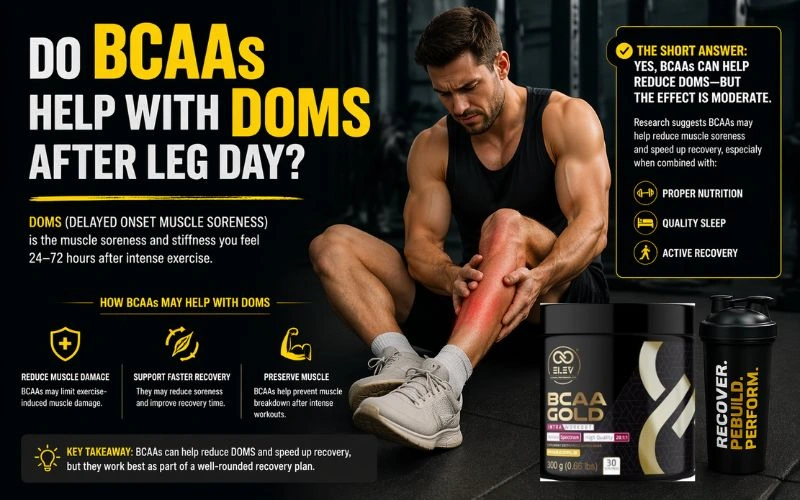
Yes, BCAAs can meaningfully reduce the severity and duration of DOMS, particularly after high-volume leg training. They work by limiting muscle protein breakdown during the session and accelerating the repair process afterwards. They will not eliminate soreness entirely, but consistent use before and during leg day makes a measurable difference for most gym goers. If you are comparing BCAA price in Pakistan and wondering whether the investment is worth it for recovery, leg day is the single best use case you can make for them.
Table of Contents
Why Leg Day Causes More Soreness Than Any Other Session
Before getting into how BCAAs help, it is worth understanding why leg training produces such severe and prolonged soreness compared to other muscle groups.
The primary reason is muscle mass. Your legs contain the largest muscle groups in the body: the quadriceps, hamstrings, glutes, and calves. Training these muscles with exercises like squats, deadlifts, and lunges creates more total muscle fibre damage than an upper body session simply because of the volume of tissue involved.
The second reason is the eccentric loading pattern of most leg exercises. When you lower yourself into a squat or control the descent of a Romanian deadlift, your muscles are lengthening under tension. Eccentric contractions cause significantly more micro-trauma to muscle fibres than concentric contractions, which is why the lowering phase of every rep is responsible for most of the soreness you feel two days later.
The third reason is that most people train legs less frequently than upper body muscles, which means leg muscles are often less adapted to high training volumes. The result is a predictable cycle of severe DOMS every time leg day comes around.
What DOMS Actually Is
DOMS, delayed onset muscle soreness, is the pain and stiffness that peaks 24 to 72 hours after intense exercise. It is not caused by lactic acid, which the body clears within an hour of training. It is caused by the inflammatory response to microscopic muscle fibre damage and the associated fluid accumulation and swelling in the surrounding tissue.
Reducing DOMS with amino acids works by addressing this process at its root. When muscle protein breakdown during training is limited and repair processes are better supported after the session, the inflammatory response is less severe and recovery time shortens. This is the core mechanism through which BCAAs earn their place in a leg day protocol.

How BCAAs Reduce Leg Day Soreness
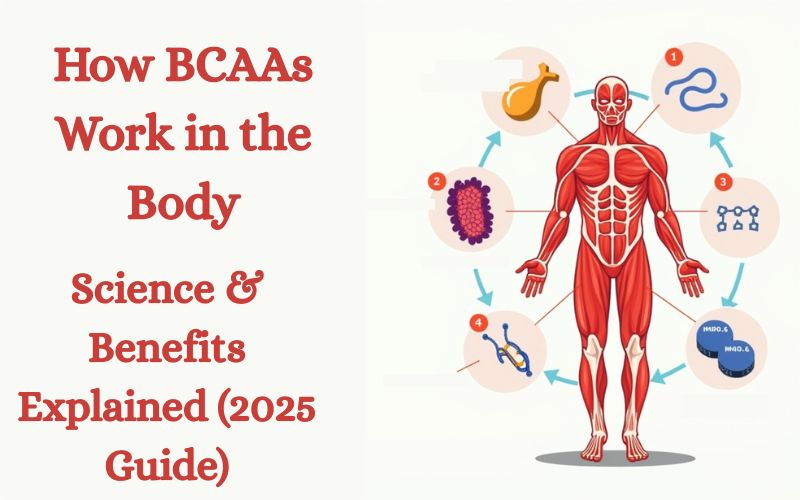
Understanding how BCAAs work in the context of muscle damage makes the recovery benefit easier to appreciate. BCAAs, particularly leucine, signal muscle protein synthesis and help counteract muscle protein breakdown during training. When you supply BCAAs intra-workout, your body has the amino acids it needs to begin limiting damage in real time rather than waiting for the post-workout protein window.
The specific mechanisms are as follows.
Leucine activates the mTOR signalling pathway, which is the primary driver of muscle protein synthesis. When mTOR is activated during training rather than only after, the repair process begins sooner and the window of net muscle protein breakdown is shortened.
Isoleucine supports glucose uptake into muscle cells during exercise, helping sustain energy availability and reducing the degree to which muscles have to break down their own protein for fuel during extended sessions.
Valine competes with tryptophan for transport across the blood-brain barrier, which reduces the rate at which central fatigue develops. This allows you to maintain training quality for longer, which indirectly reduces the kind of compensatory movement patterns that increase injury risk and soreness.
Together, these three amino acids create a protective environment during the session itself that reduces the total damage load your muscles have to repair afterwards.
What the Research Shows
Several well-designed studies specifically examining BCAAs and DOMS after resistance training support the use case. Research published in the Journal of the International Society of Sports Nutrition found that participants who consumed BCAAs before a high-volume squat session reported significantly lower muscle soreness at 24, 48, and 72 hours post-exercise compared to a placebo group. Perceived soreness was lower, peak soreness arrived earlier, and recovery to baseline was faster.
Another study examining eccentric exercise, the dominant contraction pattern in leg training, found that BCAA supplementation reduced markers of muscle damage including creatine kinase levels and subjective soreness ratings in the days following training. Creatine kinase is an enzyme released from damaged muscle fibres into the bloodstream and is used as a direct measure of muscle breakdown severity.
The evidence is not uniform. Studies using lower BCAA doses or administering them only post-workout show weaker effects. The timing and dose both matter, which is covered in the practical section below.
BCAAs vs EAAs for Post-Leg Day Recovery
A fair question is whether full BCAAs vs EAAs matters for recovery from leg day specifically. EAAs contain all nine essential amino acids and provide a more complete stimulus for muscle protein synthesis than the three BCAAs alone. In theory, EAAs should produce better recovery outcomes.
In practice, for intra-workout use during leg day, BCAAs remain the more practical choice. They are lighter, easier to sip during a demanding session, and their leucine content is sufficient to drive the muscle protein synthesis signal acutely. EAAs become more relevant in a post-workout context or as a standalone supplement for people who are not consuming adequate protein from food and shakes throughout the day.
If your protein intake from food is already high, BCAAs add targeted intra-workout benefit. If your protein intake is inconsistent, upgrading to EAAs or ensuring a solid post-workout whey or casein shake is the higher priority.
How to Use BCAAs for Maximum Leg Day Recovery
Timing matters more for DOMS reduction than for general BCAA use. The most effective protocol for minimising post-leg-day soreness is to begin using BCAAs before the session starts, not after it finishes.
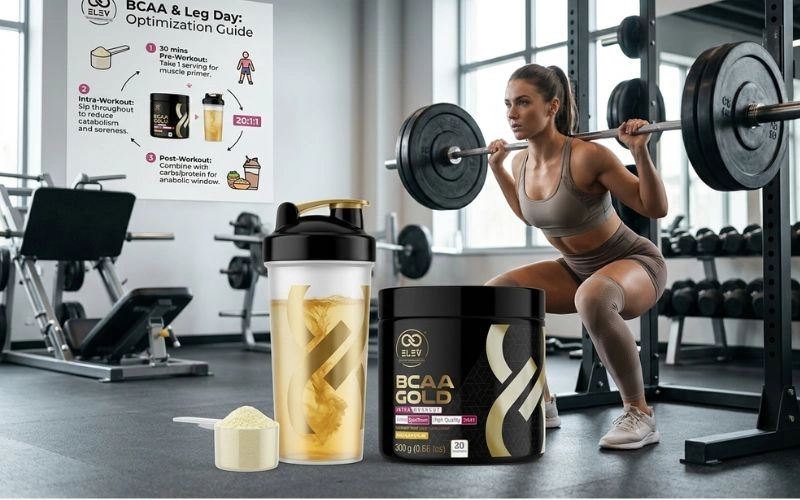
Start sipping your BCAA drink 10 to 15 minutes before you begin your warm-up, then continue throughout the session. A full serving of 5 to 7g mixed in 400 to 500ml of cold water provides the leucine dose needed to activate muscle protein synthesis signals during the workout itself. The goal is to supply amino acids to muscle tissue while the damage is occurring, not only after.
Using amino acids for faster recovery is most effective when continued on the day after leg training as well. A rest-day serving between meals keeps amino acid availability elevated during the 24 to 48 hour window when muscle repair is most active and when DOMS tends to peak.
The dose matters too. Studies showing meaningful DOMS reduction typically use 6 to 10g of BCAAs per session. Products delivering only 2 to 3g per serving require a double dose on leg day to hit the effective range.
Other Recovery Strategies That Work Alongside BCAAs
BCAAs reduce soreness most effectively when they are part of a broader recovery approach rather than used in isolation. Several other strategies compound the benefit significantly.
Warming up properly before leg day is one of the highest-leverage things you can do to reduce DOMS. A thorough dynamic warm-up increases blood flow to the muscles, improves joint mobility, and prepares the neuromuscular system for the loading ahead. Cold muscles under heavy eccentric load produce more damage than warm, primed muscles under the same load.
Stretching after leg day with static stretches held for 30 to 60 seconds helps reduce the post-session stiffness that compounds into soreness the following day. It also promotes blood flow through the worked tissue, which supports the removal of inflammatory byproducts.
Hydration is consistently underrated as a recovery tool. Dehydrated muscle tissue recovers more slowly, and the inflammatory response to training is more pronounced when total fluid intake is inadequate. For Pakistani gym goers training in warm conditions, this is particularly relevant. Aim for consistent fluid intake throughout the day on both training and rest days.
Adequate dietary protein remains the most fundamental recovery driver. If your protein intake from food is insufficient, no BCAA supplement fully compensates. Hitting your daily protein target from whole food sources and supplementing with casein protein before sleep provides a sustained overnight amino acid supply during the longest recovery window of the day.
Light activity on the day after leg training, such as a slow walk or gentle amino acids for workout fatigue management, promotes blood circulation through sore muscles without adding further damage. This is commonly called active recovery and is consistently shown to reduce soreness duration more effectively than complete rest.
Which BCAA Products to Use
For leg day DOMS specifically, you want a BCAA product that delivers at least 5 to 7g of BCAAs per serving in a 2:1:1 ratio with a leucine dose that clears the 2.5g threshold.
Xtend BCAA by Scivation delivers 7g of BCAAs per serving alongside 2.5g of glutamine and a full electrolyte blend. The glutamine addition is particularly relevant for leg day recovery since glutamine plays a direct role in reducing muscle soreness and supporting gut health during periods of high training stress. The electrolyte content also addresses the hydration component of recovery simultaneously.
Rule 1 BCAA delivers 5g of BCAAs per serving in a clean, transparent formula with no added ingredients. For gym goers who prefer simplicity and already take glutamine separately, Rule 1 is a solid and cost-effective choice for leg day use.
Both are available through verified Pakistani importers. Always confirm the batch code and packaging authenticity before purchasing, as both brands have been counterfeited in the local market.
Common Mistakes That Reduce BCAA Effectiveness for DOMS
Several habits reduce how much recovery benefit gym goers actually get from their BCAAs, even when using a quality product consistently.
Taking BCAAs only post-workout and skipping the intra-workout window is the most common error. Most of the protective benefit against DOMS comes from supplying amino acids during the session, not only after it ends.
Using a product with too low a dose per serving and not adjusting the amount for a demanding leg session. A single 3g serving is unlikely to produce meaningful DOMS reduction. Double the dose on leg day if your product delivers less than 5g per serving.
Not hitting daily protein targets from food and expecting BCAAs to compensate. BCAAs work most effectively when total protein intake is already adequate. They amplify a good nutritional foundation, not substitute for a poor one.
Neglecting sleep. Muscle repair happens predominantly during deep sleep. A gym goer who takes BCAAs consistently but sleeps five hours after leg day will recover more slowly than one who skips BCAAs but sleeps eight hours. Supplementation works within the constraints of your overall lifestyle.
Frequently Asked Questions
How long after leg day do BCAAs reduce soreness?
Most people who use BCAAs consistently before and during leg sessions notice that peak soreness arrives sooner and is less severe compared to sessions without BCAA use. The effect is most noticeable at the 48-hour mark, which is typically when DOMS peaks after a hard leg session.
Can I take BCAAs after leg day if I forgot to take them during?
Yes, and it is better than nothing. Post-workout BCAA consumption still supports the recovery process, but the most protective window against DOMS is the intra-workout period. If you only use BCAAs post-session, you miss the opportunity to limit damage in real time.
Do I need a special BCAA product for leg day or will any work?
Any BCAA product delivering 5 to 7g in a 2:1:1 ratio per serving will work. Products with added glutamine provide an additional recovery benefit that is worth considering specifically for leg day given the high muscle damage load. Check the dose per serving carefully since many budget products under-dose.
Is the DOMS from leg day a sign that the session was effective?
Soreness is a sign of muscle damage, not necessarily effective training. Beginners experience DOMS more severely because their muscles are less adapted. As you train consistently, the same session produces less soreness as your muscles adapt, but the training stimulus remains effective. Chasing soreness as a metric of a good workout is not a reliable approach.
How many weeks of consistent BCAA use before DOMS from leg day noticeably improves?
Most gym goers report noticeably less severe and shorter-duration soreness after two to four weeks of consistent pre and intra-workout BCAA use. The benefit compounds over time as your muscles also adapt to the training stimulus itself, making it difficult to isolate the BCAA effect entirely, but the combination of consistent training and consistent BCAA use produces clear improvement in recovery quality.