













The ketogenic diet has exploded in popularity across Pakistan and worldwide, with countless people experiencing dramatic weight loss, improved energy, and better metabolic health. However, maintaining adequate protein intake while staying in ketosis presents a unique challenge,especially when it comes to protein supplements.
If you’re following a keto diet and wondering whether whey isolate fits into your macros, you’re asking exactly the right question. The short answer is yes, but with important considerations that can make the difference between staying in ketosis and accidentally sabotaging your progress.
Table of Contents
Understanding Whey Isolate and Its Macronutrient Profile
Before determining whether whey isolate fits into a ketogenic diet, you need to understand exactly what it is and how its nutritional composition compares to other protein sources and whey protein forms.
What Makes Whey Isolate Different
Whey isolate is the purest form of whey protein, created through additional filtration processes that remove most lactose, fat, and carbohydrates. While regular whey protein concentrate contains 70-80% protein by weight, whey isolate delivers 90-95% pure protein, making it the leanest option available.
Typical whey isolate macros per 30g serving:
Typical whey isolate macros per 30g serving reflect its high purity and low-calorie profile:
- Protein: 25-28 grams
- Carbohydrates: 1-2 grams (with less than 0.5g from lactose)
- Fat: 0-0.5 grams
- Calories: 100-120 per serving
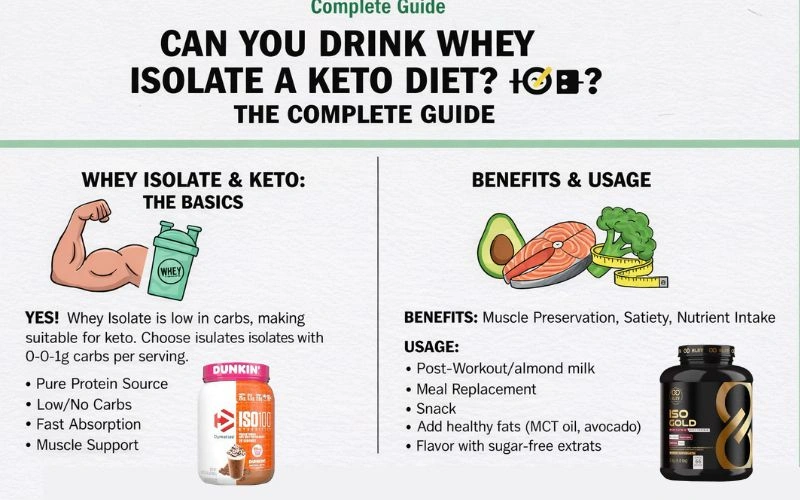
This minimal carbohydrate content is precisely why whey isolate is generally considered keto-friendly,unlike whey concentrate, which may contain 3-6 grams of carbs per serving, potentially pushing some people out of ketosis if consumed multiple times daily.
Keto Diet Basics: Why Carbs Matter
The ketogenic diet works by drastically reducing carbohydrate intake (typically to 20-50 grams of net carbs per day) while increasing fat intake to 70-80% of total calories. This metabolic shift forces your body to burn fat for fuel instead of glucose, producing ketones that provide an alternative energy source for your brain and muscles.
Standard keto macronutrient ratios:
- Fat: 70-80% of daily calories
- Protein: 15-25% of daily calories (moderate intake is crucial)
- Carbohydrates: 5-10% of daily calories (typically 20-50g net carbs)
Every gram of carbohydrate counts toward your daily limit, which means even small amounts from protein supplements can add up.
Why Whey Isolate Works Well on Keto
Beyond just being low in carbs, whey isolate offers several specific advantages that make it particularly well-suited for ketogenic dieters trying to optimize body composition while maintaining metabolic ketosis.
Minimal Carb Impact on Ketosis
With only 1-2 grams of carbohydrates per serving, whey isolate represents less than 10% of most people’s daily carb allowance on keto. Even if you consume two servings daily (which is common for active individuals), you’re only using 2-4 grams of your 20-50 gram daily carb budget,leaving plenty of room for vegetables and other nutrient-dense, fiber-rich carbohydrate sources.
Compare this to whey concentrate at 4-6 grams per serving, and the difference becomes clear. Two servings of concentrate could consume 8-12 grams of carbs,potentially 25-60% of your daily allowance just from protein shakes. This makes whey isolate the obvious choice for serious keto practitioners who want to maximize their carbohydrate budget for whole foods.
High-Quality Protein Without Excess Calories
On keto, you need adequate protein to maintain muscle mass during fat loss, but you don’t want excessive calories that might slow your progress. Whey isolate provides 25-28 grams of complete, high-quality protein in just 100-120 calories,an excellent protein-to-calorie ratio that supports muscle preservation without adding unnecessary energy intake.
Fast Absorption Supports Muscle Preservation
Whey isolate is one of the fastest-absorbing protein sources available, with amino acids entering your bloodstream within 30-60 minutes of consumption. This rapid delivery is particularly valuable on keto because:
- It quickly elevates blood amino acid levels, signaling your body to maintain muscle tissue rather than breaking it down for energy
- Post-workout protein delivery is critical when glycogen stores are depleted on keto
- Fast absorption means less digestive burden, important when your body is adapting to burning fat
- Convenient protein intake without the need to prepare and digest whole food meals
Virtually Lactose-Free for Digestive Comfort
Many people experience digestive changes when starting keto, and the last thing you need is additional gut discomfort from lactose. Whey isolate contains less than 0.5 grams of lactose per serving,essentially lactose-free,making it suitable even for those with lactose intolerance or sensitivity. This ensures you can meet protein requirements without triggering bloating, gas, or digestive distress that might interfere with your keto adaptation.
Important Considerations: When Whey Isolate Might Impact Ketosis
While whey isolate is generally keto-friendly, there are important nuances to understand. Not everyone responds identically to protein intake, and several factors can influence whether whey isolate supports or potentially interferes with your ketosis.
The Protein-Insulin Connection
Here’s a critical fact that surprises many keto dieters: protein, like carbohydrates, triggers insulin release,though to a much lesser degree. Whey protein, in particular, is insulinogenic, meaning it causes a moderate insulin response even without significant carbohydrate content. This is actually intentional from an evolutionary perspective, as insulin helps shuttle amino acids into muscle cells for protein synthesis.
For most people following keto, this insulin response is not problematic and doesn’t kick them out of ketosis. However, certain individuals who are:
- Highly insulin-sensitive or metabolically inflexible
- Consuming excessive protein relative to their needs
- Very strict about staying in deep ketosis (measuring high ketone levels)
- Using keto therapeutically for conditions like epilepsy
…may notice temporary reductions in ketone levels after consuming whey isolate. This doesn’t necessarily mean you’re out of ketosis,it just means your body is temporarily prioritizing protein synthesis over maximum ketone production, which is actually beneficial for muscle maintenance.

The Gluconeogenesis Factor
Gluconeogenesis is the process where your body converts non-carbohydrate sources (including amino acids from protein) into glucose. Many keto beginners worry that eating protein will automatically convert to sugar and kick them out of ketosis. However, this fear is largely overstated.
Gluconeogenesis is a demand-driven process, not supply-driven. Your body produces glucose as needed to maintain blood sugar levels and fuel tissues that require glucose,but it doesn’t simply convert every gram of protein you eat into sugar. In fact, adequate protein intake is crucial on keto to prevent muscle loss and maintain metabolic health.
The real concern is excessive protein: Consuming significantly more protein than your body needs (typically over 1.6-2.0g per kg of body weight for active individuals) may contribute to increased gluconeogenesis. But at moderate protein intakes,which is exactly what whey isolate helps you achieve,this is not a practical concern for most keto dieters.
Flavored vs. Unflavored: Hidden Carb Sources
One potential pitfall with whey isolate on keto comes from flavored versions that may contain added sugars, maltodextrin, or other carbohydrate-based ingredients. While pure whey isolate is low-carb, some manufacturers add sweeteners and flavorings that significantly increase carbohydrate content.
Always check the label for:
- Total carbohydrates per serving (should be 2g or less)
- Ingredients like maltodextrin, dextrose, or cane sugar (avoid these)
- Keto-friendly sweeteners (stevia, erythritol, monk fruit are acceptable)
- Serving size,some brands list smaller servings to make carb counts look better
- When choosing whey isolate protein powder, look for products specifically labeled as keto-friendly or with minimal added ingredients. Unflavored versions offer maximum control over your carb intake, though they require creative mixing to make palatable.
How Much Whey Isolate Can You Have on Keto?
Determining the right amount of whey isolate for your keto diet depends on multiple factors including your total protein needs, activity level, body composition goals, and individual metabolic response.
Calculating Your Protein Requirements
On keto, protein should be moderate,neither too high nor too low. While the exact amount varies by individual, research suggests:
- Sedentary individuals: 1.2-1.4 grams per kilogram of lean body mass daily
- Moderately active: 1.4-1.7 grams per kilogram of lean body mass daily
- Athletes and heavy training: 1.7-2.2 grams per kilogram of lean body mass daily
- During aggressive fat loss: Higher protein (up to 2.0-2.2g/kg) helps preserve muscle when in caloric deficit
- For a 70kg person with 60kg of lean body mass who’s moderately active, this translates to roughly 84-102 grams of protein daily. If they’re getting 60-70 grams from whole food sources (meat, fish, eggs), one serving of whey isolate (25-28g protein) perfectly fills the gap without excessive protein intake.
Practical Serving Guidelines
Most keto dieters do well with:
- 1 serving daily (25-30g protein): Ideal for those meeting most protein needs through whole foods, using whey as convenient post-workout nutrition or breakfast protein boost
- 2 servings daily (50-60g protein): Suitable for active individuals, those with higher protein requirements, or people who struggle to consume enough protein from whole foods alone
- 3+ servings daily: Generally not recommended unless under specific circumstances like aggressive bodybuilding, severe caloric restriction with very high activity, or medical protein requirements
Remember that even with low-carb whey isolate at 2g carbs per serving, three servings would consume 6 grams,still manageable on keto, but you’re better off prioritizing whole food protein sources when possible for their additional nutrients, fat content, and satiety benefits.
Best Times to Consume Whey Isolate on Keto
Strategic timing of whey isolate consumption can maximize its benefits while minimizing any potential impact on ketosis. Understanding when to drink your protein shake optimizes both muscle maintenance and fat-burning results.
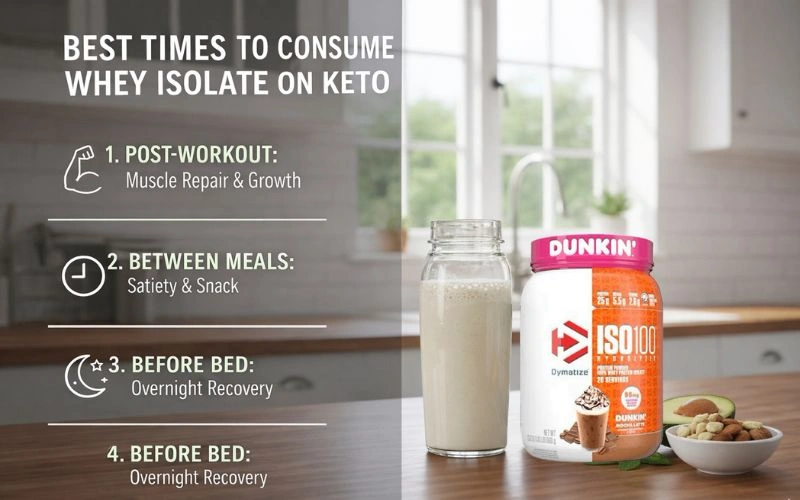
Post-Workout: The Prime Window
The 30-90 minutes after resistance training or intense exercise represents the most valuable time for whey isolate consumption on keto. During this window:
- Muscle protein synthesis is elevated and responsive to amino acid availability
- Insulin sensitivity is heightened in muscle tissue, meaning any insulin response preferentially drives nutrients into muscles rather than fat stores
- Your body prioritizes recovery and adaptation over maintaining maximum ketone levels
- Fast-absorbing protein is particularly beneficial when glycogen stores are depleted from training
Consider combining your post-workout whey isolate with creatine monohydrate for enhanced recovery and strength gains. Creatine is completely carb-free and highly effective on keto for maintaining training performance.
Morning: Breaking the Fast Strategically
Many keto dieters practice intermittent fasting, typically using a 16:8 or 18:6 eating window. Breaking your fast with whey isolate offers several advantages:
- Quickly elevates blood amino acids after the overnight fast
- Provides protein without heavy digestive burden
- Allows you to start protein intake early while preparing a more substantial meal
- Helps maintain muscle mass during extended fasting periods
For maximum satiety, blend your whey isolate with coconut oil, MCT oil, or heavy cream to add healthy fats. This creates a more complete meal replacement that keeps you satisfied while maintaining your keto macros.
Between Meals: Protein Maintenance
Using whey isolate as a between-meal protein boost helps maintain steady amino acid levels throughout the day without disrupting ketosis. This is particularly useful when:
- You have long gaps between meals (4+ hours)
- Your main meals are lower in protein
- You’re trying to meet higher protein requirements without feeling overly full
- You want a quick, portable protein option while traveling or at work
When to Avoid: Timing Considerations
Strategic timing matters, as whey isolate is not always the most effective choice in every situation.
- Before bed: While not prohibited, fast-absorbing whey isolate isn’t ideal before sleep. Consider casein protein instead for slow-release overnight muscle support.
- During pure fasting: If practicing extended fasts (24+ hours) for therapeutic ketosis, avoid whey isolate during the fasting window as any protein will break the fast.
Making Your Keto Whey Isolate Shakes More Effective
While whey isolate alone fits perfectly into a keto diet, you can enhance its effectiveness and satisfaction by adding complementary ingredients that support your ketogenic goals without adding significant carbohydrates.
Keto-Friendly Shake Additions
To enhance your ketogenic lifestyle while keeping carbs low and fats high, consider these supportive shake additions:
Healthy fats for satiety and macros:
- MCT oil (1-2 tablespoons): Provides quick ketone fuel without carbs
- Coconut oil or coconut cream: Adds richness and healthy fats
- Heavy whipping cream: Makes shakes creamier while adding fat
- Almond or macadamia nut butter: Adds flavor, fat, and minimal carbs
Low-carb flavor enhancers:
- Unsweetened cocoa powder: Adds chocolate flavor with antioxidants
- Sugar-free extracts (vanilla, almond, mint): Enhance taste without carbs
- Cinnamon or other spices: Add complexity without affecting macros
- Stevia or monk fruit sweetener: Add sweetness if needed
Nutrient boosters:
- Spinach or kale (small amounts): Adds micronutrients with minimal carb impact
- Avocado (1/4 to 1/2): Provides healthy fats and creates smooth, creamy texture
- Chia seeds (1 tablespoon): Adds fiber and omega-3s with about 1g net carbs
- Ground flaxseed: Provides fiber and healthy fats
Sample Keto-Optimized Whey Isolate Recipes
For those following a low-carb, high-fat diet, these keto-optimized whey isolate recipes help you stay in ketosis while supporting muscle recovery.
Post-Workout Recovery Shake:
- 1 scoop whey isolate (25g protein, 1-2g carbs)
- 1 tablespoon MCT oil (14g fat)
- 1 tablespoon almond butter (3g net carbs)
- 5g creatine monohydrate (optional)
- Total macros: 25g protein, 20g fat, 4-5g net carbs
Chocolate Keto Breakfast Shake:
- 1 scoop chocolate whey isolate
- 2 tablespoons heavy cream
- 1 tablespoon cocoa powder
- 1/4 avocado
- Ice and water to desired consistency
- Total macros: 26g protein, 25g fat, 6g net carbs
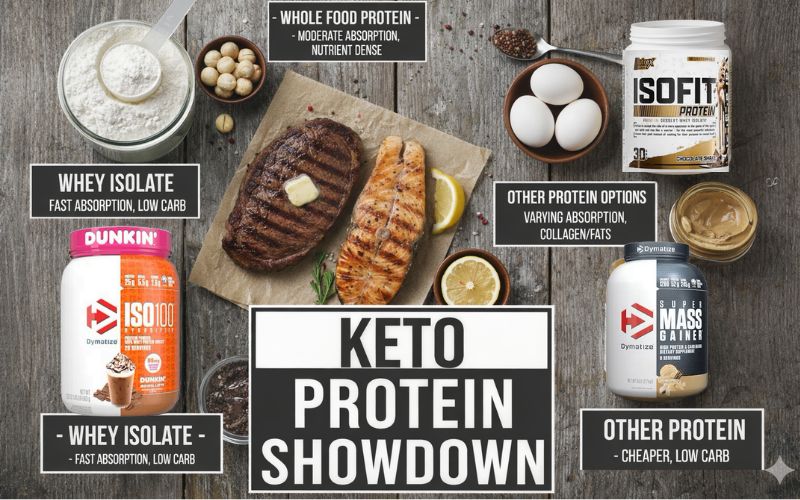
Whey Isolate vs. Other Protein Options on Keto
While whey isolate works well for keto, it’s worth understanding how it compares to other protein supplement options so you can make the best choice for your specific situation and preferences.
Whey Isolate vs. Whey Concentrate on Keto
Whey concentrate contains more lactose and higher carbs (4-6g per serving). While some keto dieters can accommodate this, isolate is the safer choice when staying under 20-30g daily carbs. The extra cost of isolating is worth it for the carb savings if you’re strict about ketosis.
- Choose isolate if: Strict keto, lactose sensitive, or consuming multiple servings daily.
- Consider concentrating if: More flexible carb allowance (50g daily), budget-conscious, and only one serving daily.
Whey Isolate vs. Plant-Based Proteins
Plant proteins (pea, hemp, rice) are keto-friendly but typically have 3-6g carbs per serving,more than whey isolate. They also have incomplete amino acid profiles unless blended, and lower leucine content for muscle building.
Choose plant-based if: Dairy-free keto, vegan, or dairy allergies. Choose whey isolate if: Maximum protein quality, lowest carbs, and dairy tolerance are priorities.
Whey Isolate vs. Collagen Protein
Collagen is virtually zero-carb and keto-friendly, but it’s NOT a complete protein. Collagen lacks essential amino acids needed for muscle building. Use collagen for joint and skin support, but rely on whey isolate for actual protein requirements and muscle maintenance on keto.
Monitoring Your Individual Response
Because everyone’s metabolism responds differently to protein intake on keto, monitoring your individual response helps you optimize whey isolate usage for your unique physiology and goals.
Tracking Ketone Levels
If you’re serious about optimizing ketosis, consider measuring blood ketones before and 2-3 hours after consuming whey isolate. This shows whether your protein intake impacts ketone production:
- Blood ketones above 0.5 mmol/L indicate nutritional ketosis
- 1.0-3.0 mmol/L is optimal for most keto dieters
- Temporary drops after protein are normal and don’t mean you’re out of ketosis
If your ketones consistently drop below 0.5 mmol/L after whey isolate, you might be sensitive to its insulin response. Try reducing serving size, timing it post-workout when insulin sensitivity is higher, or spacing it further from other meals.
Assessing Body Composition and Performance
The ultimate measure of whether whey isolate works for your keto diet is results:
- Are you maintaining or building muscle mass during fat loss?
- Is your strength staying consistent or improving in the gym?
- Are you losing fat at the expected rate (0.5-1% body weight per week)?
- Do you feel satisfied and energized throughout the day?
- Is your recovery from workouts adequate?
If you’re seeing positive results across these metrics, your whey isolate usage is working well regardless of what ketone meters say. Remember that the goal is improved body composition and performance, not just high ketone numbers.
Complementary Supplements for Keto Athletes
While whey isolate addresses protein needs on keto, combining it with other strategic supplements creates a comprehensive nutrition plan that supports both ketosis and athletic performance.
- Electrolytes: Keto increases electrolyte excretion. Supplement sodium, potassium, and magnesium to prevent ‘keto flu’ and maintain performance. Critical for anyone training while keto-adapted.
- Creatine monohydrate: Completely carb-free and highly effective for maintaining strength on keto. Take 5g daily with your whey isolate shake.
- Omega-3 fatty acids: Support cardiovascular health, reduce inflammation, and optimize fat metabolism. Essential for anyone on a high-fat diet like keto.
- MCT oil or powder: Provides quick ketone fuel and can boost ketone production. Mix into your whey shake for additional energy and satiety.
- Quality multivitamin: Keto can limit micronutrient intake from restricted food groups. A comprehensive multivitamin ensures nutritional adequacy while maintaining ketosis.
The Bottom Line: Whey Isolate and Keto Are Compatible
Yes, you can absolutely drink whey isolate on a keto diet,in fact, it’s one of the best protein supplement choices for ketogenic dieters due to its minimal carbohydrate content, high protein quality, and fast absorption.
With only 1-2 grams of carbs per serving, whey isolate fits comfortably within even strict keto macros while providing the complete amino acid profile necessary for muscle maintenance and optimal body composition.
The key to success is moderation and strategic use. One to two servings daily, timed around workouts or as convenient protein sources, allows you to meet protein requirements without excessive protein intake that might reduce ketone production. Always add healthy fats to your shakes to maintain proper keto macronutrient ratios, and choose high-quality whey isolate products free from added sugars or maltodextrin.