













Building muscle as a student in Pakistan comes with a very specific set of challenges that most generic diet plans completely ignore. University timetables, hostel food, limited kitchen access, tight budgets, and back-to-back classes create a nutritional environment that is genuinely difficult to navigate. But students who manage it , who figure out how to eat enough of the right foods despite all of that , make some of the fastest muscle-building progress of any demographic. This 7-day plan is built entirely around the Pakistani student reality. No unrealistic meal prep assumptions. No imported superfoods. Just real food, real timing, and a structure that actually fits student life.
Table of Contents
Why Students Struggle to Build Muscle Despite Training Hard
Most students who train consistently hit a wall after the first few months of excitement. They are going to the gym, putting in effort, but the results slow down or stop altogether. In almost every case, the problem is not the training , it is the eating. Building muscle requires a consistent caloric surplus built around adequate protein, and student life in Pakistan actively works against both.
Hostel meals are typically carbohydrate-heavy and protein-light. Cafeteria food , biryani, daal chawal, samosas , delivers calories but rarely enough protein to support muscle repair and growth. Add irregular sleep, academic stress, and skipped meals during exam season, and you have a body that is in no position to grow regardless of how well the gym sessions are going.

What Your Body Actually Needs to Build Muscle
Before the meal plan, the science needs to be clear. Building muscle requires three nutritional conditions to be consistently met: a caloric surplus above your maintenance needs, adequate protein intake of approximately 1.6 to 2.2 grams per kilogram of body weight daily, and sufficient carbohydrates and fats to fuel training and support hormonal function. For a 70kg student, that translates to roughly 2,400 to 2,800 calories per day and 112 to 154 grams of protein.
The Student Protein Problem and How to Solve It
Protein is the macronutrient most Pakistani students fall short on, and the gap is larger than most people realise. A standard hostel dinner of daal and roti might deliver 18 to 22 grams of protein for the entire meal. A day where every meal looks like that ends with 50 to 60 grams of total protein , less than half of what is needed to build muscle.
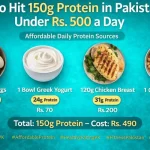
The solution is not complicated, but it does require intentionality. Eggs are the single most accessible, affordable, and protein-dense food available to students across Pakistan. A dozen eggs provides roughly 72 grams of protein and costs between Rs. 180 to Rs. 230. That is muscle-building protein at a cost that fits even the tightest student budget. Combined with chicken , widely available in university cafeterias and local dhabas , and daal at hostel meals, the protein gap can be closed without supplements.
4 eggs daily deliver approximately 26g of protein at a cost of Rs. 65 to Rs. 80. A 150g chicken portion at one meal adds approximately 37g of protein for Rs. 90 to Rs. 110. A cup of daal contributes approximately 18g of protein at Rs. 25 to Rs. 35, and a glass of milk adds approximately 8g of protein for Rs. 30 to Rs. 40.
When Whey Protein Makes Sense for Students
There are days when whole food protein targets are genuinely difficult to hit , back-to-back classes, no access to a proper meal, or hostel food that simply does not deliver. On those days, a single scoop of whey protein bridging the gap is both practical and cost-effective.
The 7-Day Muscle Building Diet Plan
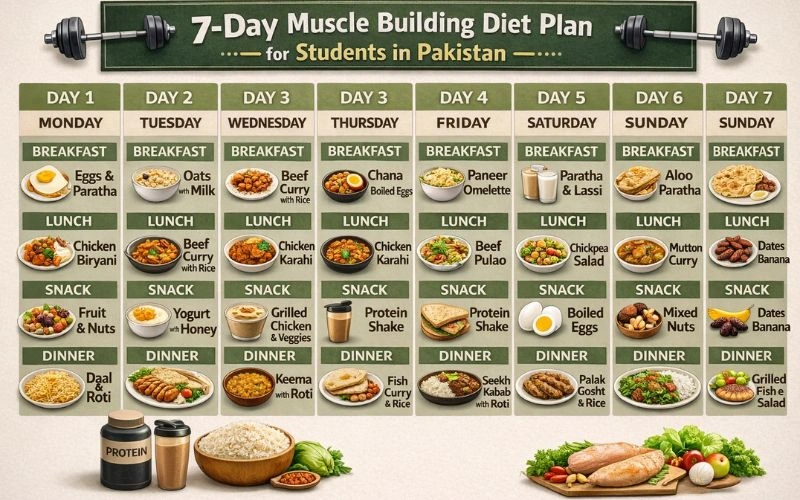
This plan is built around foods available in Pakistani markets, university cafeterias, and roadside dhabas. Each day follows a structure of five eating occasions , breakfast, mid-morning, lunch, post-workout or afternoon, and dinner , that keep protein distributed and energy levels stable throughout the day.
Day 1
Start the week with a strong protein foundation at breakfast to set the tone for the day.
Breakfast is 4 boiled eggs with 2 slices of bread and a glass of milk, delivering approximately 42g of protein. Mid-morning is a banana and a handful of peanuts. Lunch is chicken karahi with 2 roti from the cafeteria, adding approximately 40g of protein. The afternoon slot is 1 scoop of whey protein in water or milk. Dinner is daal with rice and a cup of dahi, contributing approximately 28g of protein. Total protein for the day lands at approximately 130 to 140g.
Day 2
Tuesday is a recovery day for most weekly training splits, and the diet should reflect that , higher carbohydrates to replenish glycogen, consistent protein to support overnight repair.
Breakfast is a 3-egg omelette with onion and tomato on 2 roti. Mid-morning is dahi with a pinch of sugar or salt. Lunch is chicken daal with rice , this combination delivers both protein sources in one meal, approximately 45g of protein. The afternoon slot is 2 boiled eggs with a cup of chai. Dinner is beef or chicken qeema with roti and salad, approximately 35g of protein. Total protein for the day is approximately 135 to 145g.
Days 3 to 5
The middle of the week is where most students start to slip. Academic pressure builds, energy dips, and the temptation to skip meals or eat whatever is convenient becomes strongest. This is exactly when having a repeatable, low-effort meal structure pays off.
- Days 3: through 5 follow the same architectural logic as the first two days , a protein-strong breakfast, a carbohydrate-supported lunch, and a protein-centric dinner , with minor variations to prevent monotony.
- On Day 3: replace chicken at lunch with chana masala for plant-based protein variety, and add peanut butter to breakfast bread for additional protein and healthy fats.
- On Day 4: include mutton or beef at dinner for a change in amino acid profile and an iron boost that supports training performance. Mutton yakhni is a genuinely useful recovery meal for students who have access to home-cooked food on weekends.
- Day 5: is a heavy training day, so carbohydrates at lunch go up and a post-workout shake or additional eggs are added in the afternoon. The optimal timing for whey protein matters most on high-intensity training days like this one.
Keeping Costs Under Control Through the Week
The biggest concern for students is not nutrition knowledge , it is cost. A muscle-building diet on a student budget is achievable only when the most expensive foods, like supplements and red meat, are used strategically rather than daily. The case for food-first nutrition over gym supplements positions supplements as support tools rather than primary sources, which is the right frame for anyone managing a tight monthly allowance.
Day 6
Weekends are the student muscle-builder’s greatest opportunity. More time, potentially home-cooked meals, better sleep, and less academic stress create conditions where both training and nutrition can be optimised. Saturday and Sunday meals should prioritise higher calorie intake , this is when the weekly surplus gets built.
Breakfast is a 5-egg omelette with milk and paratha, approximately 48g of protein. Lunch is a full chicken portion with daal and rice, approximately 55g of protein. Post-workout is 1 scoop of whey protein. Dinner is beef qeema or mutton with roti and dahi, approximately 38g of protein. Total protein for the day reaches approximately 160g or more.
Day 7
Sunday is an active recovery day. Training is lighter or rest-based, so total calories can come down slightly while protein stays consistent to support the week’s muscle repair.
Breakfast is 4 boiled eggs with bread and milk. Lunch is home-cooked chicken karahi or daal gosht. The afternoon slot is dahi with fruit. Dinner is a chicken or egg-based light meal with roti. A cup of dahi before sleep acts as a natural slow-release casein protein source that supports Sunday night muscle repair, one of the simplest and most affordable recovery strategies available.
Supplements That Fit a Student Budget
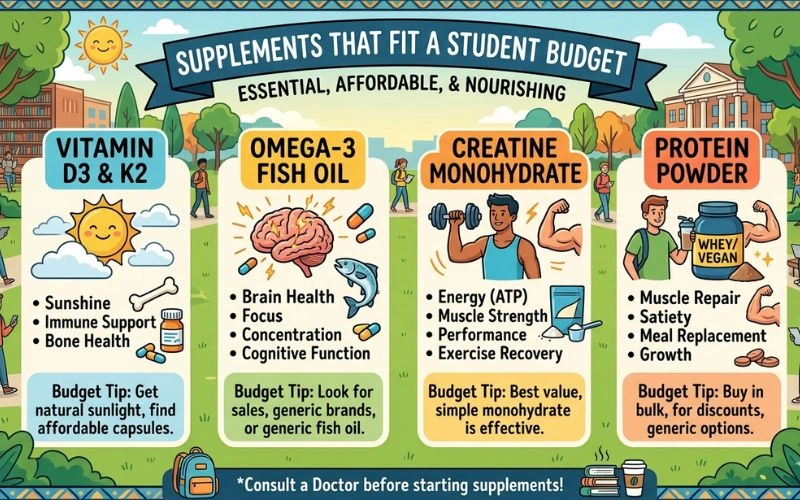
Whole food comes first , always. But a small number of supplements genuinely support the muscle-building process for students who are training consistently and cannot always hit their nutritional targets through food alone.
Creatine monohydrate is the most cost-effective performance supplement available, and it works regardless of training experience. A 250g tub lasts approximately two months at a 3 to 5 gram daily dose and costs between Rs. 1,200 to Rs. 2,500 depending on the brand. Students new to creatine benefit from understanding the right creatine monohydrate dosage for beginners before starting, and the long-term safety of daily creatine use is well-supported by research. Taking creatine at a consistent time each day matters more than the specific window, so students should pick a time that fits their routine and stick with it.
A quality multivitamin rounds out the student stack by covering the micronutrient gaps that inevitably appear in a diet constrained by hostel food and budget limitations.
Whey Protein as a Student Tool
Whey protein is best used by students as a convenience supplement , one scoop on days when food access is limited, not a daily crutch. Protein shake combinations built around ingredients available in Pakistani homes offer practical ways to add calories and protein on weekend days when a blender is accessible.
Building the Habit That Makes the Plan Work
A 7-day plan only works if it becomes a repeatable habit rather than a one-week experiment. The students who build the most muscle are not the ones following the most complex plan , they are the ones who nail the basics every single day with the least friction possible.
Prep what you can. Keep boiled eggs in a container. Buy peanuts and bananas in bulk for snacks. Know the protein content of everything in your cafeteria so you can make smart choices without overthinking. And on the days when the plan falls apart , because student life guarantees those days will come , get back on track at the next meal rather than writing off the entire day.