













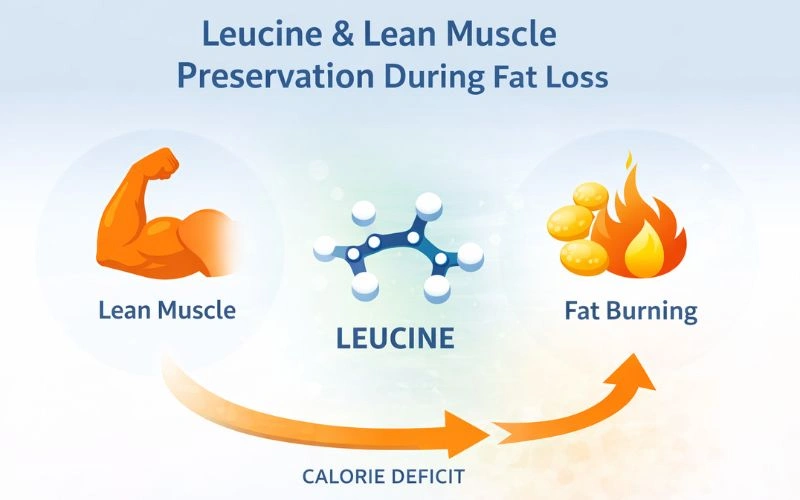
Aggressive fat loss presents one of fitness’s greatest challenges. How do you shed body fat rapidly without sacrificing the lean muscle you’ve worked so hard to build? This question becomes particularly critical when you’re operating in significant caloric deficits, where your body desperately seeks alternative energy sources. Enter leucine, a single amino acid that has emerged as perhaps the most powerful nutritional tool for protecting muscle tissue when calories are restricted. Understanding how leucine works and how to use it strategically can mean the difference between successful body recomposition and disappointing muscle loss alongside your fat loss.
Leucine belongs to the branched-chain amino acids (BCAAs), alongside isoleucine and valine, but it stands apart due to its unique metabolic properties. While all three BCAAs support muscle health, leucine specifically triggers the biological switches that activate muscle protein synthesis,the process of building new muscle proteins. During aggressive fat loss when your body is in a catabolic state, leucine becomes your primary defense against muscle breakdown, essentially telling your body to “preserve this tissue” even when energy is scarce.
Table of Contents
Understanding Leucine’s Unique Metabolic Properties
Leucine functions differently from other amino acids in ways that make it particularly valuable during caloric restriction. Most amino acids primarily serve as building blocks for protein, but leucine also acts as a signaling molecule. It directly activates mTOR (mechanistic target of rapamycin), a crucial cellular pathway that regulates muscle protein synthesis, cell growth, and metabolism.
When leucine levels rise in your bloodstream, mTOR activation triggers a cascade of cellular processes that ramp up protein production. How BCAAs work in the body explains these mechanisms in detail. This signaling function means that even small amounts of leucine can have outsized effects on maintaining muscle mass, making it incredibly valuable when total protein and calorie intake are limited.
Leucine Threshold and Muscle Protein Synthesis
Research has identified something called the “leucine threshold”,a minimum amount of leucine required to maximally stimulate muscle protein synthesis. This threshold sits around 2.5-3 grams per meal for most adults. Below this threshold, muscle protein synthesis remains relatively low. Once you cross it, synthesis rates jump dramatically. During aggressive fat loss, consistently hitting this threshold at each meal becomes crucial for muscle preservation.
The practical implication is significant: it’s not just about total daily leucine intake, but about providing adequate leucine at regular intervals throughout the day. BCAA vs EAA for recovery compares how different amino acid combinations affect recovery and muscle maintenance. Spacing your protein intake to provide 2.5-3 grams of leucine every 3-4 hours creates repeated signals telling your body to maintain muscle mass despite the caloric deficit.
Why Aggressive Fat Loss Threatens Muscle Mass
Before diving deeper into leucine’s protective effects, understanding why muscle loss occurs during severe caloric restriction helps you appreciate leucine’s importance. When you consume significantly fewer calories than you burn, your body must find alternative energy sources. Your body doesn’t just burn fat,it also breaks down protein from muscle tissue through proteolysis.
Extended caloric deficits reduce anabolic hormones like testosterone and IGF-1 while increasing catabolic hormones like cortisol. Natural testosterone boost diet exercise addresses hormone optimization strategies. Additionally, insulin levels drop during dieting, removing one of the body’s primary anabolic signals. Leucine becomes particularly valuable because it can stimulate muscle protein synthesis even in the presence of reduced insulin and other anabolic hormones. Amino acids for reducing workout fatigue explains how specific amino acids support performance under stress.
Leucine’s Dual Action: Synthesis and Breakdown
Leucine protects muscle through two complementary mechanisms: it increases muscle protein synthesis while simultaneously reducing muscle protein breakdown. This dual action creates a more favorable net protein balance even when total calories are severely restricted.
Leucine activates mTOR, which increases the rate of protein translation at cellular level. During aggressive fat loss, this counteracts the natural reduction in protein synthesis that occurs with low energy availability. Less discussed but equally important is leucine’s ability to reduce muscle protein breakdown by inhibiting the ubiquitin-proteasome system. Reduce DOMS with amino acids discusses recovery mechanisms. This combined effect,increased synthesis plus decreased breakdown,creates maximum muscle preservation during aggressive fat loss.
Optimal Leucine Dosing During Fat Loss
Research suggests that 2.5-3 grams of leucine per meal maximally stimulates muscle protein synthesis in most individuals. During aggressive fat loss, aim for this threshold at each of your main protein-containing meals,typically 3-4 times daily, translating to roughly 8-12 grams of total leucine daily distributed across multiple feedings.
Most high-quality protein sources contain approximately 8-10% leucine by weight. A 30-gram serving of whey protein provides about 2.5-3 grams of leucine naturally. Best time to take whey protein discusses protein timing strategies. Free-form leucine supplements offer advantages in specific situations,taking 3-5 grams between meals provides muscle-preserving signals without adding significant calories. BCAA supplements in Pakistan reviews available options.
Timing Leucine Intake for Maximum Muscle Protection
When you consume leucine matters as much as how much you consume. The muscle protein synthetic response to leucine lasts approximately 3-4 hours before declining. This “muscle full” effect means that spacing leucine intake throughout the day produces better results than consuming it all at once.
Distribute protein intake across 3-4 meals, each providing 2.5-3 grams of leucine. During particularly aggressive fat loss, consider adding free-form leucine or BCAAs between main meals,taking 3-5 grams mid-morning and mid-afternoon provides additional muscle-preserving signals without substantial calorie addition. BCAA during intermittent fasting explains timing considerations. This creates 5-6 daily “pulses” of leucine, maintaining a consistent anti-catabolic environment throughout the day.
Leucine-Rich Food Sources During Cutting
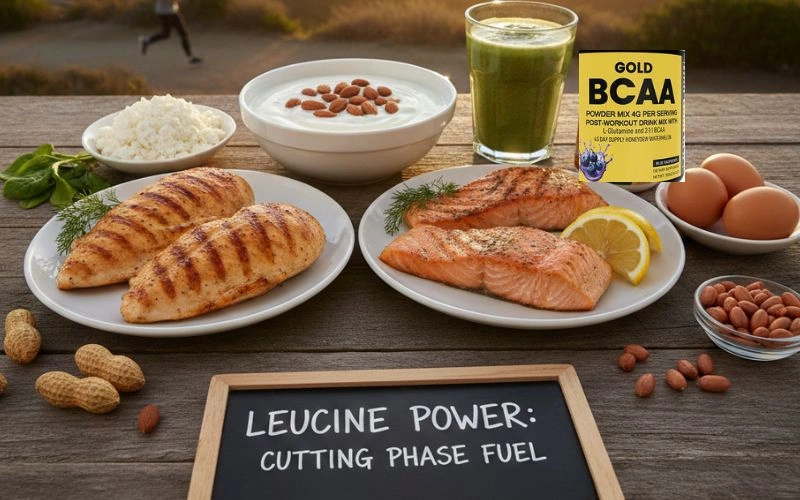
Choosing foods naturally high in leucine helps you reach optimal intake levels while keeping calories controlled. Whey protein leads with approximately 11% leucine content,a single scoop providing nearly 3 grams for only 120 calories. Animal proteins like chicken breast, turkey, fish, and lean beef all provide excellent leucine content. Low carb protein shakes for weight loss offer meal planning strategies.
For plant-based diets, obtaining adequate leucine becomes more challenging but achievable. Soy protein offers the best leucine content among plant proteins at approximately 8% by weight. Legumes contain only 6-7% leucine, meaning plant-based athletes may need slightly more total protein to achieve the same leucine intake. Whey protein vs pea protein for vegans compares options
Leucine and Training During Caloric Deficits
Resistance training provides the most powerful stimulus for muscle preservation during fat loss, and leucine amplifies this effect. The synergy between mechanical tension from training and biochemical signaling from leucine is greater than either alone. Consuming leucine-rich protein before and after training becomes especially critical. Pre-workout vs post-workout supplements discusses optimal timing.
During longer training sessions (90+ minutes) in caloric deficits, consuming leucine or BCAAs during these extended workouts can blunt muscle catabolism. Why do athletes use hydrolyzed protein during intra-workout explains intra-workout nutrition strategies. Mix 5-10 grams of BCAAs in your water bottle for sipping throughout training, maintaining elevated blood amino acid levels throughout your session.
Combining Leucine With Other Nutrients
While leucine provides powerful muscle-preserving effects alone, combining it strategically with other nutrients can enhance results. Small amounts of carbohydrates paired with leucine create an insulin response that further reduces muscle protein breakdown. Pair your highest carbohydrate meals with high-leucine protein sources. Zero carb protein in intermittent fasting discusses protein strategies with limited carbs.
While leucine triggers muscle protein synthesis, you need all essential amino acids present to actually build new muscle proteins. Essential amino acids for endurance athletes explains complete amino acid profiles. Prioritize high-quality complete proteins over leucine-only supplementation for the majority of your intake.
Common Mistakes With Leucine During Fat Loss
Many athletes misunderstand leucine’s role and either overconsume it wastefully or underconsume it ineffectively. The most common mistake involves taking large leucine doses infrequently,consuming 10+ grams once or twice daily. Remember the “muscle full” effect: once you’ve maximally stimulated muscle protein synthesis, additional leucine provides no extra benefit for several hours.
Distribute leucine intake across multiple smaller doses throughout the day. Three to four doses of 2.5-3 grams each produces better muscle preservation than two larger doses. How to use amino acids for faster recovery provides dosing strategies.
Another critical error involves supplementing with leucine while consuming insufficient total protein. During aggressive fat loss, aim for 1.8-2.4 grams of protein per kilogram of body weight daily minimum. How much whey protein per day addresses protein requirements.
Monitoring Muscle Preservation Progress
Tracking progress during aggressive fat loss helps determine if your leucine strategy is working. Scale weight alone is misleading,tracking body composition measurements, strength levels, and visual assessment. If strength is maintained or increasing while body weight drops, you’re likely preserving muscle effectively. Strength exercises at home offers training benchmarks.
Regular body composition measurements help track muscle preservation. Ideally, you want consistent fat mass reductions while lean body mass remains stable or decreases only minimally. Visual assessment also matters,take progress photos every 2-3 weeks under consistent lighting. Best exercises for V-shape body discusses visual development. You should look increasingly defined and muscular as fat drops away, not flat and depleted.
Frequently Asked Questions
How much leucine do I need daily during aggressive fat loss?
Aim for 8-12 grams total daily, distributed across 3-4 doses of 2.5-3 grams each. This typically comes naturally from consuming 1.8-2.4 grams of protein per kilogram of body weight from high-quality sources.
Should I take leucine supplements or just eat high-protein foods?
For most athletes, high-quality protein foods provide adequate leucine. Supplemental leucine becomes valuable for between-meal muscle protection during severe caloric deficits or for athletes on plant-based diets who struggle to reach leucine thresholds from food alone.
Can I take too much leucine?
While leucine is generally safe, excessive intake (15+ grams daily) may interfere with the absorption of other BCAAs and potentially impair their function. Stick to recommended doses distributed throughout the day for optimal results. What amino acid supplements do for your body explains amino acid balance.
Does leucine help with fat burning or just muscle preservation?
Leucine primarily protects muscle mass during caloric restriction. While some research suggests potential metabolic benefits, leucine’s main value during fat loss is preventing muscle breakdown, which helps maintain metabolic rate. L-carnitine benefits discusses compounds more directly involved in fat metabolism.