














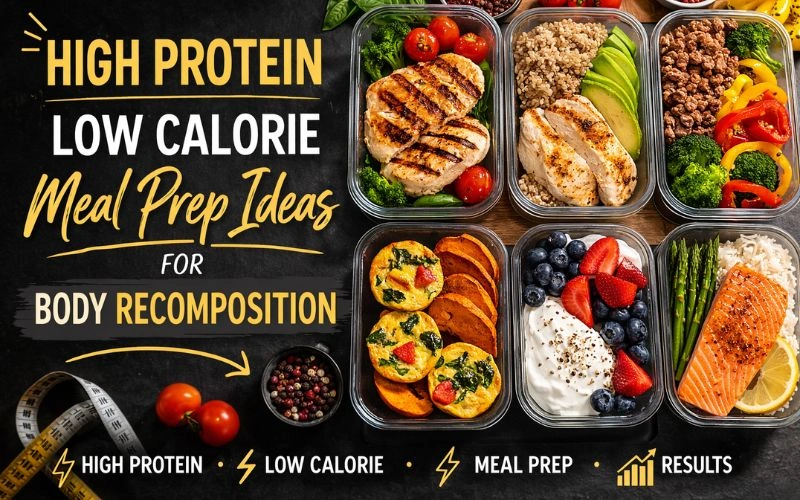
Body recomposition,simultaneously losing fat while building muscle,represents the holy grail of fitness transformations. Unlike simple weight loss or pure muscle building, recomposition requires precise nutritional strategy where every calorie counts and protein intake becomes paramount. For Pakistani fitness enthusiasts juggling busy schedules with ambitious body goals, meal prepping high-protein, low-calorie meals isn’t just convenient,it’s the cornerstone of success. When you control your nutrition through strategic meal preparation, you eliminate guesswork, avoid impulsive eating decisions, and ensure your body receives exactly what it needs to shed fat while preserving or building lean muscle.
This comprehensive guide provides practical, Pakistani-friendly meal prep ideas specifically designed for body recomposition. You’ll discover exact recipes with macro breakdowns, strategic timing recommendations, and practical preparation techniques that fit real life. Whether you’re meal prepping for the entire week or just planning tomorrow’s nutrition, these ideas will help you stay on track without sacrificing taste or spending hours in the kitchen daily.
Table of Contents
Understanding Body Recomposition Nutrition Requirements
Before diving into specific meal prep ideas, you need to understand the unique nutritional demands of body recomposition. This isn’t standard dieting,it’s a calculated approach that requires precise macronutrient ratios and strategic calorie management.
Why High Protein Matters for Recomposition
Protein serves multiple critical functions during body recomposition that make it non-negotiable. When you’re in a caloric deficit (necessary for fat loss), your body looks for energy sources,and unfortunately, muscle tissue is fair game unless you give your body compelling reasons to preserve it. High protein intake sends powerful signals to maintain muscle mass even during fat loss.
Optimal protein targets for recomposition:
- 2.0-2.4 grams per kilogram of body weight daily (higher end during aggressive fat loss)
- For a 70kg person: 140-168 grams of protein daily
- Distributed across 4-5 meals for optimal muscle protein synthesis
- Each meal containing 30-40 grams of complete protein
High protein also increases satiety, helping you feel fuller on fewer calories,crucial when you’re eating below maintenance. Additionally, protein has the highest thermic effect of all macronutrients, meaning your body burns more calories digesting protein compared to carbs or fats. Combined with strategic supplementation like whey protein, hitting these targets becomes manageable even with busy schedules.
The Low-Calorie Component: Creating the Right Deficit
Body recomposition requires a modest caloric deficit,enough to promote fat loss but not so aggressive that muscle loss becomes inevitable. The sweet spot typically falls between 300-500 calories below your maintenance level, creating slow but sustainable fat loss of 0.5-1% body weight per week while allowing muscle building to continue.
Key principles for low-calorie meal prep:
- Prioritize protein and fiber to maximize satiety per calorie
- Use volume eating strategies,large portions of low-calorie-density foods
- Include strategic fats for hormone health and satisfaction (but measure carefully)
- Time carbohydrates around training for performance and recovery
Essential Meal Prep Equipment and Planning Strategy
Successful meal prep requires minimal investment in the right tools and a systematic approach to planning. Before we explore specific meal ideas, let’s establish the foundation that makes consistent meal preparation sustainable rather than overwhelming.
Must-Have Equipment
- Food storage containers: Invest in quality glass or BPA-free plastic containers with dividers. Aim for 10-15 containers in various sizes for different meal types.
- Digital food scale: Non-negotiable for body recomposition. Measuring portions by eye leads to significant calorie errors that sabotage progress.
- Meal prep containers: 3-compartment containers work perfectly for balanced meals,protein, carbs, and vegetables each get their section.
- Basic cooking equipment: Large pots for batch cooking grains, multiple baking sheets for roasting, and a good non-stick pan for efficient protein preparation.
The Weekly Prep Blueprint
Successful meal preppers follow a systematic approach rather than randomly cooking. Dedicate 2-3 hours one day per week (Sunday works for most) to prepare your foundational components:
- Batch cook 3-4 protein sources (different preparations for variety)
- Prepare 2-3 carbohydrate sources (rice, sweet potato, whole wheat roti)
- Wash, chop, and roast 4-5 types of vegetables
- Portion everything into containers with labels showing macros
- Store strategically,meals for days 1-3 in fridge, days 4-7 in freezer
High-Protein Breakfast Meal Prep Ideas
Starting your day with substantial protein sets the tone for successful body recomposition. These breakfast meal prep ideas deliver 30-40 grams of protein while keeping calories controlled, ensuring you break your overnight fast with exactly what your muscles need.
Egg White Veggie Scramble Cups
These portable protein powerhouses can be made in muffin tins for perfect portions. Mix egg whites with vegetables, bake, and you have grab-and-go breakfasts for the entire week.
Recipe (makes 6 servings):
- 12 whole eggs + 12 egg whites (or 20 whole eggs if using full eggs)
- 2 cups chopped spinach
- 1 cup diced bell peppers
- 1/2 cup diced onions
- 100g low-fat cheese (optional, adds calories)
- Salt, pepper, and spices to taste
Macros per serving: 32g protein, 8g carbs, 5g fat = 210 calories
Prep instructions: Whisk eggs with vegetables, pour into greased muffin tins, bake at 180°C for 20-25 minutes. Store in refrigerator, microwave for 45-60 seconds to reheat. Pair with 1-2 pieces of whole wheat toast for additional carbohydrates if your calorie budget allows.
Overnight Protein Oats
Perfect for those who prefer not to cook in the morning. Prepare multiple jars on Sunday, and breakfast is ready all week. The protein powder transforms basic oats into a muscle-building meal.
Recipe (per serving):
- 40g rolled oats
- 1 scoop (30g) vanilla or chocolate whey protein isolate
- 200ml unsweetened almond milk or skim milk
- 1 tablespoon chia seeds
- 1/2 cup fresh berries or 1 small banana
- Cinnamon and stevia to taste
Macros per serving: 35g protein, 42g carbs, 8g fat = 380 calories
Prep instructions: Mix all ingredients in mason jars, refrigerate overnight. Lasts 4-5 days. The whey protein isolate ensures you hit protein targets while oats provide sustained energy for morning training or work.
Protein-Packed Lunch Ideas for Body Recomposition
Lunch during body recomposition needs to provide substantial protein while keeping you satisfied through the afternoon without excess calories. These Pakistani-friendly meal prep ideas deliver optimal macros while tasting delicious even after days in the refrigerator.
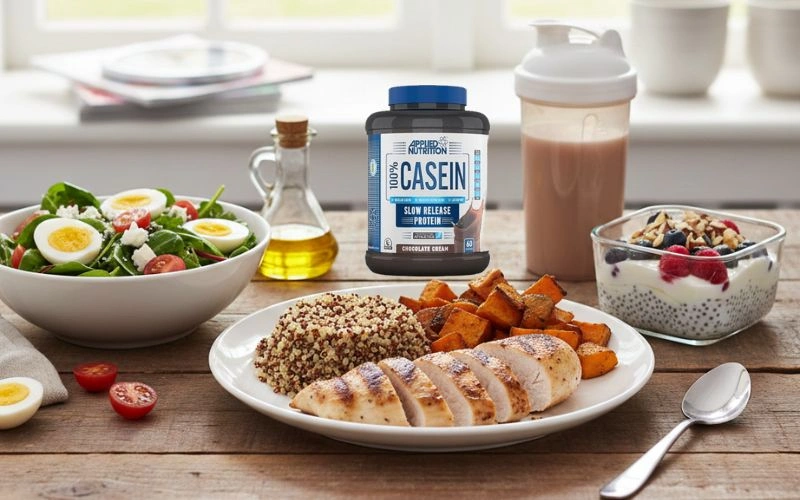
Tandoori Chicken with Cauliflower Rice and Raita
This Pakistani twist on meal prep delivers authentic flavors while maximizing protein and minimizing calories. Cauliflower rice provides volume and fiber without the calorie density of regular rice.
Recipe (makes 5 servings):
- 750g boneless chicken breast, cubed
- 200g low-fat yogurt mixed with tandoori spices
- 2 large cauliflower heads, riced (about 1kg)
- For raita: 250g Greek yogurt, cucumber, mint, salt
- Side salad: mixed greens, tomatoes, cucumbers
Macros per serving: 42g protein, 18g carbs, 6g fat = 290 calories
Prep instructions: Marinate chicken in spiced yogurt for 2+ hours, grill or bake at 200°C for 20 minutes. Pulse cauliflower in a food processor, sauté with minimal oil. Portion into containers with raita on the side. This meal prep favorite provides restaurant-quality taste while hitting perfect recomposition macros.
Lean Beef Kebab Bowls
Ground beef kebabs provide satisfying protein and iron, crucial during caloric restriction. Served over vegetables and a small portion of rice, this meal balances macros perfectly for body recomposition.
Recipe (makes 6 servings):
- 900g extra lean ground beef (90% lean or higher)
- Spices: cumin, coriander, garam masala, ginger, garlic
- 2 cups cooked basmati rice (measured after cooking)
- Mixed roasted vegetables: zucchini, bell peppers, onions
- Low-calorie mint chutney for topping
Macros per serving: 38g protein, 28g carbs, 9g fat = 350 calories
Prep instructions: Mix spices into ground beef, form into kebabs, grill or bake at 200°C for 15-18 minutes. Roast vegetables with spray oil. Portion rice (1/3 cup per serving), vegetables, and 2-3 kebabs into containers. Freezes well for up to 2 months.
Dinner Meal Prep Ideas: Evening Protein Focus
Dinner during body recomposition should emphasize protein while being lighter on carbohydrates (unless you train in the evening). These meal prep ideas ensure you end your day with satisfied hunger, adequate protein intake, and calories that support fat loss without leaving you feeling deprived.
Baked Fish with Roasted Vegetables
Fish provides lean protein with beneficial omega-3 fatty acids. This simple preparation method works with any white fish available in Pakistani markets,tilapia, pomfret, or rohu.
Recipe (makes 5 servings):
- 750g white fish fillets
- Marinade: lemon juice, garlic, herbs, minimal oil
- 800g mixed vegetables: broccoli, green beans, carrots, zucchini
- 1 tablespoon olive oil for roasting vegetables
- Side salad with lemon vinaigrette
Macros per serving: 35g protein, 15g carbs, 6g fat = 260 calories
Prep instructions: Marinate fish for 30 minutes, bake at 180°C for 12-15 minutes until flaky. Roast vegetables at 200°C for 25 minutes. Fish is best consumed within 3 days, so prep only for Monday-Wednesday, then prep fresh batch mid-week.
Chicken Curry with Spinach (Palak Chicken)
This Pakistani favorite adapts perfectly for body recomposition by reducing oil and increasing vegetables. The spinach provides volume, fiber, and micronutrients while keeping calories in check.
Recipe (makes 6 servings):
- 900g boneless chicken breast, cubed
- 500g fresh spinach, pureed
- 200g low-fat yogurt for gravy
- Onions, tomatoes, ginger, garlic, green chilies
- Spices: turmeric, coriander, cumin, garam masala
- 2 tablespoons oil (for entire batch)
Macros per serving: 40g protein, 12g carbs, 7g fat = 280 calories
Prep instructions: Cook using minimal oil, focusing on spices for flavor rather than fat. Portion into containers. Serve with 1-2 pieces of roti or 1/2 cup rice if your calorie budget allows. This reheats beautifully and actually tastes better after flavors meld overnight.
High-Protein Snack Prep for Hunger Management
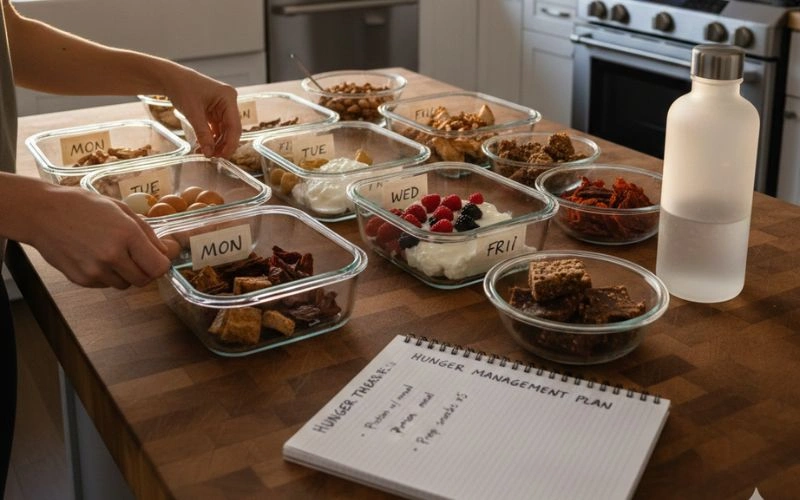
Snacks during body recomposition serve a critical purpose: preventing extreme hunger that leads to impulsive, calorie-dense choices. Having pre-portioned, high-protein snacks readily available keeps you on track between meals without derailing your calorie deficit.
Protein-Packed Snack Ideas
- Greek yogurt bowls: 200g Greek yogurt (0% fat) = 20g protein, 8g carbs, 0g fat = 110 calories. Add berries and a sprinkle of nuts for minimal additional calories but significant satisfaction.
- Hard-boiled eggs: Prep 2 dozen eggs on Sunday. Each egg = 6g protein, 0g carbs, 5g fat = 70 calories. Keep 6-8 in the fridge for the week, perfect portable protein.
- Protein shake with fruit: 1 scoop whey protein isolate + 1 small banana = 28g protein, 28g carbs, 2g fat = 240 calories. Quick, convenient, and hits protein targets effortlessly.
- Chicken breast strips: Bake seasoned chicken breast strips, portion into snack-size containers. 100g = 31g protein, 0g carbs, 3.6g fat = 165 calories.
- Cottage cheese with vegetables: 150g low-fat cottage cheese with cucumber and tomatoes = 18g protein, 6g carbs, 3g fat = 120 calories. Prep containers with pre-cut vegetables for instant snacks.
Strategic Meal Timing for Body Recomposition
When you eat matters almost as much as what you eat during body recomposition. Strategic meal timing optimizes muscle protein synthesis, training performance, and fat burning throughout the day.
Pre-Workout Nutrition Timing
Consume a moderate protein and carbohydrate meal 2-3 hours before training. This provides energy for performance while ensuring amino acids are available during and after your workout. If training early in the morning, a protein shake 30-45 minutes pre-workout prevents training in a completely fasted state.
Example pre-workout meals: Overnight oats with protein powder, chicken with rice and vegetables, or eggs with toast. Consider adding creatine monohydrate to your pre-workout meal for enhanced performance and muscle building.
Post-Workout Anabolic Window
The post-workout meal is critical for body recomposition. Aim for 30-50g protein and 40-60g carbohydrates within 60-90 minutes after training. This combination maximizes muscle protein synthesis while replenishing glycogen stores.
Best post-workout meal prep options: Chicken with rice and vegetables, protein shake with banana and oats, or lean beef with sweet potato. The fast-absorbing protein kickstarts recovery while carbohydrates prevent muscle breakdown and support adaptation.
Vegetarian and Alternative Protein Sources
Body recomposition isn’t limited to meat-eaters. Pakistani vegetarian cuisine offers numerous high-protein options that work perfectly for meal prep when approached strategically.
Paneer-Based Meal Prep
Paneer provides excellent protein for vegetarians. Choose a low-fat paneer to keep calories controlled while maximizing protein content.
-
- Paneer tikka with vegetables: 150g low-fat paneer = 27g protein, 6g carbs, 12g fat = 245 calories. Marinate in spiced yogurt, grill with vegetables, portion into containers.
- Paneer bhurji: Scrambled paneer with vegetables and spices. High protein, customizable heat level, reheats perfectly. Add minimal oil to keep calories in check.
- Lentil and Legume Options: Dal (lentils) provides plant-based protein with fiber. While not as protein-dense as meat, combining lentils with whole grains creates complete amino acid profiles.
- High-protein dal meal prep: 1 cup cooked dal (moong or masoor) = 18g protein, 40g carbs, 1g fat = 230 calories. Prepare a large batch, portion with vegetables and small amount of rice or roti.
- Chickpea curries: Chana masala provides substantial protein and fiber. 1 cup cooked chickpeas = 15g protein, 45g carbs, 4g fat = 270 calories. Prep in batches, freezes excellently.
Macro Tracking and Portion Control Tips
Even perfectly prepped meals won’t deliver body recomposition results if portions are incorrect. Accurate tracking and portion control separate successful transformations from disappointing plateaus.
Essential Tracking Strategies
Accurate tracking is the foundation of successful fat loss, muscle gain, or body recomposition.
- Weigh everything raw: Protein and grains should be weighed before cooking for accuracy. Cooked weights vary dramatically based on water content and cooking method.
- Label containers clearly: Write protein/carbs/fat/calories on each container. This eliminates guesswork and ensures you’re hitting daily targets.
- Use measuring cups consistently: Once you’ve weighed portions several times, measuring cups work for speed. But verify with scale periodically,portion creep is real.
- Track cooking oils accurately: This is where most people unknowingly add hundreds of calories. Measure oil in tablespoons, not by pouring. Consider spray oils or non-stick pans to minimize added fats.
Supplementation to Enhance Your Meal Prep Strategy
While whole food meal prep forms your nutritional foundation, strategic supplementation fills gaps and enhances results during body recomposition. These aren’t magic pills,they’re tools that optimize an already solid nutrition plan.
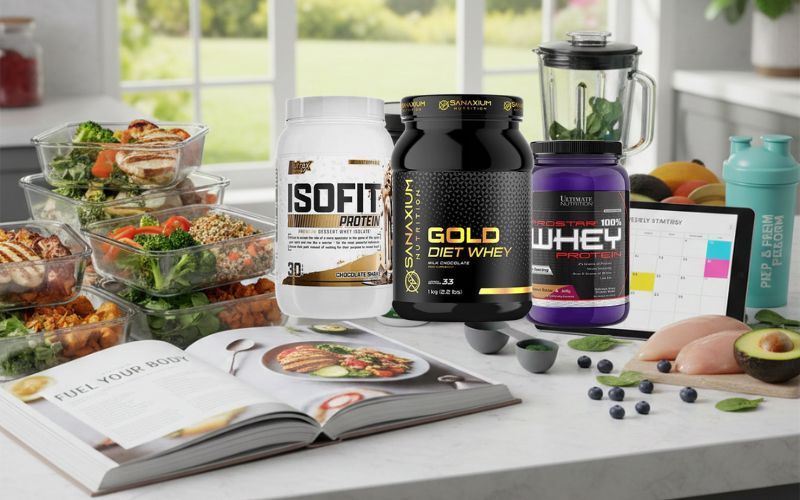
- Whey protein isolate: Essential for hitting protein targets conveniently. Quality whey protein provides 25-28g protein per serving with minimal calories, perfect for between meals or post-workout.
- Creatine monohydrate: 5g daily maintains strength and muscle mass during caloric deficit. Zero calories, highly researched, incredibly effective for body recomposition.
- Omega-3 fatty acids: Support fat metabolism and reduce inflammation. Fish oil supplements ensure adequate intake even when reducing dietary fat.
- Multivitamin: Caloric restriction can create micronutrient gaps. A quality multivitamin ensures nutritional adequacy while dieting, supporting optimal body function during recomposition.
Putting It All Together: Your Weekly Meal Prep Action Plan
Successful body recomposition through meal prep isn’t about perfection,it’s about consistency with a strategic approach. The meal prep ideas provided give you a framework, but personalizing them to your preferences, schedule, and macronutrient targets makes them sustainable long-term.
Start by selecting 2-3 breakfast options, 3-4 lunch/dinner combinations, and 2-3 snack types that appeal to you. Dedicate your Sunday afternoon to preparing these in bulk,cook all proteins, prepare all carbohydrate sources, chop and roast all vegetables. Portion everything into labeled containers with macro counts clearly marked.
The beauty of high-protein, low-calorie meal prep for body recomposition lies in its flexibility. Mix and match components throughout the week to prevent boredom while maintaining precise macro control. Monday’s tandoori chicken can be paired with cauliflower rice, Tuesday with regular rice, Wednesday with roasted vegetables only,all pre-prepped and ready.