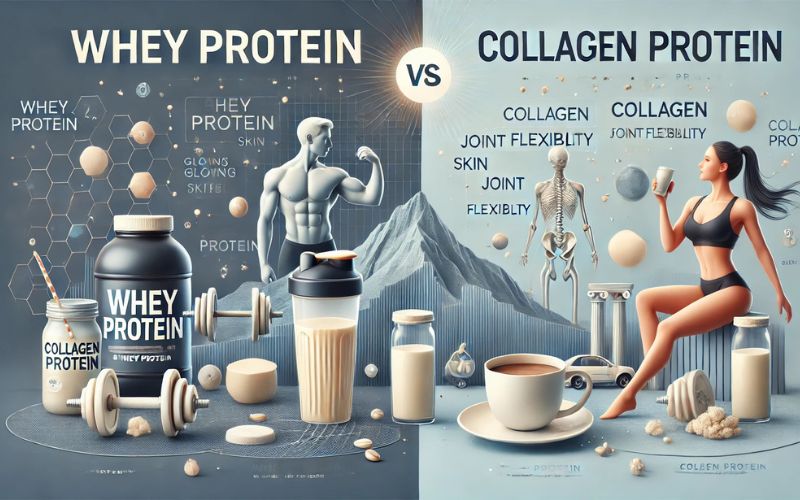














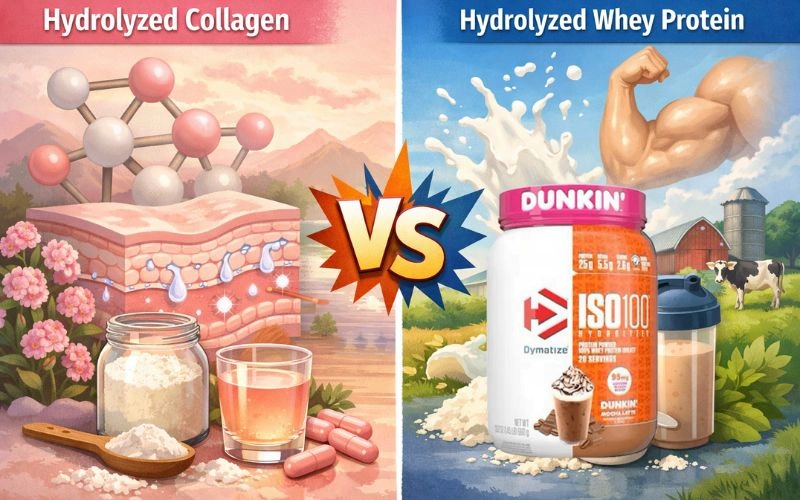
In the world of protein supplements, two terms frequently cause confusion: hydrolyzed collagen and hydrolyzed whey protein. While both share the word ‘hydrolyzed’ and offer valuable benefits, they’re fundamentally different proteins serving distinct purposes in your health and fitness journey.
The main difference between Hydrolyzed Whey Protein and Hydrolyzed Collagen lies in their purpose: Hydrolyzed Whey is a complete protein designed for muscle repair and growth, while Hydrolyzed Collagen is an incomplete protein specifically for skin elasticity, hair strength, and joint health. While both are ‘hydrolyzed’ for rapid absorption,
Whey provides the essential Leucine needed for post-workout recovery, whereas Collagen provides the Glycine and Proline necessary for anti-aging and connective tissue support. For the best results in your fitness journey, Whey is for your muscles, and Collagen is for your body’s structural health.
Table of Contents
What Does ‘Hydrolyzed’ Actually Mean?
Before getting into the specific differences, it’s essential to understand what ‘hydrolyzed’ means in the context of protein supplements. This shared characteristic is often the source of confusion between these two distinct products.
The Hydrolysis Process
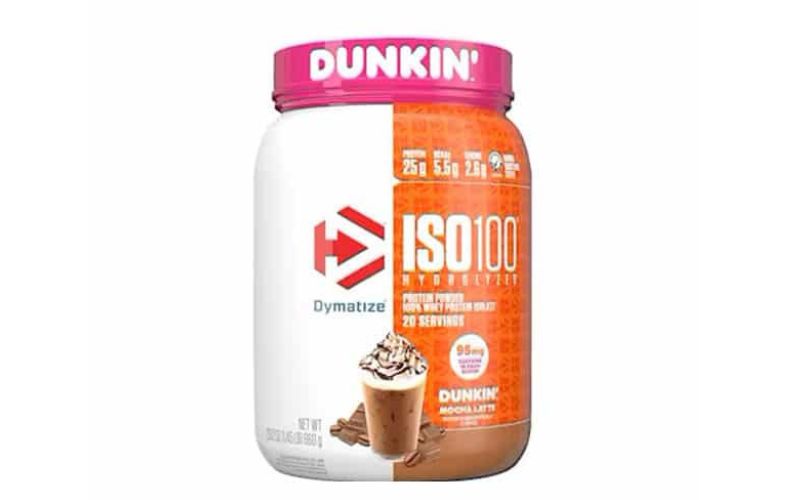
Hydrolysis is a chemical process that uses water, enzymes, or acids to break down large protein molecules into smaller peptide chains and amino acids. Think of it as pre-digestion,the complex protein structure is broken into more easily absorbed fragments before you even consume it. This process occurs naturally in your digestive system, but hydrolyzed supplements have already undergone this breakdown during manufacturing.
Key benefits of hydrolysis for any protein:
- Faster absorption into the bloodstream since molecules are already broken down
- Reduced digestive burden as your body requires less enzymatic work
- Better solubility in liquids, making supplements easier to mix
- Lower risk of digestive discomfort compared to intact protein forms
However, while both hydrolyzed collagen and hydrolyzed whey protein undergo this process, the similarities largely end there. The source material, amino acid profile, biological effects, and optimal uses differ dramatically.
Source and Origin: Where These Proteins Come From
The fundamental difference between hydrolyzed collagen and hydrolyzed whey protein lies in their source material. This origin story determines everything else about these supplements,from their amino acid profiles to their biological functions.
Hydrolyzed Collagen: Derived from Connective Tissue
Collagen is the most abundant protein in the human body, comprising about 30% of total protein content. It’s found in bones, skin, tendons, ligaments, and cartilage,essentially the ‘glue’ that holds your body together. Collagen supplements are extracted from animal sources, typically:
- Bovine collagen (from cow bones, skin, and connective tissue)
- Marine collagen (from fish skin and scales)
- Porcine collagen (from pig skin and bones)
- Chicken collagen (from cartilage and bones)
Through hydrolysis, these collagen sources are broken down into smaller peptides, creating what’s commonly called collagen peptides or hydrolyzed collagen. The resulting product is highly bioavailable and easily absorbed, designed specifically to support the body’s structural proteins.
Hydrolyzed Whey Protein: Derived from Milk
Whey protein is one of the two primary proteins found in cow’s milk (the other being casein). During cheese production, milk separates into solid curds and liquid whey,the whey is then collected, filtered, and processed into protein powder. Whey protein comes in several forms:
- Whey concentrate (70-80% protein with some lactose and fat)
- Whey isolate (90%+ protein with minimal lactose and fat)
- Whey hydrolysate (pre-digested for rapid absorption)
Hydrolyzed whey protein represents the most processed form, where enzymes break down the whey into smaller peptides. This creates a fast-absorbing protein designed specifically for muscle building, recovery, and overall protein intake,fundamentally different goals than collagen.
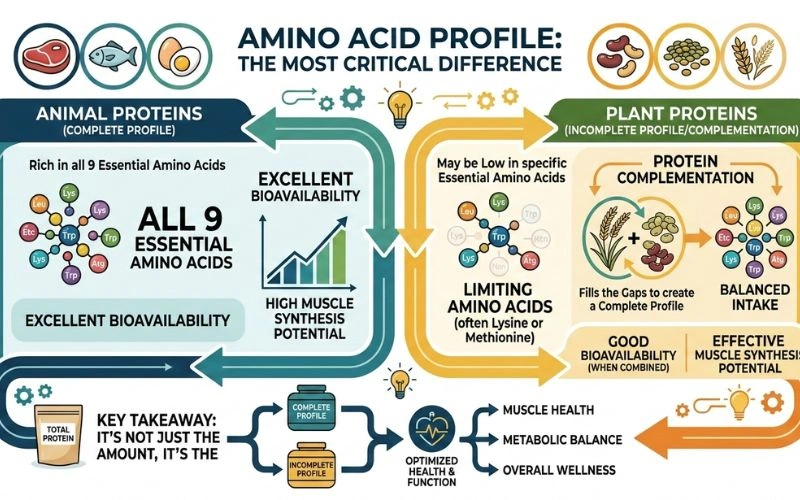
Amino Acid Profile: The Most Critical Difference
Perhaps the most important distinction between these two proteins lies in their amino acid composition. This difference fundamentally determines what each protein can and cannot do in your body.
Collagen’s Unique Amino Acid Structure
Collagen has a distinctive amino acid profile dominated by three amino acids that make up nearly 50% of its content:
- Glycine (33%): The smallest amino acid, crucial for collagen synthesis, joint health, and cellular repair. Glycine is also important for sleep quality and digestive health.
- Proline (12%): Essential for skin elasticity, wound healing, and maintaining cardiovascular health. Proline helps rebuild damaged tissue.
- Hydroxyproline (10%): Almost exclusively found in collagen, this modified amino acid is critical for collagen stability and function.
- Critical limitation: Collagen is NOT a complete protein. It lacks or has very low amounts of essential amino acids, particularly tryptophan. This means collagen cannot serve as your primary protein source for muscle building or meeting daily protein requirements.
- Think of collagen supplements as a specialized support protein that targets specific tissues (skin, joints, bones) rather than a general-purpose muscle-building protein.
Whey’s Complete Amino Acid Profile
Whey protein is a complete protein containing all nine essential amino acids in optimal ratios for human needs. It’s particularly rich in branched-chain amino acids (BCAAs), which are crucial for muscle protein synthesis:
- Leucine (high concentration): The primary trigger for muscle protein synthesis, essential for building and maintaining muscle mass.
- Isoleucine: Supports energy regulation and helps with muscle recovery.
- Valine: Promotes muscle growth and tissue repair.
- Additional essential amino acids: Lysine, methionine, threonine, tryptophan, phenylalanine, and histidine,all in bioavailable forms.
- This complete amino acid profile makes whey protein ideal for muscle building, post-workout recovery, and meeting daily protein requirements,roles that collagen simply cannot fulfill due to its incomplete amino acid profile.
Primary Benefits and Uses: Different Goals, Different Proteins
Understanding what each protein excels at helps you choose the right supplement for your specific health and fitness objectives. These proteins serve complementary,not competing,roles in a comprehensive nutrition strategy.
When to Choose Hydrolyzed Collagen
Collagen shines when your goals center on structural health and tissue maintenance:
- Joint health and mobility: Collagen provides the building blocks for cartilage regeneration, potentially reducing joint pain and improving flexibility. Studies show benefits for osteoarthritis and exercise-related joint discomfort.
- Skin quality and anti-aging: Supplementing with collagen can improve skin elasticity, hydration, and reduce wrinkle depth. The hydroxyproline and proline support your body’s natural collagen production.
- Bone density: Collagen forms the structural framework for bones. Supplementation may support bone mineral density, particularly important as we age.
- Gut health: The glycine in collagen supports the intestinal lining and may help with digestive issues.
- Hair and nail strength: Many users report improvements in hair thickness and nail quality with consistent collagen supplementation.
- Best for: People over 30 (when natural collagen production declines), athletes with joint issues, those concerned with skin aging, individuals with digestive sensitivities, or anyone looking to support connective tissue health.
When to Choose Hydrolyzed Whey Protein
Whey protein is your go-to when muscle, strength, and overall protein intake are priorities:
- Muscle building and growth: The high leucine content and complete amino acid profile make whey ideal for stimulating muscle protein synthesis and building lean mass.
- Post-workout recovery: Hydrolyzed whey’s rapid absorption makes it perfect for the post-training window when muscles need quick protein delivery.
- Weight management: Whey protein increases satiety and supports lean muscle retention during calorie restriction, crucial for effective fat loss.
- Meeting protein requirements: Whey can serve as a primary protein source to help you reach daily protein goals, unlike collagen.
- Convenience and versatility: Quick protein supplementation for busy schedules, between-meal protein boosts, or when whole food protein isn’t available.
- Best for: Athletes and bodybuilders, people trying to gain weight and muscle, individuals struggling to meet protein requirements through food alone, or anyone prioritizing muscle maintenance and recovery.
Absorption Rate and Bioavailability
Both proteins are hydrolyzed for enhanced absorption, but they work differently once consumed. Understanding these differences helps optimize timing and usage for maximum benefit.
Hydrolyzed Collagen Absorption
Hydrolyzed collagen peptides are rapidly absorbed and can appear in the bloodstream within 30-60 minutes of consumption. Interestingly, studies using radioactive tracers have shown that collagen peptides don’t just break down into individual amino acids,they can be transported as intact di-peptides and tri-peptides to target tissues.
These peptides accumulate in skin, cartilage, and bone tissue, where they signal fibroblast cells to produce new collagen. This isn’t just about providing amino acids,it’s about triggering your body’s own collagen synthesis mechanisms. Peak blood levels occur 1-2 hours after consumption and can remain elevated for several hours.
Hydrolyzed Whey Absorption
Hydrolyzed whey protein is absorbed even more rapidly than hydrolyzed collagen, with amino acids entering the bloodstream within 15-30 minutes. This makes it one of the fastest-absorbing protein sources available. The pre-digested peptides require minimal digestive work, allowing for quick delivery to muscle tissue.
Peak amino acid levels occur 30-60 minutes post-consumption, with leucine,the key muscle-building amino acid,spiking rapidly to trigger muscle protein synthesis. This rapid absorption makes hydrolyzed whey particularly valuable immediately after training when nutrient timing can enhance recovery and adaptation.
Taste, Texture, and Mixability
Practical considerations like taste and texture significantly impact long-term supplement adherence. Even the best supplement won’t help if you can’t consistently consume it.
Collagen’s Practical Characteristics
Hydrolyzed collagen is remarkably neutral-tasting and virtually flavorless when properly processed. High-quality collagen dissolves completely in both hot and cold liquids without clumping, making it incredibly versatile:
- Mix into coffee, tea, or smoothies without affecting taste
- Add to soups, broths, or sauces for protein boost
- Bake into recipes without texture changes
- No chalky texture or artificial flavoring needed
This neutrality makes collagen easier to incorporate into daily routines without feeling like you’re taking a supplement. Many people simply add it to their morning coffee or tea.
Whey’s Practical Characteristics
Hydrolyzed whey protein has a distinctive taste that can be challenging. The hydrolysis process exposes peptide bonds that create bitterness. Most brands add flavoring to mask this, but the characteristic whey taste remains:
- Typically consumed as a shake rather than mixed into foods
- Requires flavoring (chocolate, vanilla, strawberry are most common)
- Can be slightly bitter even with flavoring
- Creates some foam when mixed vigorously
Quality matters significantly with whey,premium brands invest in better flavoring technology. Consider trying different whey protein brands to find one you genuinely enjoy, as taste preference varies significantly between individuals.
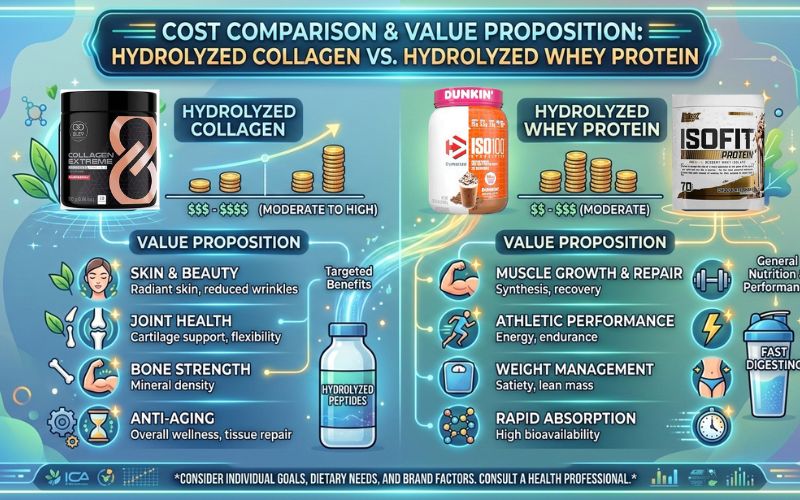
Cost Comparison and Value Proposition
Budget considerations play a significant role in supplement choices, especially in Pakistan where imported supplements represent a substantial investment. Understanding the cost-benefit ratio helps you allocate your supplement budget wisely.
Collagen Pricing and Serving Cost
Hydrolyzed collagen supplements in Pakistan typically range from PKR 3,500 to 8,000 for a month’s supply, depending on source (marine is more expensive than bovine) and brand quality. Per-serving cost averages PKR 120-250.
Typical serving size is 10-20 grams daily, providing 10-20 grams of protein. While this seems expensive per gram of protein, remember you’re not buying collagen for protein content,you’re investing in specific structural health benefits that whey can’t provide.
Whey Protein Pricing and Serving Cost
Hydrolyzed whey is generally more expensive than regular whey but provides better value per gram of usable protein. Prices range from PKR 8,000 to 15,000 for a 2kg container (40-60 servings), with per-serving cost of PKR 130-250.
Each 30-gram serving typically provides 24-26 grams of protein,significantly more protein per serving than collagen. When calculated as cost per gram of complete, muscle-building protein, whey offers superior value for meeting protein requirements.
Can You Take Both Together? The Synergistic Approach
Rather than viewing hydrolyzed collagen and hydrolyzed whey as competing options, consider them complementary supplements that serve different biological roles. Many health-conscious individuals benefit from using both strategically.
Benefits of Combining Both Proteins
Using both supplements provides comprehensive support:
- Complete protein spectrum: Whey provides muscle-building amino acids while collagen supplies structural amino acids your body needs.
- Athletic performance: Whey supports muscle adaptation while collagen protects joints from training stress.
- Aging support: As you age, both muscle mass (sarcopenia) and collagen production decline. Addressing both with targeted supplementation provides comprehensive aging support.
- Recovery optimization: Whey rebuilds muscle tissue while collagen repairs connective tissue, tendons, and ligaments.
- Many serious athletes and fitness enthusiasts use whey protein post-workout for muscle recovery and collagen in the morning or evening for joint and skin support.
Optimal Timing Strategy
If using both supplements, strategic timing maximizes benefits:
- Morning collagen: Take collagen with your morning coffee or tea on an empty stomach for optimal absorption. The glycine also supports focus and energy.
- Post-workout whey: Consume whey within 30-60 minutes after training to maximize muscle protein synthesis and recovery.
- Evening collagen (optional): Some people take a second collagen dose before bed, as glycine may support sleep quality while providing overnight tissue repair support.
- Between-meal whey: Use whey as a convenient protein source between meals to maintain amino acid levels and meet daily protein goals.
Choosing the Right Form for Your Needs
Now that you understand the fundamental differences, here’s how to decide which supplement,or combination,best serves your specific situation and goals.
Choose Primarily Collagen If:
- You’re over 30 and concerned about skin aging or joint health
- You experience joint pain or stiffness, especially related to exercise
- Skin quality, elasticity, and anti-aging are primary concerns
- You’re already meeting protein requirements through food and other supplements
- Bone density and osteoporosis prevention are important (especially for women)
- You prefer a completely neutral-tasting supplement that disappears into beverages
Choose Primarily Whey If:
Whey protein is the most effective choice when your goal is maximizing muscle growth, recovery, and overall protein efficiency.
- Building muscle mass or strength is your primary goal
- You struggle to meet daily protein requirements through food alone
- Post-workout recovery and adaptation are priorities
- You’re trying to lose fat while maintaining lean muscle mass
- You need a complete protein source for meal replacement or convenience
- You have no issues with dairy-based supplements and their taste
Use Both If:
- You’re a serious athlete concerned with both performance and longevity
- You train intensely and experience both muscle soreness and joint stress
- You’re over 40 and prioritizing both muscle maintenance and tissue health
- Budget allows for comprehensive supplementation
- You want holistic health support covering multiple biological systems
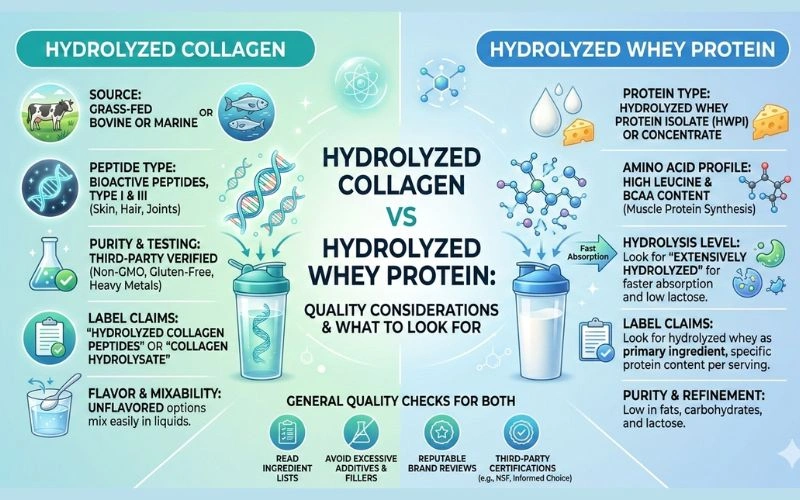
Quality Considerations and What to Look For
Whether you choose collagen, whey, or both, quality matters significantly. Not all supplements are created equal, and the Pakistani market includes both excellent products and subpar imitations.
Collagen Quality Markers
High-quality collagen supplements are defined by specific measurable standards that determine their effectiveness and safety.
- Molecular weight: Look for hydrolyzed collagen with low molecular weight (2,000-5,000 Daltons) for optimal absorption.
- Source transparency: Quality brands clearly state whether collagen is bovine, marine, or other sources, with information about sourcing standards.
- Type specification: Collagen comes in types (I, II, III are most common). Type I is best for skin and bones, Type II for joints, Type III for skin elasticity.
- Purity: Premium collagen should be pure peptides without fillers, additives, or unnecessary ingredients.
- Third-party testing: Look for products tested for heavy metals, contaminants, and amino acid content verification.
Whey Quality Markers
Selecting a high-quality whey protein requires attention to purity, processing methods, and verified nutritional standards.
- Degree of hydrolysis: Should be 15-30% for optimal balance between absorption speed and taste.
- Protein content: Quality hydrolyzed whey should provide at least 24g protein per 30g serving (80%+ protein by weight).
- Lactose content: Should be minimal (<1g per serving) since hydrolysis typically includes additional filtration.
- Amino acid profile: Look for products that list full amino acid breakdown, particularly leucine content (should be 2.5g+ per serving).
- Certifications: Halal certification, informed sport testing, or other quality certifications add credibility. Check for authentic imported supplements with proper documentation.
Making Your Final Decision
The difference between hydrolyzed collagen and hydrolyzed whey protein boils down to fundamentally different purposes. Whey is your muscle-building, protein-intake workhorse,a complete protein designed to support muscle growth, recovery, and overall protein requirements. Collagen is your structural health specialist,targeting skin, joints, bones, and connective tissue with amino acids your body specifically needs for these purposes.
For most people serious about fitness and health, the ideal approach combines both: whey protein for muscle and protein intake, collagen for joints, skin, and structural health. If budget requires choosing one, let your primary goals guide you,muscle building points to whey, while joint pain and aging concerns point to collagen.
Remember that supplements work best as part of a comprehensive approach including proper nutrition, consistent training, adequate sleep, and strategic supplementation. Consider pairing your protein supplements with creatine monohydrate, omega-3 fatty acids, and quality multivitamins for comprehensive health support.