













Managing body fat is not just about eating less it’s about eating smarter. One of the most effective tools for appetite control and sustainable fat loss is whey protein for satiety and fat loss. When used correctly, whey protein helps you feel fuller for longer, protects lean muscle, and supports a calorie deficit without the constant struggle of hunger.
This article explains how whey protein works, why it’s uniquely effective for satiety, and how to use it strategically for long-term fat loss.
Table of Contents
Highlights
- Whey protein improves fullness and reduces hunger-driven snacking
- Supports fat loss while preserving lean muscle mass
- Helps maintain metabolism during calorie restriction
- Backed by strong scientific evidence
- Easy to integrate into daily diets for sustainable results
The Satiety Factor: How Whey Protein Keeps Hunger at Bay
Satiety plays a central role in fat loss. When hunger hormones are uncontrolled, sticking to a calorie deficit becomes difficult. Whey protein helps regulate appetite by influencing key hormones involved in hunger and fullness.
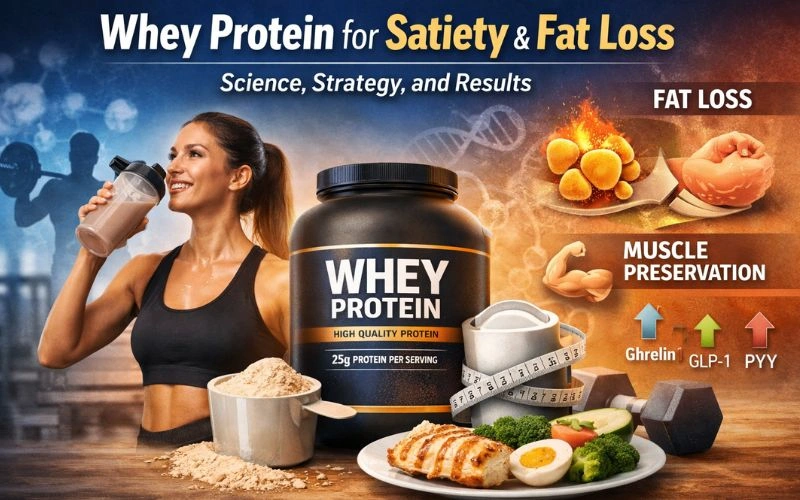
Protein intake lowers ghrelin, the hormone responsible for triggering hunger, while increasing satiety hormones such as peptide YY (PYY) and GLP-1. Whey protein digests relatively quickly yet triggers a strong hormonal response, helping you feel full sooner and stay satisfied longer.
Compared to carbohydrates or fats, whey protein delivers greater satiety per calorie. This makes whey protein for satiety and fat loss especially useful for individuals who struggle with portion control or late-night cravings.
Whey Protein Efficiency: A Dual Approach to Weight Loss
Effective fat loss requires two things: reducing fat mass and preserving muscle. Whey protein supports both.
During calorie restriction, the body may break down muscle tissue for energy. Whey protein provides essential amino acids especially leucine that stimulate muscle protein synthesis. Preserving muscle is critical because muscle tissue helps maintain metabolic rate.
At the same time, improved satiety reduces overall calorie intake naturally. This dual action makes whey protein uniquely effective for fat loss compared to low-protein dieting strategies that often result in muscle loss and metabolic slowdown.
Evidence-Based Insights: Whey Protein’s Effectiveness in Weight Management
Research consistently shows that higher-protein diets lead to greater fat loss and better body composition outcomes than low-protein diets, even when total calories are similar.
Clinical studies demonstrate that individuals consuming whey protein experience:
- Reduced appetite throughout the day
- Lower spontaneous calorie intake
- Better muscle retention during weight loss
These outcomes highlight why whey protein for satiety and fat loss is widely recommended in evidence-based nutrition plans.
Optimal Dosage and Timing for Satiety and Fat Loss
Moderation matters. More protein does not automatically mean better results.
- Per serving: 20–30 grams of whey protein
- Daily intake: 1.6–2.2 g of protein per kg of body weight
Best times to use whey protein:
- Morning: Reduces hunger later in the day
- Before meals: Helps control portion sizes
- Post-workout: Preserves muscle during fat loss
- Evening: Can reduce late-night snacking
Overconsumption may increase calories unnecessarily, which can stall fat loss.
Whey Protein vs Other Protein Sources for Fat Loss
Whey protein stands out due to its amino acid profile and digestibility.
- Whey vs plant protein: Whey generally provides higher leucine content and better muscle preservation
- Whey vs casein: Casein digests slowly, but whey triggers stronger satiety hormones
- Whey vs whole foods: Whole foods are essential, but whey offers convenience and precise protein control
For structured fat-loss plans, whey protein offers unmatched efficiency.
Common Mistakes That Reduce Fat-Loss Results
Many people misuse whey protein and fail to see results due to avoidable errors:
- Treating whey as a meal replacement without calorie awareness
- Consuming multiple servings without adjusting food intake
- Ignoring total daily calories
- Using poor-quality or counterfeit supplements
Whey protein works best as a tool, not a shortcut.
Who Should Use Whey Protein for Satiety and Fat Loss
Whey protein is suitable for a wide range of individuals:
- Beginners starting weight-loss journeys
- Athletes during cutting phases
- Women aiming for body recomposition
- Older adults preserving muscle while losing fat
- Anyone struggling with appetite control
Its flexibility makes it practical across age and fitness levels.
Formulating for Success
Whey protein’s effectiveness has made it a cornerstone of weight-management formulations. Common forms include:
- Whey concentrate: Balanced and affordable
- Whey isolate: Lower lactose, higher protein purity
- Hydrolyzed whey: Faster digestion and absorption
Clean formulation, digestibility, and protein quality are key factors for optimal results.
Is Whey Protein Safe for Long-Term Fat Loss?
For healthy individuals, whey protein is safe when consumed within recommended ranges. Concerns about kidney damage are unsupported in people without pre-existing kidney disease.
Those with lactose intolerance should choose whey isolate. As with any dietary change, individuals with medical conditions should consult a healthcare professional.
FAQs – Whey Protein for Satiety and Fat Loss
Does whey protein reduce belly fat?
Whey protein does not target specific fat areas, but it supports overall fat loss by improving satiety and preserving muscle, which helps reduce total body fat over time.
Can whey protein replace meals for weight loss?
Occasionally, yes but regular meal replacement without planning can lead to nutrient gaps. Whey works best alongside balanced whole-food meals.
Is whey protein effective without exercise?
Yes, whey protein can aid appetite control without exercise, but combining it with resistance training produces significantly better fat-loss and body composition results.
Is whey protein suitable for women?
Absolutely. Whey protein supports satiety, lean muscle, and metabolic health for women without causing unwanted bulk.
Conclusion
Whey protein for satiety and fat loss is not a magic solution, but it is one of the most scientifically supported tools for sustainable weight management. By improving fullness, preserving muscle, and supporting calorie control, whey protein makes fat loss more manageable and realistic.
When combined with mindful eating, proper dosing, and consistency, whey protein can play a powerful role in long-term health and body composition success.
If you’re looking to incorporate whey protein for satiety and fat loss into your routine with confidence, explore trusted, high-quality whey protein options at Nutritional World.