












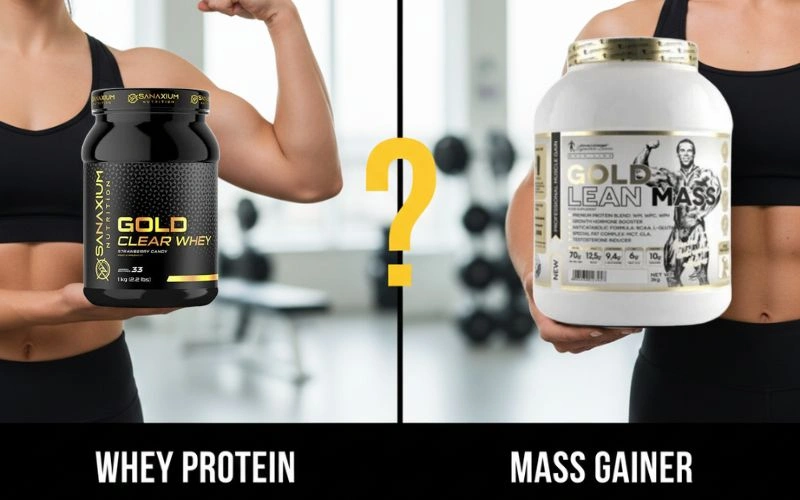
Women today are more informed than ever about fitness, nutrition, and the supplements that can support their body goals. Some want a lean, toned physique, while others are focused on healthy weight gain or building strength. This is precisely where confusion tends to begin: should women choose whey protein or a mass gainer?
While both supplements support muscle repair and recovery, they serve very different purposes and choosing the wrong one can lead to unwanted fat gain, digestive discomfort, or results that do not match your goal. This guide breaks down whey protein vs mass gainer for women in practical terms, helping you select the right powder based on your body type, training routine, metabolism, and lifestyle.
Table of Contents
What Is Whey Protein and How Does It Benefit Women?
Whey protein is one of the most studied and widely used supplements in fitness nutrition. Before deciding whether it is the right choice for you, understanding exactly what it is and what it does inside the body helps you use it more confidently and effectively.
Whey protein is a fast-digesting, high-quality complete protein derived from milk. It contains all nine essential amino acids, with a particularly high concentration of leucine, which plays a key role in triggering muscle protein synthesis and supporting muscle repair after training. For women, whey protein is most commonly used to meet daily protein requirements without adding excess calories to the diet.

Most standard whey protein servings provide 20 to 25 grams of protein with relatively low carbohydrates and fats, making them easy to fit into a calorie-controlled plan. This nutritional profile makes whey protein particularly well-suited for women who want to tone their bodies, maintain lean muscle during fat loss, or recover faster from training without increasing their overall calorie intake significantly.
An important point that is often misunderstood: whey protein does not cause women to bulk up. Significant increases in muscle size depend on training intensity, sustained calorie surplus, and testosterone levels, not on protein supplementation alone. Women naturally have much lower testosterone than men, which makes building large muscle mass extremely difficult regardless of how much protein they consume.
What Is a Mass Gainer and When Is It Appropriate for Women?
Mass gainers are a different category of supplement entirely, built for a different purpose and a specific type of user. Understanding what they contain and how they work makes it much easier to determine whether they belong in your nutrition plan.
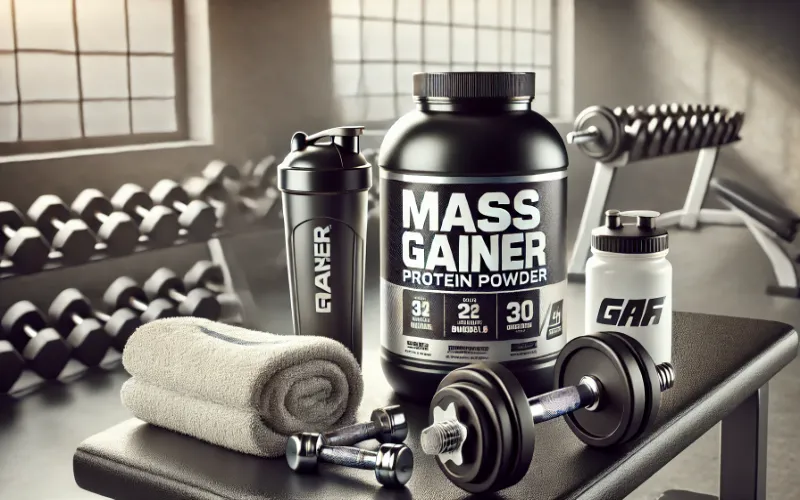
A mass gainer is a high-calorie supplement designed to help individuals increase total body weight through a concentrated blend of protein, carbohydrates, and sometimes fats. A single serving can deliver 500 to 1,200 calories, depending on the product and serving size. For women who struggle to eat sufficient food throughout the day or who fail to gain weight despite eating regular meals, a mass gainer can provide the calorie surplus needed to support growth.
However, many mass gainers also contain significant amounts of added sugars, which can accelerate fat gain rather than lean muscle gain if the product is not used carefully and paired with appropriate training. For a clearer picture of when a mass gainer is more appropriate than a protein powder, the key question is always whether your primary challenge is hitting a calorie surplus or simply meeting your protein target.
Mass gainers are not inherently problematic, but they must match the user’s specific goal and metabolic rate to produce the intended outcome rather than unwanted fat accumulation.
The Core Difference Between Whey Protein and Mass Gainer for Women
The distinction between these two supplements is straightforward once you understand the role that calorie density plays in body composition outcomes. Getting this distinction right is the single most important step in choosing the supplement that supports your actual goal.
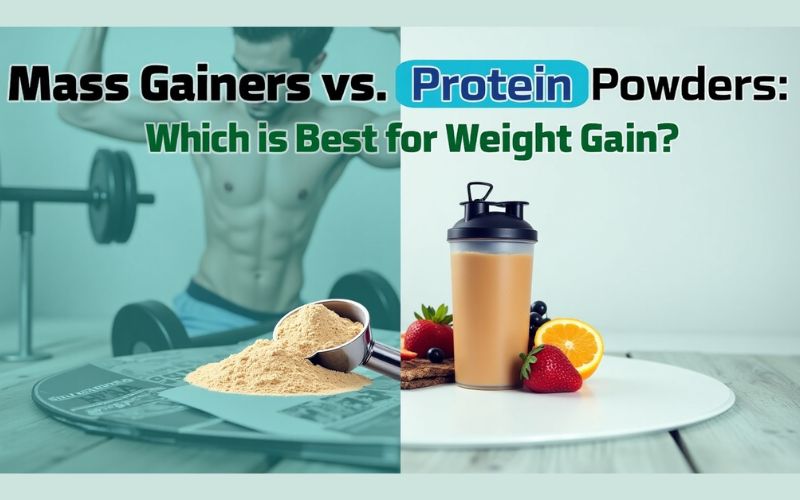
The biggest difference lies in calorie density and purpose. Whey protein focuses on muscle repair, toning, and lean body composition, while mass gainers focus on overall calorie surplus and body weight gain. Whey protein is lower in calories and much easier to control within a daily calorie target, whereas mass gainers can push you well beyond your calorie needs very quickly if portions are not carefully managed.
Digestive comfort is another important consideration for women. Whey protein is generally lighter and easier on the stomach, especially if you choose a whey isolate formula with minimal lactose. Mass gainers can feel heavy and cause bloating or digestive discomfort due to their high carbohydrate content, particularly in products with large amounts of added sugars or maltodextrin. For women who already deal with digestive sensitivity, this difference matters significantly in day-to-day supplement use. Understanding the difference between whey isolate and concentrate helps women with lactose sensitivity choose the version that minimizes digestive issues.
Which Supplement Should Women Choose Based on Their Goal?
The right choice between whey protein and a mass gainer depends entirely on what you are trying to achieve. There is no single correct answer for all women, but matching the supplement to your goal, metabolism, and training approach removes most of the guesswork.
Best Choice for Women Who Want a Toned, Lean Physique
For women focused on toning, muscle definition, and a lean body composition, whey protein is the clear and consistent recommendation. It supports muscle firmness and definition without pushing daily calories higher than your needs, which is essential for maintaining or improving body composition rather than simply adding weight. When combined with regular resistance training, a quality whey protein helps improve shape, strength, and recovery without adding unwanted bulk. For women exploring which whey protein isolate works best during a cutting or toning phase, low-carb isolate formulas consistently deliver the cleanest results.
Best Choice for Women Who Want Healthy Weight Gain
Mass gainers can be an appropriate and effective tool for women who are genuinely trying to add body weight, particularly those who are underweight or who struggle to eat enough food consistently to create a calorie surplus. The key to getting results from a mass gainer without excessive fat gain is using controlled, moderate serving sizes and combining the supplement with a structured strength training program. Women aiming for clean weight gain without accumulating excess body fat should prioritize gainers with moderate carbohydrate content and minimal added sugars over products with very high calorie counts per serving.
Best Option for Skinny or Underweight Women
Women with naturally fast metabolisms who find it genuinely difficult to gain weight through food alone are the strongest candidates for mass gainer supplementation. The sustained calorie boost from a gainer helps create the surplus that food alone cannot consistently provide for this body type. Choosing a cleaner formula with moderate carbohydrates and a higher protein-to-calorie ratio reduces the risk of fat gain while still providing the energy needed for weight and muscle growth. For guidance on increasing calorie intake consistently when appetite or time is limited, strategic meal timing combined with a gainer supplement is one of the most reliable approaches.
Best Option Based on Metabolism Type
Metabolic rate plays a significant role in which supplement is appropriate. Women with slower metabolisms should strongly prefer whey protein to avoid excess fat storage from surplus calories they are not burning efficiently. Women with faster metabolisms may tolerate mass gainers better and be able to channel those extra calories into muscle growth more effectively, though portion control still remains essential regardless of metabolic rate.
How to Use Whey Protein and Mass Gainer Effectively as a Woman
Knowing which supplement to choose is only half the equation. How you use it, when you take it, and how it fits into your overall diet determines whether it actually produces the results you are working toward.
Using Whey Protein Effectively
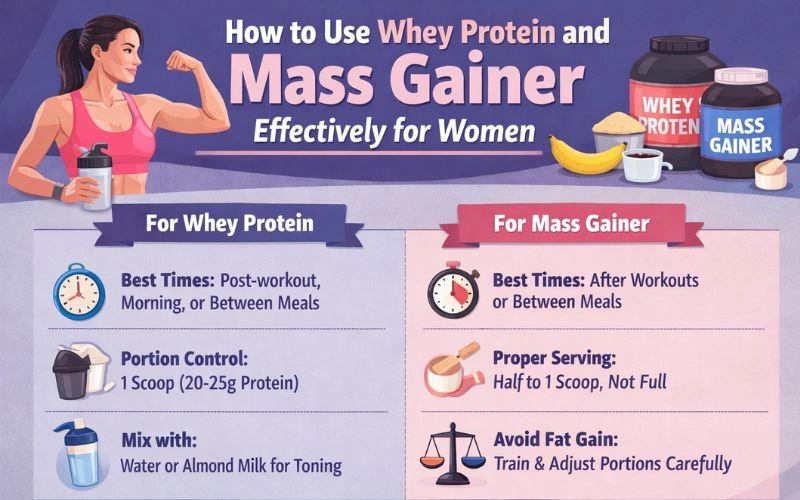
Whey protein works best when taken post-workout, in the morning as part of breakfast, or between meals as a protein-focused snack. It can be mixed with water for a lean, lower-calorie option during a toning phase, or with milk when a slightly higher calorie content is acceptable. One serving per day is sufficient for most women who are also eating protein-rich whole foods consistently. For women who are active but time-poor, using whey as a base for nutritious smoothies and shakes makes daily protein targets easier to hit without complex meal preparation.
Using Mass Gainer Effectively
Mass gainers should be used strategically and deliberately, not consumed casually throughout the day without tracking their caloric contribution. Half servings taken after workouts or between meals work better for most women than full servings, which can push total daily calories well beyond what the body can efficiently use for muscle growth. Using mass gainers on rest days without training typically results in fat gain rather than meaningful muscle or weight gain in a healthy direction.
Toning vs Weight Gain: What Most Women Get Wrong
Several common misconceptions around protein supplementation cause women to make choices that work against their goals. Addressing these directly helps set realistic expectations and more effective supplement habits from the start.
The most widespread mistake is fearing protein because of a perceived risk of developing bulk or masculine muscle. In reality, calories determine body weight change, not protein content alone. Whey protein within a calorie-controlled diet supports a leaner, more defined physique rather than a bulkier one. Supplements of any kind support goals, but training consistency, portion control, and total calorie intake always matter more than which product you choose.
The second common mistake is relying entirely on supplements while neglecting whole-food nutrition. Protein powders and gainers are designed to complement meals and fill gaps in your diet, not replace balanced eating. Women who replace multiple meals with shakes or gainers often find their energy, digestion, and results suffer over time. For a thorough look at how supplements and natural diet work together for fitness goals, whole foods should always form the foundation with supplements filling specific nutritional gaps.
Whey Protein or Mass Gainer for Women Who Are Just Starting Out
For women who are new to fitness supplementation, starting with the simpler and more flexible option makes the process less overwhelming and reduces the risk of making choices that do not match your actual needs.
Beginners should almost always start with whey protein. It is easier to digest, easier to incorporate into different meal plans, and more adaptable across different fitness goals. The caloric content is straightforward to track and control, and the digestive tolerance is better for most women unfamiliar with supplements. Mass gainers are better introduced at a later stage if genuine weight gain becomes difficult despite consistent training and whole food caloric increases. For a broader overview of which supplements work best when starting a gym routine, building your foundation with whey protein before adding anything else is consistently the most practical approach.
Common Side Effects Women Should Be Aware Of
Like any dietary supplement, both whey protein and mass gainers can cause side effects in some users, and knowing what to watch for helps you adjust before a minor issue becomes a reason to stop using an otherwise effective product.
Some women experience bloating or digestive discomfort, particularly with lactose sensitivity or when using mass gainers that contain high amounts of sugar or maltodextrin. Choosing a whey isolate formula or a low-sugar mass gainer significantly minimizes digestive discomfort in most cases. Drinking adequate water throughout the day also improves tolerance and supports digestion when using higher-protein supplements. If bloating persists after switching to a cleaner formula, a brief break followed by a smaller serving size typically resolves the issue. Understanding which protein types work best for lactose-sensitive individuals can help you make the right product selection before experiencing discomfort rather than after.
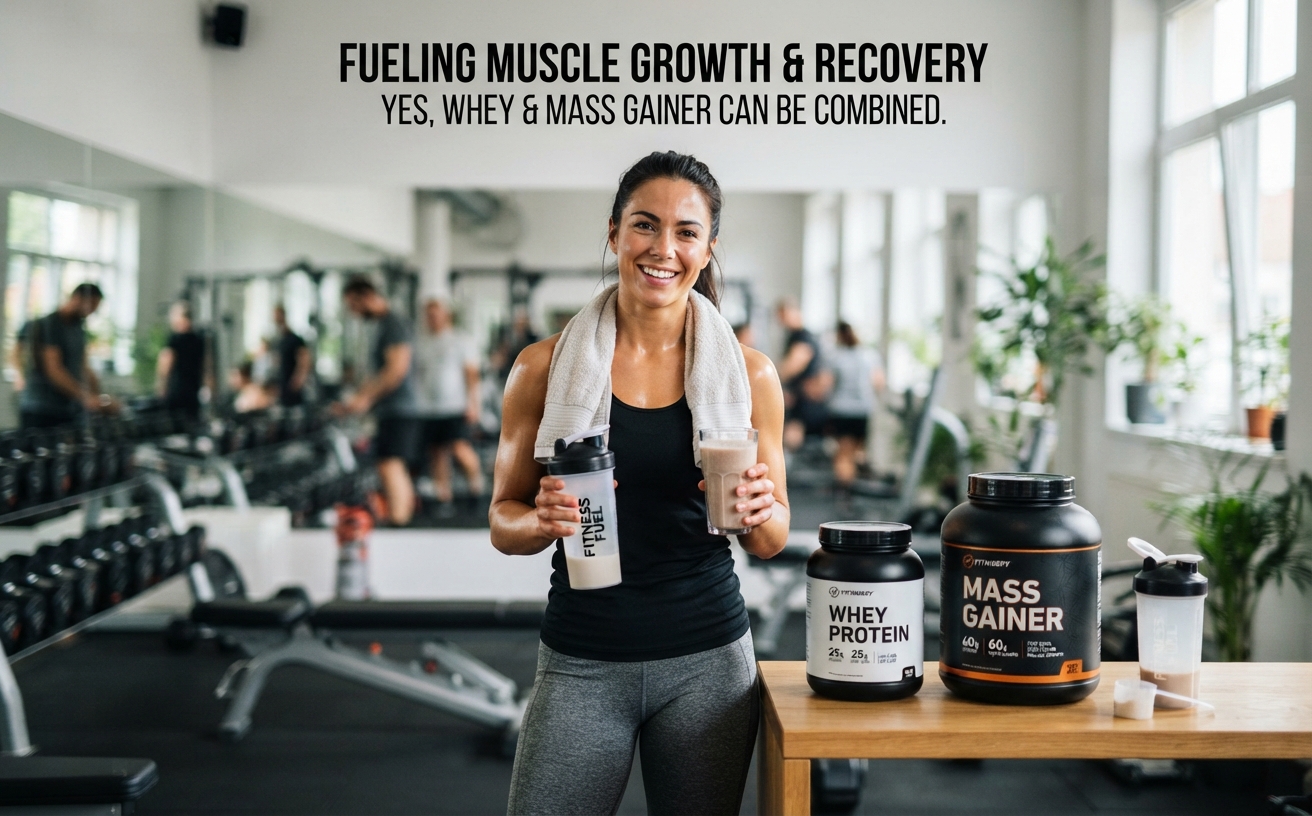
Can Women Combine Whey Protein and Mass Gainer?
Combining both supplements is possible, but it is only appropriate in specific situations and for a specific type of user. For most women, using both simultaneously is unnecessary and may make calorie tracking more difficult.
Underweight women engaged in frequent, intense resistance training may benefit from using whey protein post-workout for immediate recovery and a moderate mass gainer serving on high-activity training days to support the calorie surplus required for weight gain. For the majority of women, however, one or the other is sufficient, and stacking both adds complexity without proportional benefit. Always calculate your total daily calorie intake first before deciding to use both products simultaneously.
Expert Verdict: Which Powder Best Supports Women’s Fitness Goals?
For the majority of women across different fitness goals and body types, whey protein is the smarter, more versatile, and safer starting point. It supports toning, strength development, muscle recovery, and body composition improvement without the elevated risk of fat gain that comes with high-calorie mass gainer products. Mass gainers serve a genuine purpose but should be reserved for women with a documented difficulty gaining weight and used with portion discipline and consistent resistance training.
The best supplement is always the one that aligns with your body, your metabolism, and your training program rather than whatever is trending or most heavily marketed at any given time. For women building their first supplement routine, understanding how to structure a supplement stack from beginner to advanced provides a clear and practical framework for adding products at the right time and in the right order.
Frequently Asked Questions
Here are answers to the most commonly asked questions from women comparing whey protein and mass gainers before making their first purchase.
Q1: Is whey protein safe for women to use daily?
Yes. Whey protein is safe for women when used in appropriate amounts as part of a balanced diet. It supports muscle repair
, lean toning, post-workout recovery, and daily protein intake without causing hormonal disruption, masculine physical characteristics, or excessive muscle bulk. Most women benefit from one serving per day alongside protein-rich whole food meals.
Q2: Will a mass gainer make women gain unwanted fat?
It can, if used excessively or without sufficient physical activity. Mass gainers are calorie-dense by design, and consuming them beyond your actual daily calorie needs will result in fat storage rather than lean muscle gain. Proper portion control, meal planning, and consistent resistance training are essential for mass gainers to support healthy weight gain rather than disproportionate fat accumulation.
Q3: Can women use whey protein without going to the gym?
Yes. Whey protein helps women meet their daily protein needs regardless of whether they are training at a gym. However, visible improvements in toning, firmness, and body shape require some form of physical activity, ideally resistance-based movement that challenges the muscles to adapt and strengthen over time.
Q4: Does whey protein affect hormonal balance in women?
does not disrupt female hormones when consumed in normal dietary amounts. Hormonal balance in women is primarily influenced by overall calorie intake, stress levels, sleep quality, and micronutrient status rather than by protein supplementation. Women with existing hormonal conditions should consult a healthcare provider before starting any new supplement.
Q5: How long does it take for women to see results from whey protein?
With consistent protein intake and regular resistance training, most women notice improvements in strength, recovery speed, and muscle tone within three to four weeks. Visible changes in body shape or composition typically become more apparent after six to eight weeks of consistent effort, and results vary based on individual metabolism, training intensity, and overall diet quality.
Q6: Which is better for women with PCOS, whey protein or a mass gainer?
Whey protein is generally the more appropriate choice for women managing PCOS, as it supports lean muscle development and satiety without significantly increasing carbohydrate or calorie intake. Mass gainers with high sugar content can worsen insulin sensitivity, which is already a concern for many women with PCOS. For more on how whey protein supports women managing PCOS , the combination of adequate protein intake and resistance training is one of the most evidence-supported dietary strategies for this condition.
Final Recommendation
Choosing between whey protein and a mass gainer comes down to one clear question: is your primary goal lean toning and muscle definition, or is it gaining overall body weight? If you want muscle definition without excess calories, whey protein is the smarter and safer choice for the vast majority of women. If you are genuinely underweight and struggling to gain weight despite eating well and training consistently, a controlled mass gainer can help when used with portion discipline and a progressive training program.
At NutritionalWorld, you will find authentic whey protein and clean mass gainer options sourced from verified manufacturers and suited to women’s specific fitness needs. Shop from Pakistan’s trusted supplement platform and choose the right product to support your toning, strength, and weight goals with confidence.