













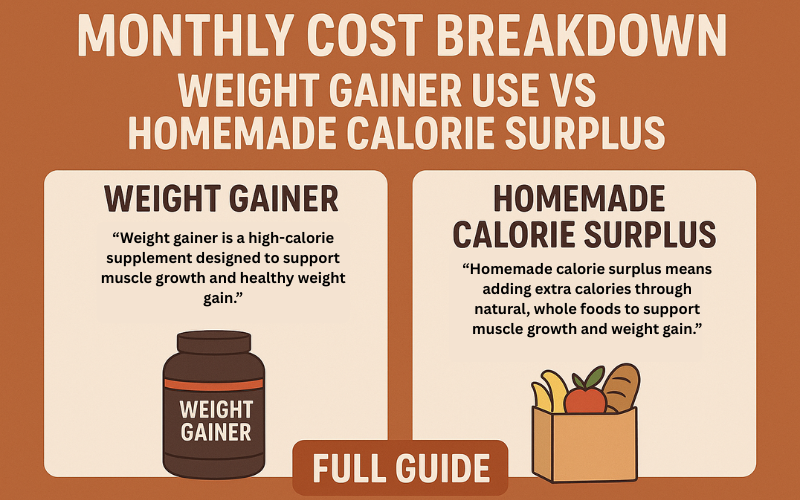
Gaining healthy weight does not have to break the bank. Whether you are a bodybuilder, athlete, or simply trying to increase your calorie intake, the choice between commercial weight gainers and homemade calorie surplus meals can greatly affect your monthly expenses. This guide provides a clear monthly cost breakdown, comparing prices, benefits, and drawbacks of each approach so you can bulk up effectively without overspending.

Table of Contents
Who Should Consider This Cost Comparison?
If your goal is healthy weight gain, whether for bodybuilding, athletics, or simply to overcome a naturally fast metabolism, understanding the cost of your nutrition strategy is crucial. Many people rely on commercial weight gainers for quick results, while others prefer homemade calorie surplus meals for a more natural approach. This guide is perfect for:
- Students or professionals on a monthly budget
- Gym-goers wanting to maximize nutrition per rupee
- Athletes seeking consistent calorie intake without overspending
Can a Cost-Effective Plan Still Help You Gain Weight?
Before comparing prices in detail, it is worth confirming that a budget-conscious approach does not mean a less effective one. Yes. Gaining weight is about achieving a calorie surplus by eating more calories than your body burns. However, the quality of those calories matters.
- Weight gainers offer convenience but may come with added sugars and low fiber.
- Homemade meals offer better control over ingredients but require more prep time.
Balancing cost efficiency with nutrition quality ensures you gain healthy muscle mass rather than just body fat.
Understanding the Monthly Cost of Weight Gainers

With the general principle established, here is what the numbers actually look like on the commercial supplement side. Commercial weight gainers are available in different serving sizes, with prices depending on brand and quality. If you are unsure how these products actually work before budgeting for one, this overview of how mass gainers work for weight gain is a useful starting point.
Average Market Price in Pakistan (2025)
| Product Size | Servings | Cost per Pack (PKR) | Cost per Serving (PKR) | Monthly Cost (2 Servings/Day) |
| 6 lbs (2.7 kg) | 16 | 14,500 | 906 | around 54,360 |
| 12 lbs (5.4 kg) | 32 | 25,000 | 781 | around 46,860 |
| Premium Mass Gainer | 30 | 28,000 | 933 | around 55,980 |
Pros:
- Quick to prepare (just add water or milk)
- Consistent nutrient profile
- Portable for travel or work
Cons:
- High upfront cost
- Often contains artificial sweeteners
- Lower satiety compared to whole foods
Understanding the Monthly Cost of Homemade Calorie Surplus Meals
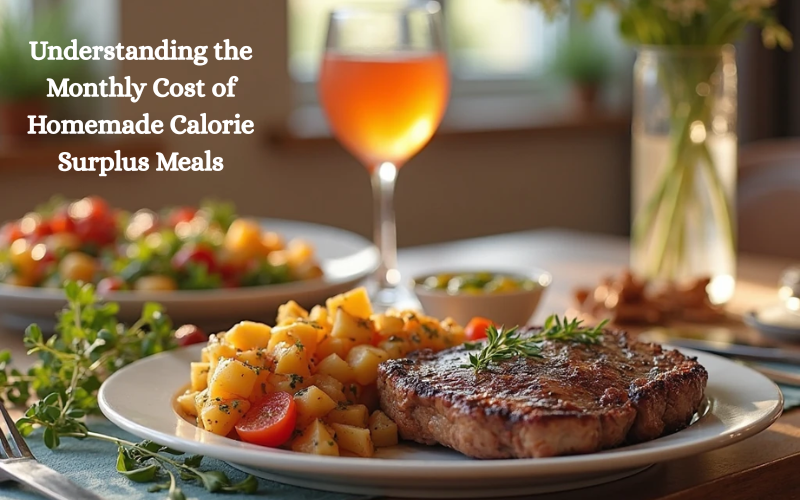
Now that the supplement side is clear, here is how the homemade route compares on paper. A homemade calorie surplus diet focuses on budget-friendly, high-calorie foods such as rice, oats, peanut butter, eggs, milk, and bananas.
Example Monthly Grocery List (PKR)
| Food Item | Qty/Month | Price per Unit (PKR) | Total Cost (PKR) | Calories per Month |
| White Rice | 10 kg | 350/kg | 3,500 | 36,000 kcal |
| Whole Milk | 60 L | 180/L | 10,800 | 30,000 kcal |
| Eggs | 360 pcs | 25/egg | 9,000 | 25,920 kcal |
| Peanut Butter | 3 kg | 1,600/kg | 4,800 | 18,000 kcal |
| Bananas | 120 pcs | 40/banana | 4,800 | 12,000 kcal |
| Oats | 4 kg | 500/kg | 2,000 | 15,600 kcal |
Total Monthly Cost: around 34,900 PKR
Pros:
- Cheaper than most weight gainers
- Customizable for taste and nutrition, especially once you know what to add to your gainer shake for extra variety
- Higher micronutrient content
Cons:
- Requires cooking and storage
- Less portable for busy schedules
How to Follow a Balanced, Cost-Friendly 3,000-Calorie Diet
With both cost breakdowns in hand, here is how to actually structure a day of eating around either approach. A 3,000 calorie budget plan can be achieved using either method.
- Macronutrient breakdown: 50% carbs, 25% protein, 25% fat
- Budget tips: Buy in bulk, cook in batches, and use local seasonal produce, an approach covered further in this practical approach to gaining weight on a busy schedule
- Example homemade daily plan (PKR around 1,100/day):
- Breakfast: Oats, milk, peanut butter, and banana
- Lunch: Rice, chicken, and vegetables
- Snack: Homemade smoothie (milk, peanut butter, banana, oats)
- Dinner: Rice, lentils, and eggs
Foods to Choose and Avoid for Budget Bulking
Beyond the sample day above, it helps to know which categories of food consistently deliver value and which ones quietly drain your budget.
Choose:
- Calorie-dense, nutrient-rich foods (nuts, seeds, dairy, whole grains)
- Lean protein sources (chicken, fish, eggs)
- Healthy fats (olive oil, peanut butter)
Avoid:
- Overpriced “superfoods” with low calorie density
- Junk foods high in sugar and trans fats
- Pre-packed snacks with hidden costs
Sample Monthly Budget Plans
Bringing the cost breakdowns together, here are three realistic monthly budgets depending on which approach, or mix of approaches, you choose.
Plan 1, Weight Gainer Only: around PKR 47,000 to 55,000 per month
Plan 2, Homemade Calorie Surplus Only: around PKR 35,000 per month
Plan 3, Hybrid (50% gainer + 50% homemade): around PKR 40,000 to 45,000 per month
The Bottom Line
With all three plans laid out, here is how to decide which one actually fits your situation. If time is your biggest constraint, weight gainers are worth the premium price.
If budget and nutrition quality matter more, a homemade calorie surplus is the better choice, especially once you follow a structured approach to building your weight gain routine.
A hybrid approach, using weight gainers when needed and relying on homemade meals most of the time, offers the best of both worlds. If you are also trying to avoid excess fat gain along the way, this guide to building weight without adding excess belly fat is worth pairing with whichever plan you choose.
Ready to put a cost-effective bulking plan into action? Browse weight gain supplements and start building your monthly plan at www.nutritionalworld.com.pk.
FAQs
To close out, here are quick answers to the questions people ask most often when budgeting for weight gain.
Which is cheaper, weight gainer or homemade calorie surplus?
Homemade calorie surplus meals are usually 20 to 35% cheaper per month than commercial weight gainers in Pakistan.
Can I gain the same muscle with homemade meals as with weight gainers?
Yes, if your calorie and protein intake are matched, homemade meals can give identical muscle growth results.
What is the biggest advantage of weight gainers?
Convenience and consistent nutrient delivery without cooking or prepping.
How much should I budget monthly for bulking?
Expect to spend between 35,000 and 55,000 PKR depending on whether you choose homemade, supplement-based, or a mix.
Is it safe to rely only on weight gainers?
They are fine short-term, but long-term, whole foods are recommended for better micronutrient intake, which is also covered in this approach to building a balanced diet as a beginner.