












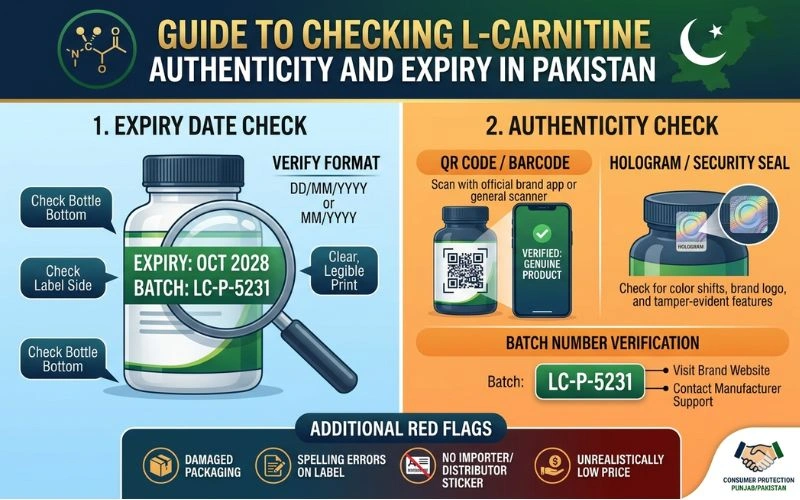
Check the manufacturing and expiry dates printed directly into the packaging rather than on a stuck-on sticker, verify the batch code on the brand’s official website, inspect the seal and label quality, compare the price against the genuine market rate, and buy only from an established importer. L-Carnitine supplements in Pakistan span everything from authentic imports to convincing fakes, and the steps below help you separate the two before you ever open the bottle.
Table of Contents
Why L-Carnitine Is So Often Faked in Pakistan
It helps to understand why this particular supplement attracts counterfeiters before you start inspecting one, because the motive shapes the tricks you need to watch for.
L-Carnitine sits among the most counterfeited supplement categories in the local market for a predictable set of reasons. It carries a premium price, it stays in steady demand from gym goers and anyone running a fat-loss protocol, and both the powder and liquid forms are easy to copy visually behind a convincing label.
Grasping what L-Carnitine actually does clarifies what is at stake. As an amino acid derivative, it shuttles long-chain fatty acids into the mitochondria where they are burned for energy. A genuine, correctly dosed product delivers that mechanism. A fake one, whether it holds the wrong dose, a cheap filler, or no active ingredient at all, simply does not. You can train just as hard and eat just as carefully, yet see nothing from a product that was never real.
There is more on the line than wasted money. Learning to catch counterfeit imported supplements before purchase rather than after protects your health too, since some fakes carry unregulated compounds, incorrect stimulant doses, or contaminants that can trigger digestive trouble, cardiovascular stress, or worse over sustained use.
Step 1: Check the Expiry Date and How It Is Printed
The very first check on any L-Carnitine product is the expiry date, and the way that date is printed tells you almost as much as the date itself.
A genuine product from a reputable international brand always has its manufacturing and expiry dates printed straight into the packaging during production. The date becomes part of the printed label or is moulded into the plastic or glass. On capsules and tablets, look at the bottom of the bottle or tub. On liquid L-Carnitine, check the base or side panel.
The warning signs are consistent across fakes. A sticker placed over the original date is the most common way to disguise expired stock, so run a fingernail gently under the date area; if a sticker edge lifts, the date has been altered. A date stamped in a different ink colour or font from the surrounding text points to something added after manufacture, and any blurring, smudging, or misalignment deserves real suspicion.
Some sellers leave the original expired date sitting under a fresh sticker, which shows up the moment you peel it back in strong light. Always inspect the date in good lighting before you pay, not once you are home.
Step 2: Examine the Seal and Physical Packaging
Before you open anything, study every physical element of the packaging, because counterfeits give themselves away through small inconsistencies a genuine factory line would never produce.
Start with the seal. Capsule bottles should carry a tamper-evident ring that snaps cleanly and has not been re-attached. Liquid bottles should have a uniform foil seal under the cap that is fully adhered. Any seal that looks stretched, re-glued, or leaves residue suggesting earlier removal is a clear sign of tampering.
Next, press along the label edges. Genuine products use industrial adhesive that bonds the label flat to the container, while cheaply printed counterfeit labels applied by hand lift at the corners within seconds. Bubbling, wrinkling, or any portion not flush with the surface should be treated as a warning.
Finally, check the cap and the overall feel. A lid that does not click or thread cleanly, a bottle lighter than its stated volume suggests, or plastic thinner than you would expect from a premium brand are all worth noting. The same checks that expose fake whey protein apply directly here and across nearly every supplement category.
Step 3: Read the Label With Precision
The label holds the most information and is where counterfeiters slip up most often, so read every element of it rather than just the brand name and flavour.
The ingredient panel should name L-Carnitine, L-Carnitine L-Tartrate, Acetyl-L-Carnitine, or Propionyl-L-Carnitine depending on the form, with a specific dose per serving. A label that hides behind a proprietary blend with no individual dosages, misspells the ingredient, or offers a vague phrase like amino matrix is a red flag. Cross-reference the exact wording, font, and layout against the official product page on the brand’s website.
At a minimum, confirm the label shows a clearly stated country of manufacture, a local importer’s name and contact details, a batch or lot number, and manufacturing and expiry dates that match the date printed on the base of the container. Any mismatch between dates in different spots on the same product, such as the label showing a different expiry year than the base, means the item is almost certainly fake or relabelled.
The barcode should scan correctly and return product information consistent with the brand’s catalogue. Many fakes carry barcodes that either fail to scan or return no recognisable product data.
Step 4: Verify the Batch Code
This single step removes more doubt than any other, and most international brands now make it possible in under two minutes.
Locate the batch or lot number, usually printed near the expiry date on the base or side of the container, then enter it on the brand’s official verification page. A valid code returns the product name, batch details, and confirmation of authenticity. If the code errors out, does not exist in the system, or the brand offers no verification function, contact the brand’s official customer service directly with the batch number and ask them to confirm it.
Avoid third-party reseller sites or unofficial local distributor pages for this check and always go to the brand’s own international website. A seller who refuses to give you time to verify the code before you buy, or who turns evasive when asked for it, is one to walk away from.
Step 5: Check the Price Against the Real Market Rate
Price is one of the quickest tells, because genuine L-Carnitine follows a fairly predictable range when it is sourced legitimately.
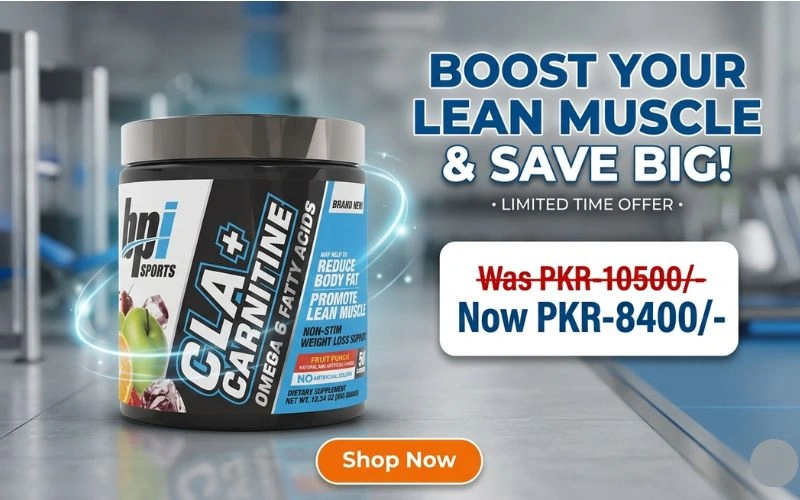
Counterfeit sellers tend to undercut that range, sometimes by 40 to 60 percent, since producing a fake costs a fraction of what the real manufacturer pays. Looking at how imported and local supplements are priced gives you a useful benchmark for what authentic stock should cost. If a 60-capsule bottle of a well-known imported brand sells for under half of what other verified stores charge, the real question is not whether you have found a bargain but what was compromised to reach that price.
Legitimate clearance sales from verified stores do exist, and the difference always comes down to the source. A clearance deal from a retailer with a proven track record, a physical presence, and transparent importer relationships is a world apart from a discounted tub offered through a social media account with no traceable supply chain.
Step 6: Confirm Regulatory Compliance
A final layer of confidence comes from checking that the product and its importer sit inside Pakistan’s formal regulatory framework.
Food supplements brought in for commercial sale are expected to meet applicable DRAP guidelines. Enforcement is uneven, but legitimate importers hold documentation showing their products cleared import through proper channels. Cross-referencing the item against the officially approved supplement listings gives you a baseline read on whether both product and importer operate within formal structures.
For products carrying extra certifications, the same approach you would use when spotting PSQCA-certified products applies. Ask the seller for proof of import documentation before buying. A reputable one will provide it or point you to the official distributor, while a seller who cannot answer at all is operating outside the verified supply chain.
Trusted L-Carnitine Products Available in Pakistan
Knowing which products carry verifiable brand authenticity and established distributor relationships takes a lot of guesswork out of the decision, so here are reliable options available through verified importers with the batch-verification mechanisms described above.
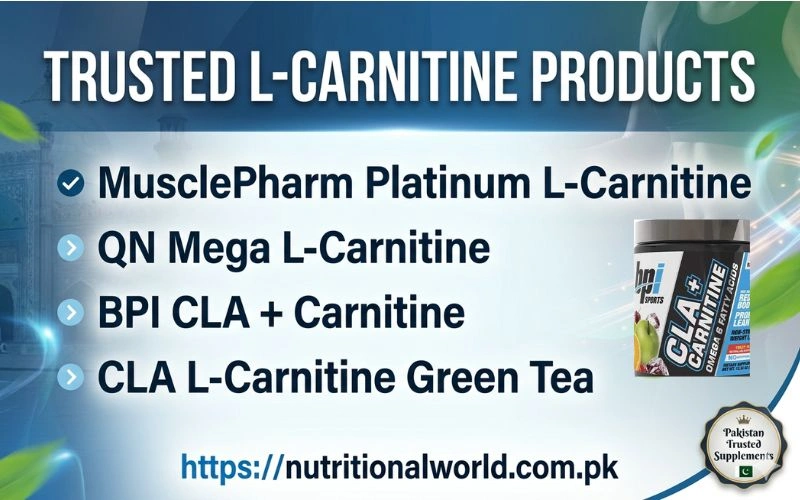
MusclePharm Platinum L-Carnitine is one of the most widely stocked and recognised capsule options in the market. Each serving delivers a clean, well-dosed formula from a brand with transparent labelling and a verifiable supply chain.
QN Mega L-Carnitine is a locally available pick from a brand that keeps consistent stock through verified retailers, which makes batch verification straightforward.
BPI CLA + Carnitine pairs L-Carnitine with conjugated linoleic acid in a powder format for dual-mechanism fat-loss support, with a label that matches its official brand specification precisely.
CLA L-Carnitine Green Tea is a popular combination formula that stacks L-Carnitine with thermogenic compounds and is commonly held by established importers with proper documentation.
Where to Buy Authentic L-Carnitine in Pakistan
Your single strongest defence against a fake is the source you choose, so it is worth treating where you buy as carefully as what you buy.
Choosing a verified importer over an anonymous seller protects more than authenticity; it also brings accurate expiry management, proper storage, and accountability if something is wrong with the product. Established retailers with a physical presence, clear supply-chain documentation, and traceable distributor links are far safer than social media or WhatsApp vendors, however polished their pages look. If you would rather start from a known address, this rundown of established stores across major cities is a sensible reference.
There is a deeper reason your supplement source matters beyond simply dodging fakes: it determines whether the product was stored correctly from import to sale, which affects both potency and safety, especially for temperature-sensitive liquid L-Carnitine. When buying online, favour sellers who list a physical address, share import documentation on request, and show a genuine order history rather than a wall of five-star reviews from freshly created accounts.
What to Do If You Have Already Bought a Suspicious Product
If you already own an L-Carnitine product and now doubt it, act on those doubts rather than waiting for a reaction that may never come in an obvious way.
Stop using it immediately and do not assume the absence of an instant reaction means it is safe, since some problematic compounds build up over time. Contact the seller and request documentation for the batch you received. If they cannot supply a batch code that verifies on the brand’s official website, treat the product as unverified and do not resume use. Photograph the packaging, keep your purchase record, and if the seller goes quiet, report the product through DRAP’s official complaint channels and leave an honest review on the platform where you bought it to protect other buyers.
Using L-Carnitine Correctly After Confirming Authenticity
Once you are confident the product is genuine, getting real value from it comes down to using it the way it is designed to work.
Setting realistic expectations for your first month matters, because L-Carnitine performs best alongside consistent cardio and a calorie deficit. It is not a passive fat burner and produces little without the exercise that actually moves fatty acids into the mitochondria for oxidation. It also plays a wider role, and understanding its support for metabolic health helps you see it as more than a weight-loss shortcut.
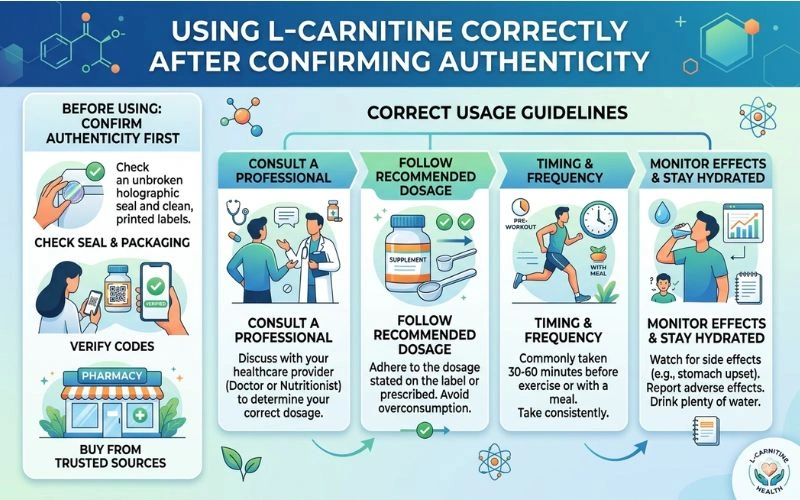
A standard dose typically runs from 500mg to 2,000mg per day, taken before exercise on training days or with meals on rest days. Liquid L-Carnitine absorbs slightly faster than capsules but degrades more easily if stored poorly. Both forms work well when they are genuine.
Frequently Asked Questions
A handful of questions come up repeatedly from buyers trying to avoid fakes, so here are clear answers to the most common ones.
How do I know if L-Carnitine has expired without opening it?
Check the expiry date on the base or side panel and confirm it is printed directly into the packaging rather than added as a sticker. If the date sits on a sticker, or a sticker has clearly been placed over another date, treat the product as potentially expired or relabelled and do not buy it.
Can expired L-Carnitine cause harm?
Expired L-Carnitine is mainly a question of lost potency rather than toxicity, as the active compound degrades and may deliver less than the stated dose. That said, if an expired product was stored poorly, particularly liquid forms exposed to heat, microbial contamination becomes a real concern. Do not use expired supplements.
Is liquid L-Carnitine more likely to be fake than capsules?
Both formats are counterfeited. Liquid is slightly easier to fake because buyers find it harder to judge ingredient quality by sight, but the verification steps stay the same: check the seal, label accuracy, batch code, and source. Many liquid formulas also need refrigeration after opening, so confirm the storage instructions on the label.
How can I tell if an L-Carnitine seller on Instagram is legitimate?
Ask for the batch code before buying and verify it on the brand’s official website, then ask for proof of import documentation. Check whether the seller has a physical address and an established order history with reviews that predate the product you are considering. Legitimate sellers welcome these questions; those who deflect or dismiss them are a sign to look elsewhere.
What is the safest way to buy L-Carnitine for the first time in Pakistan?
Buy from an established physical retailer with verifiable importer credentials, which lets you inspect the product before purchase, check the batch code in real time, and hold someone accountable if there is an issue afterward. If you are new to fat-loss supplementation, this guide to where supplements fit for beginners shows how L-Carnitine slots into a broader plan.