














Sleepless nights are becoming common in Pakistan’s biggest cities. Between long working hours, heavy traffic noise, hot summers that push into the early hours, and screens that stay on well past midnight, many people in Lahore, Karachi, and Islamabad are struggling to fall asleep and stay asleep. Melatonin has become one of the most searched sleep supplements in Pakistan, but confusion around dosage, halal sourcing, and safety keeps many buyers hesitant. This guide breaks down what melatonin actually does, how much to take, what to check for halal compliance, and where it fits alongside other sleep supplement options in Pakistan.
Table of Contents
What Is Melatonin and How Does It Work?
Melatonin is a hormone produced naturally by the pineal gland in the brain. Its main job is to regulate the sleep wake cycle, also called the circadian rhythm. Melatonin levels rise in the evening as light fades, signaling to the body that it is time to wind down, and they fall again in the morning as daylight returns. Artificial light from phone screens, laptops, and bright LED bulbs late at night can suppress this natural rise, which is one reason so many people report difficulty falling asleep despite feeling exhausted.
Melatonin supplements are designed to support this natural process rather than force sleep the way a sedative would. They are most useful for people whose internal clock has been disrupted, such as shift workers, frequent travelers dealing with jet lag, or anyone whose sleep schedule has drifted due to late nights during Ramadan or exam season.

Why Sleep Support Is Becoming a Bigger Conversation in Pakistan
Sleep has historically been an overlooked area of health in Pakistan compared to topics like protein intake or weight management. That is changing. Rising urban stress, longer commutes, and irregular work schedules across corporate and gig sectors are pushing more people to look for practical solutions. Chronic poor sleep is also linked to slower muscle recovery, so it is worth noting alongside other natural approaches to better sleep and mood that many fitness focused readers already explore. For anyone managing training stress, understanding how to lower cortisol naturally is closely tied to falling asleep faster, since elevated evening cortisol is one of the most common reasons people lie awake with a racing mind.
How Much Melatonin Should You Take?
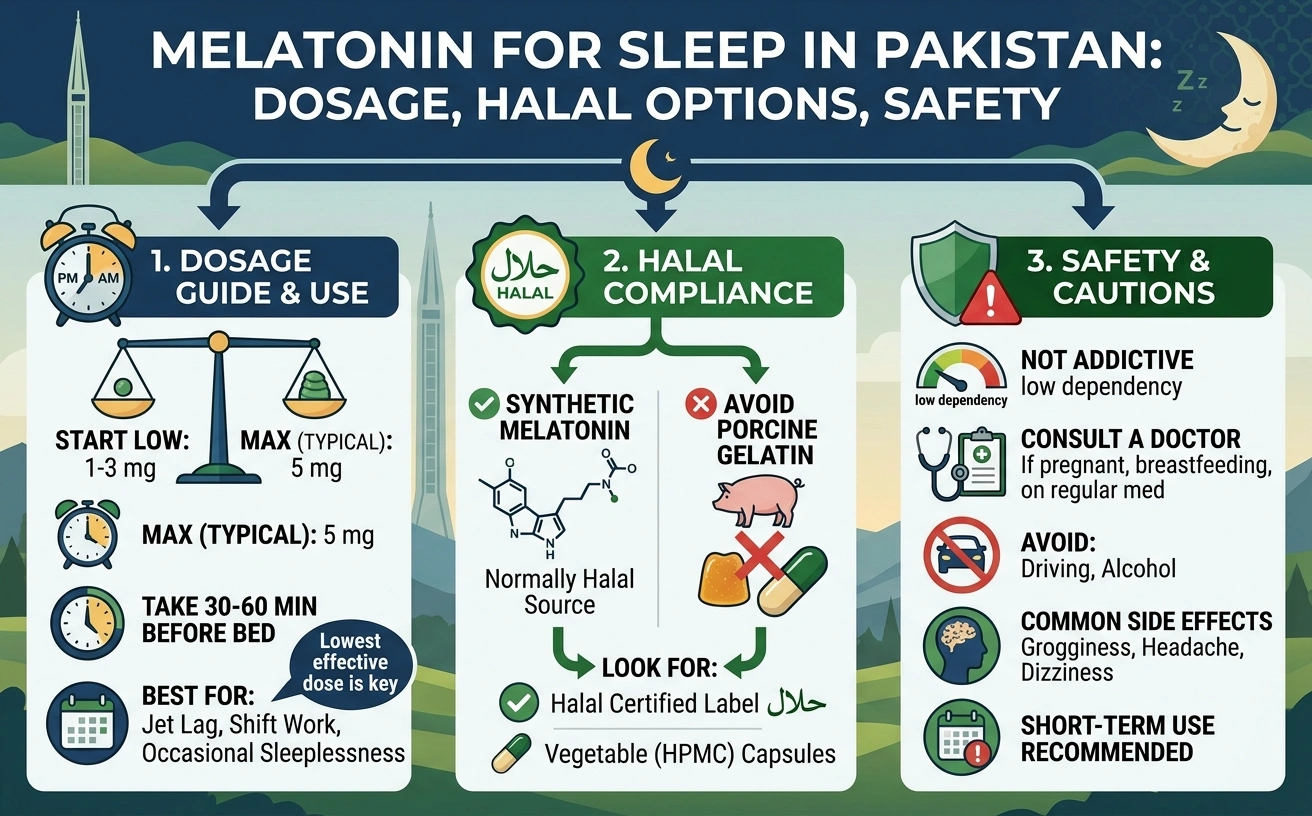
One of the most common mistakes with melatonin is taking too much. Research generally supports that lower doses work as well as, or better than, higher ones for healthy adults. A typical starting range is between 0.5 mg and 3 mg, taken around 30 to 60 minutes before the intended bedtime. Some products sold internationally go as high as 5 mg or 10 mg, but higher amounts do not necessarily mean better sleep and can increase the chance of next day grogginess.
A sensible approach for a first time user is to start at the lowest available dose, assess how the body responds over three to five nights, and only increase gradually if needed. Consistency in timing matters more than the exact milligram amount, since melatonin works best when taken at the same time each evening to reinforce the body’s natural rhythm.
Factors That Affect the Right Dose
Body weight, age, sensitivity to supplements, and the underlying reason for poor sleep all influence how someone responds to melatonin. Older adults often need less, since natural melatonin production already declines with age. Someone dealing with occasional jet lag after travel may only need it for a few nights, while someone adjusting a long term irregular schedule may use it more consistently under guidance from a healthcare provider.
Halal Sourcing: What to Check Before Buying
Halal compliance is a genuine concern for melatonin buyers in Pakistan, and it comes down to two main factors: the source of the melatonin itself and the capsule material used to package it.
- Source of melatonin: Melatonin supplements are typically produced synthetically in a lab rather than extracted from animal tissue, which generally makes the active ingredient itself halal. Always check the label or product description to confirm the source is synthetic.
- Capsule shell: This is where most halal concerns actually arise. Traditional gelatin capsules can be sourced from bovine or porcine gelatin. Look for products that specify halal certified gelatin, bovine sourced gelatin from halal certified animals, or vegetarian capsules made from plant based cellulose (often labeled as HPMC or veg caps).
- Additional ingredients: Some melatonin formulas are combined with other compounds. Check the full ingredient list for anything derived from alcohol extraction or animal byproducts that may not meet halal standards.
When in doubt, choosing a product with a visible halal certification mark or one that clearly states vegetarian or plant based capsules removes most of the guesswork.
Is Melatonin Safe? Side Effects to Know
Melatonin is generally well tolerated by healthy adults when used at appropriate doses and for short to moderate durations. That said, it is not entirely free of side effects. Some people report mild next day drowsiness, headache, dizziness, or vivid dreams. These effects are more common at higher doses.
Melatonin can also interact with certain medications, including blood thinners, diabetes medications, and immunosuppressants, so anyone on regular medication should speak with a doctor before starting it. It is not generally recommended for pregnant or breastfeeding women without medical advice, and nightly use in children should only happen under a pediatrician’s guidance. Buying from a reputable source and following the label’s suggested dose reduces most of the risk.
Building Better Sleep Habits Alongside Melatonin
Melatonin works best as part of a broader sleep routine rather than a standalone fix. Reducing screen exposure an hour before bed, keeping the bedroom cool and dark, and maintaining a consistent wake up time all reinforce what melatonin is trying to do naturally. Mineral status matters too, and low magnesium glycinate levels are commonly linked to restless sleep and muscle tension at night, making it a useful complementary consideration for anyone building a sleep focused routine. Vitamin D status is another overlooked factor, and readers dealing with rising vitamin D deficiency in Pakistan may find that correcting a deficiency improves overall sleep quality alongside daytime energy.

Where Melatonin Fits Among Sleep Supplement Options in Pakistan
Nutritional World currently does not stock a dedicated melatonin product, so this section focuses on complementary sleep support categories already available on the site while that gap gets addressed. Magnesium and zinc combinations, commonly known as ZMA, are widely used in the evening to support relaxation and recovery, and options like QN ZMA or a combined ZMA Pro with ashwagandha pair mineral support with an adaptogen known for helping manage evening stress. A straightforward calcium magnesium tablet is another accessible starting point for anyone whose restlessness is linked to low mineral intake rather than a circadian rhythm issue. For those whose poor sleep traces back to daytime stress and elevated cortisol, standalone ashwagandha capsules are worth considering as well. As melatonin specific inventory becomes available, this section will be updated with direct product links.
Final Thoughts
Melatonin can be a genuinely useful tool for people in Pakistan dealing with disrupted sleep, whether from late night screen use, irregular work hours, or travel. The key is using it correctly: starting with a low dose, checking for halal certified sourcing, taking it consistently at the same time each night, and pairing it with good sleep habits rather than expecting it to work in isolation. For anyone with existing health conditions or taking regular medication, a quick conversation with a doctor before starting is always the safer route.
For general information on melatonin and its use, the National Center for Complementary and Integrative Health provides an independent overview of current research and safety considerations.
Frequently Asked Questions
Is melatonin halal in Pakistan?
Synthetic melatonin itself is generally considered halal since it is not animal derived. The main concern is the capsule shell, so buyers should check for halal certified gelatin or plant based vegetarian capsules before purchasing.
What is the correct melatonin dosage for sleep?
Most healthy adults respond well to 0.5 mg to 3 mg taken thirty to sixty minutes before bed. Starting low and adjusting gradually works better than beginning with a high dose right away.
Can melatonin be taken every night?
Short to moderate term nightly use is generally considered safe for healthy adults, but long term daily use should be discussed with a doctor, especially if underlying sleep issues or medications are involved.
Does melatonin cause grogginess the next day?
Some people experience mild next day drowsiness, particularly at higher doses. Lowering the dose or adjusting the timing earlier in the evening usually reduces this effect significantly.
What can I use for sleep support if melatonin is unavailable?
Magnesium based products, ashwagandha, and consistent sleep habits like reduced screen time can support better rest. These are widely available as complementary options while dedicated melatonin stock is added.