













Collagen supplements have become extremely popular for improving skin, joints, hair, and overall health. At the same time, many supplement brands recommend taking collagen with vitamin C, claiming it boosts absorption.
But does taking vitamin C with collagen actually improve absorption significantly?
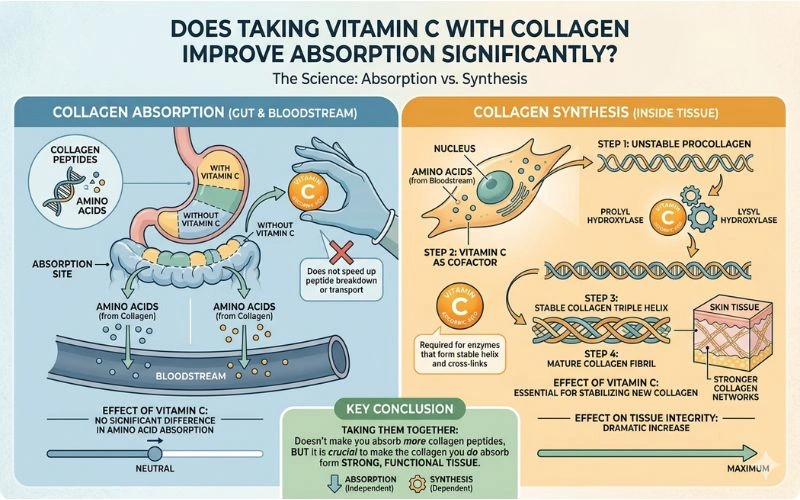
The short answer is no—vitamin C does not directly enhance collagen absorption. However, it plays a critical role in collagen synthesis, which is where the real benefit lies.
Understanding this difference can help you make smarter supplement choices and avoid common misconceptions.
Table of Contents
Does Vitamin C Improve Collagen Absorption?
One of the biggest myths in the supplement industry is that vitamin C improves collagen absorption.
In reality, collagen absorption happens independently of vitamin C.
When you consume collagen (especially hydrolyzed collagen peptides), your digestive system breaks it down into amino acids and small peptides. These are then absorbed in the small intestine and transported into the bloodstream.
Vitamin C does not influence this digestive or absorption process.
The confusion comes from mixing up:
- Absorption (digestion and uptake)
- Synthesis (collagen formation in the body)
Vitamin C is essential for synthesis—not absorption.
How Collagen Is Digested and Absorbed
Collagen supplements are typically available in hydrolyzed form, also known as collagen peptides.
This form is designed for easy digestion and absorption.
Here’s how it works:
- Collagen is broken down into amino acids like glycine, proline, and hydroxyproline
- These amino acids are absorbed through the intestinal lining
- They enter the bloodstream and are delivered to tissues
This process is similar to how your body handles other protein sources.
Important: Vitamin C is not required at this stage.

Where Vitamin C Becomes Essential: Collagen Synthesis
After absorption, your body uses the amino acids from collagen to build new collagen fibers. This process is known as collagen synthesis.
This is where vitamin C becomes essential.
Vitamin C supports the biochemical reactions that convert amino acids into stable collagen molecules. Without it, collagen production becomes inefficient.
That’s why vitamin C deficiency can lead to weak connective tissue, poor wound healing, and skin issues.
Vitamin C as a Required Enzymatic Cofactor
Vitamin C acts as a cofactor for enzymes involved in collagen production.
These enzymes include:
- Prolyl hydroxylase
- Lysyl hydroxylase
They help stabilize collagen’s structure by forming its triple-helix shape.
Without vitamin C:
- Collagen becomes fragile
- Tissue repair slows down
- Skin elasticity decreases
This explains why vitamin C is essential for maintaining strong and healthy connective tissues. You can find quality multivitamins & minerals including vitamin C support at Nutritional World.
Why Collagen Synthesis Is Often Rate-Limited
Even if you consume enough collagen, your body may not produce optimal collagen levels.
Why?
Because collagen synthesis depends on several factors:
- Vitamin C availability
- Nutrient balance
- Age-related decline
- Lifestyle factors (stress, smoking, poor diet)
If vitamin C levels are low, collagen production becomes a rate-limited process.
In simple terms: your body cannot build collagen efficiently without sufficient vitamin C.
Collagen Fibrils, Mechanical Loading, and Performance
Collagen plays a major role in:
- Tendons
- Ligaments
- Cartilage
Physical activity and resistance training can stimulate collagen production through a process known as mechanical loading.
Some research suggests that combining collagen supplementation, vitamin C, and exercise may improve connective tissue strength and recovery.
- Collagen supplementation
- Vitamin C
- Exercise
may improve connective tissue strength and recovery.
This is especially useful for athletes and active individuals.
Why Whole Protein Alone May Not Fully Support Collagen Needs
Many people assume that consuming regular protein is enough to support collagen production.
However, standard protein sources (like whey or meat) lack high amounts of specific amino acids required for collagen synthesis.
Collagen peptides are rich in:
- Glycine
- Proline
- Hydroxyproline
These amino acids are critical for building collagen.
That’s why targeted collagen supplementation can be more effective.

Vitamin C’s Antioxidant Role in Connective Tissue
Vitamin C is also a powerful antioxidant.
It helps:
- Protect collagen from oxidative stress
- Reduce inflammation
- Support tissue repair
This protective role ensures that existing collagen remains strong and functional over time. Pairing collagen with essential vitamins and minerals is a smart approach to long-term connective tissue health.
Do You Need to Take Vitamin C With Collagen?
Here’s the practical answer:
You do not need to take vitamin C with collagen for absorption.
However, you should ensure adequate vitamin C intake for optimal collagen synthesis.
When combining them makes sense:
- If your diet lacks fruits and vegetables
- If you have increased nutrient demands
- If you want to support skin or joint health
When it’s less important:
- If your diet already provides enough vitamin C
Best Time and Way to Take Collagen with Vitamin C
Consistency matters more than timing.
However, some practical tips include:
- Take collagen daily (5–10g is common)
- Vitamin C can be taken alongside or separately
- Pairing them is convenient but not necessary
Some people prefer taking collagen:
- In the morning
- Before workouts
- Or before bed
Choose what fits your routine best.
How Much Vitamin C Is Needed for Collagen Production
The recommended daily intake of vitamin C is:
- 75 mg for women
- 90 mg for men
Higher intake may be beneficial in certain cases, but excessive doses are unnecessary.
The body absorbs vitamin C efficiently at moderate doses and excretes excess amounts. Browse our multivitamin & mineral supplements to find options that meet your daily vitamin C needs.
Food Sources of Vitamin C for Better Collagen Support
You can easily meet your vitamin C needs through food.
Top sources include:
- Oranges and lemons
- Guava
- Strawberries
- Bell peppers
- Spinach and leafy greens
A balanced diet often eliminates the need for supplementation.

Common Myths About Collagen and Vitamin C
Let’s clear up some common myths:
❌ Vitamin C improves collagen absorption
✔️ It supports synthesis, not absorption
❌ More vitamin C means more collagen
✔️ Only helpful if you are deficient
❌ Collagen works instantly
✔️ Results take consistent use over weeks
Benefits of Taking Collagen with Vitamin C
While vitamin C doesn’t improve absorption, combining both can still support overall health.
Skin Health
- Improved elasticity
- Reduced wrinkles
Joint Support
- Stronger connective tissues
- Better mobility
Hair and Nails
- Increased strength
- Reduced breakage
Potential Side Effects or Overuse
Vitamin C is generally safe, but excessive intake may lead to:
- Digestive discomfort
- Diarrhea
- Risk of kidney stones (high doses)
Moderation is key.
Making an Informed Decision
So, does taking vitamin C with collagen improve absorption significantly?
No—but it still plays an important role.
Collagen provides the building blocks, while vitamin C helps your body turn those building blocks into functional collagen.
The best approach is to focus on:
- Balanced nutrition
- Consistent supplementation
- Realistic expectations
Best Collagen Supplements to Consider
When choosing collagen supplements, look for:
- Hydrolyzed collagen peptides
- High-quality sourcing
- Minimal additives
For premium options, explore our full range of essentials and wellness supplements and check out our latest special offers at Nutritional World.
(You can internally link collagen products, skin supplements, or joint support categories here.)
Final Verdict
Vitamin C and collagen work together—but in different ways.
- Collagen supports structure
- Vitamin C supports production
The real benefit lies in supporting collagen synthesis—not improving absorption.
Understanding this can help you use supplements more effectively and achieve better results over time.
FAQ: Vitamin C and Collagen
Does vitamin C improve collagen absorption significantly?
No, vitamin C does not improve collagen absorption significantly. Collagen is absorbed as amino acids in the gut. Vitamin C helps the body synthesize collagen afterward, supporting formation, strength, and overall tissue repair processes.
Can I take collagen without vitamin C?
Yes, you can take collagen without vitamin C because absorption does not depend on it. However, having enough vitamin C in your diet ensures your body can properly produce and maintain healthy collagen levels.
What happens if I don’t get enough vitamin C?
If vitamin C intake is low, collagen production becomes inefficient. This may lead to weaker skin, slower healing, joint discomfort, and reduced connective tissue strength, even if you regularly consume collagen supplements.
Is it better to take collagen with vitamin C supplements or food?
Getting vitamin C from natural food sources is usually sufficient and healthier. Multivitamin supplements can be helpful if your diet lacks fruits and vegetables, ensuring your body has enough vitamin C for collagen synthesis support.
How long does it take for collagen to show results?
Most people start noticing benefits after four to twelve weeks of consistent collagen use. Results depend on diet, lifestyle, age, and overall health, with improvements in skin, joints, and hair over time.