













Table of Contents
Do Multivitamins Cause Weight Gain? The Honest Answer
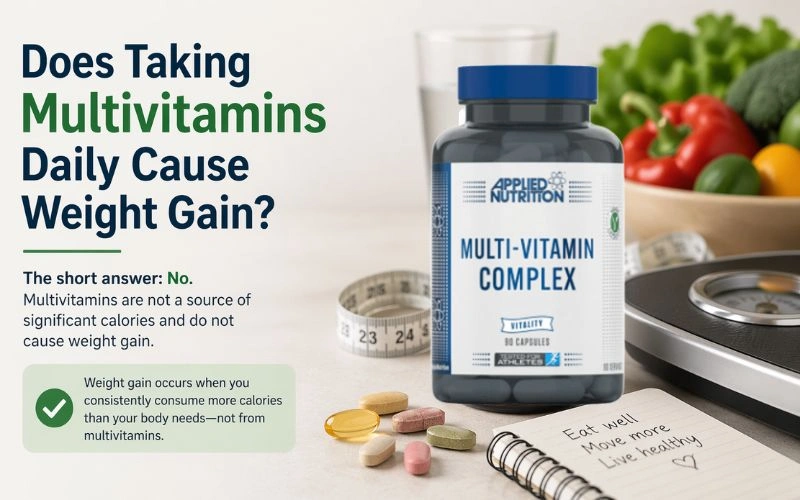
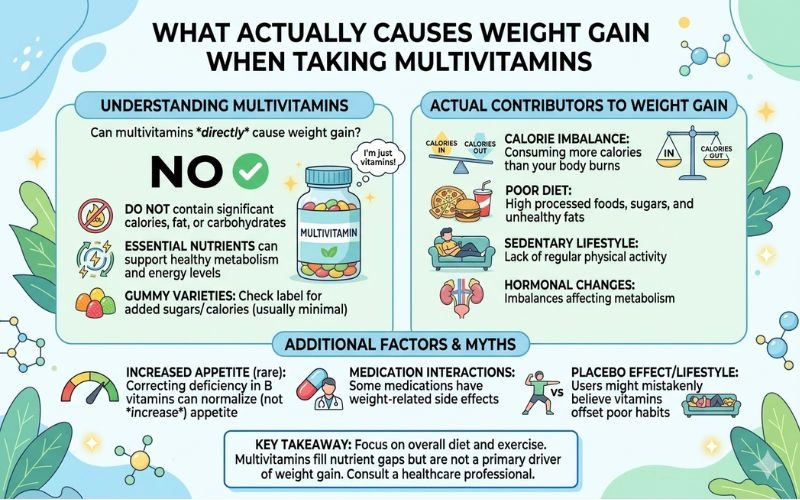
Answer: No, taking a multivitamin daily does not cause weight gain. A standard tablet contains only 5 to 20 calories and no fat-storing macronutrients. Any scale change usually comes from restored appetite, water retention, sugary gummies, or lifestyle shifts that happened around the same time you started.
One of the most common questions about supplements in Pakistan has nothing to do with deficiency. People notice a few extra kilograms after starting their daily multivitamins and immediately wonder whether the tablet is to blame. This guide explains what is really happening, which situations can shift the scale, and when the cause lies somewhere else entirely.
What a Multivitamin Actually Contains
Before looking at why the scale moves, it helps to know what is inside the tablet, because the ingredients explain why direct weight gain is not possible.
A standard multivitamin tablet contains micronutrients: vitamins and minerals measured in milligrams or micrograms. It does not contain meaningful amounts of protein, fat, or carbohydrates, which are the three macronutrients that provide calories and drive changes in body weight.
A typical tablet delivers roughly 5 to 20 calories per serving, almost entirely from the coating or binders. Even three tablets a day for a full year add a negligible amount compared with a single meal. A product such as Platinum Multivitamin is built around micronutrients, not fuel.
The role of vitamins is mainly catalytic, as explained in this look at how vitamins support body functions. Vitamin D supports calcium absorption, B vitamins enable energy metabolism, and zinc supports immune function and hormone regulation. None of these actions add caloric load.

Myth vs Fact: Multivitamins and Weight
Several beliefs about vitamins and body weight keep circulating, so the table below separates what is commonly assumed from what the evidence supports.
| Myth | Fact |
|---|---|
| Multivitamins are fattening. | A tablet has about 5 to 20 calories and no meaningful fat, protein, or carbohydrate. |
| Vitamins make you hungrier. | They do not stimulate hunger directly. Fixing a deficiency can bring back a normal appetite that was suppressed. |
| Stopping your multivitamin will help you lose weight. | It removes a nutritional safety net and changes nothing about calorie balance. |
| Weight gain after starting a multivitamin means the tablet caused it. | Timing is a coincidence in most cases. Diet, activity, sleep, and water balance explain far more. |
| All multivitamins are calorie free. | Tablets are close to calorie free. Gummies and chewables can contain added sugar. |
| A quick scale jump is fat gain. | Early changes are often water, muscle, or digestive adjustment rather than fat. |
Why Some People Gain Weight After Starting a Multivitamin
Even though the tablet itself is not fattening, there are genuine indirect pathways that can change your weight or how you perceive it, and each one is worth understanding.
Appetite, B Vitamins and Restored Hunger
Nutrient deficiencies can quietly suppress appetite, so when they are corrected, hunger returns to its natural level and can feel like the supplement caused it.
B vitamins are central to converting food into usable energy. In people who were low, signs of B12 deficiency such as fatigue, low motivation, and reduced activity often fade once levels improve. As energy returns, appetite frequently rises to match it. If food intake climbs without a matching rise in activity, weight can increase, but the cause is the recovered energy, not the vitamin itself.
Low vitamin D has also been linked to disrupted appetite signalling. Learning the benefits of vitamin D helps explain why some people feel hungrier for a short period while their hormonal signalling normalises.
Better Energy and Muscle Mass
When fatigue lifts, people move more, train harder, and may build muscle, which can raise the number on the scale without adding any fat.
Iron deficiency is one of the most common nutritional gaps in Pakistan, particularly among women, and it causes chronic tiredness and poor exercise tolerance. People who restore their levels through iron supplementation in Pakistan often become more active. Lean muscle weighs more on the scale, but it is not fat gain.
Hormones and Body Composition
Several micronutrients influence the hormones that control fat storage, so correcting a shortfall can improve body composition rather than harm it.
Zinc supports testosterone production, and the link between low testosterone and weight gain is well documented. Magnesium affects insulin sensitivity, vitamin D influences cortisol regulation, and B vitamins support thyroid hormone metabolism. Understanding how diet shapes hormonal balance shows why removing these deficiencies removes an obstacle instead of adding fat.
Gummy Vitamins and Hidden Sugar Calories
Not every multivitamin format is equal, and this is the one area where a supplement can genuinely add calories to your day.
Gummy and chewable multivitamins are often made with sugar, glucose syrup, or similar sweeteners to make them taste like candy. Depending on the brand, a serving can carry a few grams of sugar and roughly 10 to 30 calories. That is still small, but it adds up if you take extra gummies because they taste good, or if you treat them as a snack.
Tablets and capsules avoid this problem. If weight management is a priority, check the label for added sugar, stick to the stated serving size, and choose a sugar free format where possible.
Water Retention and the Scale
A small early jump on the scale is often fluid, not fat, and it usually fades without any action on your part.
Certain B vitamins, particularly B1 and B6, influence fluid balance. Correcting a shortfall can temporarily increase intracellular water as cells work normally again. Iron and high dose magnesium can also cause mild bloating while the gut adapts. This type of weight typically settles within two to four weeks.
If you notice a rise of one or two kilograms, compare how your clothes fit. That is a more reliable signal of real fat change than daily scale readings.
The Pakistan Specific Deficiency Context
Local diet and lifestyle make certain deficiencies more common here, which is why people in Pakistan often feel a clear difference after starting a multivitamin.
The reasons behind rising vitamin D deficiency in Pakistan include sun avoidance, full coverage clothing, limited outdoor activity, and few vitamin D rich foods. B12 deficiency is also common, even among meat eaters, because of cooking methods and absorption issues. Correcting both together can change how a person feels, moves, and eats, and those downstream effects are what people often mistake for weight gain from the tablet.
When Weight Gain Has Another Cause
If your weight keeps climbing, the multivitamin is almost never the explanation, so it is worth looking at the factors that really move body weight.
The most common cause is behavioural. Many people start a multivitamin at the same time as a new routine, such as joining a gym, eating more regularly, or entering a bulking phase. The tablet becomes an easy but incorrect explanation. Comparing supplements versus a balanced diet shows that supplements work alongside food, not instead of it.
Other products can also cause confusion. The question of collagen and weight gain follows the same pattern, and the answer usually lies in total calories rather than the supplement. Digestive changes matter too, and knowing how gut health affects performance helps explain temporary bloating.
When to See a Doctor
Some patterns point to a medical issue instead of a supplement effect, and these deserve proper assessment.
Speak to a doctor if you gain weight quickly without changes in diet or activity, if you notice swelling in your legs, face, or hands, or if weight gain comes with extreme tiredness, hair loss, irregular periods, feeling cold, or low mood. Thyroid disorders, PCOS, insulin resistance, and certain medications can all cause weight changes. A simple blood test can identify the real cause, and it is better to check than to blame the multivitamin and stop taking something useful.
Best Time to Take a Multivitamin
Taking your multivitamin at the right time improves absorption and reduces the stomach upset that makes many people quit.
The best time for most people is in the morning with a meal that contains some fat, such as eggs, nuts, a drizzle of oil, or full fat yoghurt. Fat soluble vitamins A, D, E, and K need dietary fat to be absorbed properly. Building the habit into your morning routine for energy makes it easier to stay consistent.
Avoid taking it on a completely empty stomach if your formula contains iron or zinc. Both can irritate the stomach and cause nausea. If you prefer evenings, take it with dinner and keep the timing the same each day.
Which Multivitamin to Choose
Choosing a well formulated product matters because the form of each nutrient decides how much your body can actually use.
A good formula uses methylcobalamin for B12, D3 instead of D2, chelated minerals for better absorption, and avoids excessive megadoses of any fat soluble vitamin. For a comparison of trusted options, see this list of the best multivitamin in Pakistan. It also helps to compare multivitamin tablet prices in Pakistan before buying, and to purchase from a verified importer so the product matches its label.
Frequently Asked Questions
These are the questions people ask most often when they connect a multivitamin to a change in weight.
Do multivitamins cause weight gain?
No. A multivitamin contains almost no calories and none of the macronutrients that build body fat. Weight changes after starting one usually come from restored appetite, water retention, sugary gummy formats, or lifestyle changes that happened at the same time.
Can a multivitamin make me feel hungrier?
Indirectly, yes. Correcting low B12, vitamin D, or iron can restore an appetite that was suppressed by the deficiency. The vitamin is not stimulating hunger. Your metabolism is simply working more normally, and balanced food choices keep that appetite from turning into extra weight.
Will stopping my multivitamin help me lose weight?
No. A multivitamin has too few calories to affect your weight. Stopping it removes a nutritional safety net without addressing the real drivers of weight, which are calorie intake, activity, sleep, and hormonal health.
Is a 1 to 2 kg increase in the first weeks normal?
It can be. A small early rise is usually water retention from B vitamin and mineral corrections, slightly higher food intake, or more activity as energy improves. If your clothes do not feel tighter, it is unlikely to be fat, and it typically settles within a few weeks.
When should I see a doctor about weight gain?
See a doctor if you gain weight quickly with no change in diet or activity, or if it comes with swelling, extreme tiredness, hair loss, or irregular periods. These signs can point to thyroid problems, PCOS, or insulin resistance rather than a supplement effect.
A daily multivitamin is a sound nutritional foundation, particularly where vitamin D and B12 gaps are widespread. If you are building a routine from scratch, this beginner supplement routine for gym is a cost effective place to start.