















Scroll through any gym group in Lahore or Karachi and someone is always asking the same question late at night. Should you drink a protein shake right before sleeping, or is it a waste of money? Casein protein before bed has become one of the most searched topics among Pakistani lifters who train hard during the day and want to know if their muscles keep growing while they rest. This guide breaks down what casein protein actually does overnight, how it compares with whey, and how to fit it into a Pakistani routine without overcomplicating your diet.
Table of Contents
What Is Casein Protein and Why It Suits Night Time Use
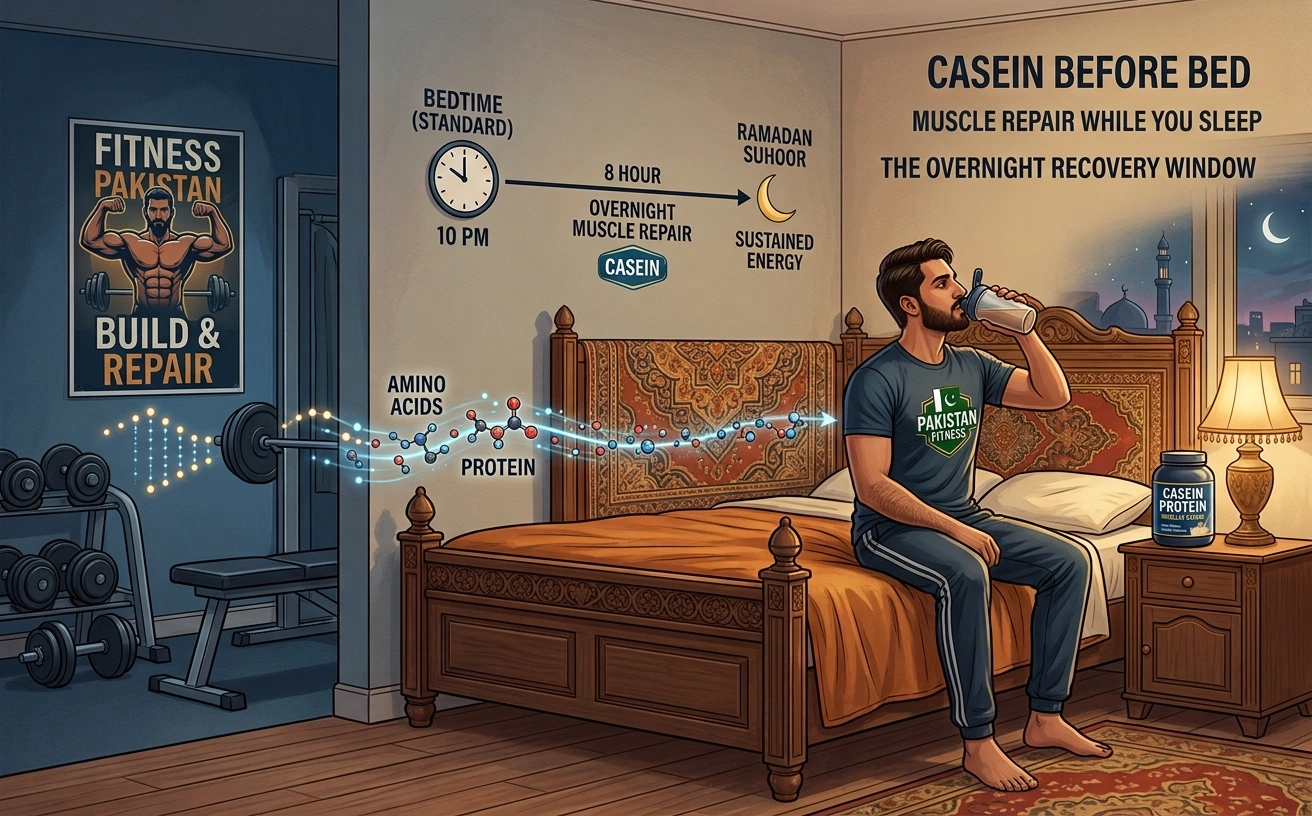
Casein is a milk protein, just like whey, but the two behave very differently once they reach your stomach. Whey dissolves and empties quickly, flooding your bloodstream with amino acids within an hour. Casein does the opposite. It forms a gel like clot in the stomach and releases amino acids gradually over several hours. That slow, steady drip is exactly what your body needs during a seven or eight hour sleep window, which is why casein is often called a slow release protein or a night time protein source.
For anyone whose only casein experience so far has been the overnight recovery basics, this article goes a step further into the actual science, the dosage, and the local dietary context.

Casein vs Whey at Night: What Actually Changes
The casein vs whey at night debate usually comes down to timing and purpose. Whey is ideal right after a workout because your muscles want amino acids fast. At bedtime, that fast spike is less useful because you are about to spend hours without eating. Research on presleep protein ingestion published in Medicine and Science in Sports and Exercise found that a casein drink taken half an hour before sleep was digested steadily through the night, raised whole body protein synthesis, and improved net protein balance compared with a placebo. In simple terms, the study showed that your body can use protein productively while you sleep, provided it is a slow digesting source like casein.
If you already know your best time to take whey protein, think of casein as the missing piece for the other end of the day. Whey covers your post workout window, and casein covers the long overnight gap where your body would otherwise run on stored amino acids alone.
Does Casein Protein Before Bed Really Build Muscle Overnight?
Muscle is not built overnight in a dramatic way, but it is repaired and maintained overnight, and that repair is where growth actually comes from. During sleep your body is in a fasted, catabolic leaning state unless it has amino acids available. A slow release protein before bed keeps a steady trickle of amino acids in your bloodstream so your body has raw material to repair the muscle fibres you broke down in the gym earlier that day. This does not mean casein magically adds muscle mass on its own. It works best as part of a complete plan that already includes enough total daily protein, resistance training, and recovery sleep. Anyone still deciding between protein formats can compare options through whey protein isolate vs concentrate to understand how digestion speed varies even within whey itself.
How Much Casein Protein Before Bed You Actually Need
Most research on presleep protein uses a dose between 30 and 40 grams, roughly one full scoop for most casein products. Going far beyond this does not multiply the benefit, since digestion speed, not total protein load, is what matters most at night. If you already track your total daily protein intake, simply fit this scoop into your existing target rather than adding it on top without adjusting anything else.
A simple night time routine for a Pakistani lifter could look like this. Finish dinner two to three hours before bed as usual, whether that is roti with daal, chicken karahi, or a lighter meal in summer when appetite drops in the heat. Mix your casein with cold water or milk about 30 minutes before sleeping. Avoid mixing it with anything heavily caffeinated, since the goal is rest, not a late night energy spike.
Casein Protein Before Bed in the Pakistani Context
Local dinner timings in Pakistan tend to run later than in many Western countries, especially in summer when the heat pushes meals and gym sessions into the evening. That means the gap between your last meal and bedtime is often shorter here than in the studies quoted above. If your dinner is already high in protein from lentils, chicken, or dairy, a smaller casein serving before bed is enough. If you train late and eat a lighter, carb focused dinner, a full scoop of casein can help close that protein gap before you sleep. During Ramzan, casein taken after Isha or just before sleeping can also help extend protein availability through the long fasting hours until Suhoor.
Price sensitivity is a real factor for most buyers in Pakistan, so it helps to know that a single casein tub, used only at night, lasts considerably longer than a whey tub used multiple times a day. Some users also worry about digestive comfort, since casein digests slowly, and it is worth reading about whether casein protein causes bloating compared to whey before switching your entire night time routine.
Common Mistakes People Make With Night Time Protein
The biggest mistake is expecting casein to replace a proper diet rather than complement it. A shake before bed cannot fix a day of undereating. The second common mistake is drinking casein immediately after a heavy, greasy dinner, which can make digestion feel sluggish going into sleep. The third mistake is assuming more scoops mean more muscle. Beyond the effective 30 to 40 gram range, extra casein is simply extra calories with no added recovery benefit. Finally, some people skip casein entirely because they think only post workout whey matters, missing out on the long overnight window where a slow release protein does its most useful work.
Should You Add Casein Protein Before Bed to Your Routine
If your training is consistent, your total daily protein is already on target, and you simply want to close the overnight gap, casein protein before bed is a reasonable, low effort addition. It will not turn an average diet into a great one, but for a dedicated lifter already doing the basics right, it removes one of the few remaining gaps in a 24 hour recovery plan. Explore the full micellar casein protein option to see the format used in most of the research discussed above, or browse the wider supplement shop if you are still comparing whey and casein side by side.
Frequently Asked Questions
Does casein protein before bed actually help build muscle?
It supports muscle repair by supplying amino acids slowly through the night. It will not build muscle by itself, but combined with training and total daily protein, it closes the overnight recovery gap effectively.
What is the difference between casein vs whey at night?
Whey digests fast and suits post workout use. Casein digests slowly, releasing amino acids for hours, which matches the long gap between dinner and waking up better than whey does.
How much casein protein should I take before bed?
Around 30 to 40 grams, roughly one scoop, is the amount used in most research. Taking more does not add extra benefit since digestion speed, not quantity, drives the overnight effect.
Can casein protein before bed cause bloating?
Some people feel heavier because casein digests slowly by design. Choosing a quality micellar casein and avoiding very large servings close to sleep usually reduces any bloating or discomfort.
Is night time protein useful during Ramzan fasting?
Yes, taking casein after Isha or shortly before sleeping can extend amino acid availability through the long overnight fast until Suhoor, helping preserve muscle during the fasting month.