














Pakistani gym goers and endurance athletes are increasingly looking for natural ways to boost stamina without relying only on stimulant heavy formulas. This is where beetroot powder benefits come into the conversation. Made from dehydrated and ground beets, this supplement has become a popular pre workout option because of its natural nitrate content, which the body converts into nitric oxide. For anyone training in Pakistan’s heat and humidity, understanding how beetroot powder works, how much to take, and when to take it can make a real difference to training output.
Table of Contents
What Is Beetroot Powder and Why Athletes Use It
Beetroot powder is simply beetroot that has been dried and milled into a fine powder, making it easier to mix into water, juice, or a shake compared to drinking fresh beet juice every day. It retains most of the vegetable’s naturally occurring nitrates, along with betalains and antioxidants. Athletes use it because dietary nitrate is one of the few natural compounds with a well documented link to improved oxygen efficiency during exercise, which is why beetroot for gym use has grown into its own supplement category rather than just a health food trend.
How Beetroot Powder Boosts Nitric Oxide Naturally
The core mechanism behind nitric oxide beetroot supplementation is straightforward. Once consumed, dietary nitrate is converted by oral bacteria and stomach acid into nitrite, which is then further converted into nitric oxide in the body. Nitric oxide relaxes and widens blood vessels, a process called vasodilation. Wider blood vessels mean more oxygen and nutrients can reach working muscles during a workout, which is the same principle behind popular nitric oxide boosting ingredients like L-citrulline and L-arginine. If you already use a L-citrulline supplement or an L-arginine capsule, beetroot powder works through a related but distinct pathway, so the two can complement rather than duplicate each other.

Key Benefits of Beetroot Powder for Athletes
Research on beetroot juice and beetroot powder has grown substantially over the past decade, and the findings are generally encouraging, though not universal across every study or every type of exercise.
- Improved oxygen efficiency: Several meta-analyses report that dietary nitrate from beetroot can modestly improve VO2 max and reduce the oxygen cost of submaximal exercise, meaning the body works a little more efficiently at a given pace.
- Better repeated sprint and power output: Some systematic reviews found beetroot supplementation supports high intensity, repeated sprint performance, which is relevant for football, cricket net sessions, and interval training.
- Support for muscle recovery: A few controlled trials found that nitrate rich beetroot juice helped speed up strength recovery and reduced perceived muscle soreness in the days following intense exercise.
- Healthy blood pressure support: Because nitric oxide relaxes blood vessels, regular beetroot intake has also been studied for its mild blood pressure lowering effect in both athletes and non-athletes.
- A natural alternative to stimulant pre-workouts: Beetroot powder contains no caffeine, so it suits people who want a pump and endurance focused supplement without added stimulation.
It is worth being transparent that the research is mixed. A recent umbrella review of beetroot juice studies found that professional athletes tended to see more benefit in muscular strength and lactate tolerance, while non-athletes saw more benefit in aerobic endurance, and that the effect sizes overall are generally small rather than dramatic. The general consensus is that beetroot powder is more likely to help endurance capacity and repeated efforts than to transform one-rep max strength on its own.
Beetroot Powder vs Other Pre-Workouts
Compared with a stimulant based pre-workout or coffee, beetroot powder works differently. Stimulants raise alertness and perceived energy almost immediately through the central nervous system, while beetroot powder works gradually by improving blood flow and oxygen delivery over a period of hours. Many Pakistani lifters now stack a small dose of beetroot powder with their regular training nutrition rather than replacing their pre-workout entirely. If you are comparing nitric oxide boosting options, it also helps to understand the difference between citrulline malate and L-arginine, since beetroot nitrate, citrulline, and arginine all support the same nitric oxide pathway through slightly different routes.
For lifters chasing the pump specifically, a dedicated pump focused pre-workout can be used on heavier training days, with beetroot powder used on the days in between for a gentler, food based nitric oxide boost.
Recommended Dosage for Gym and Sports Performance
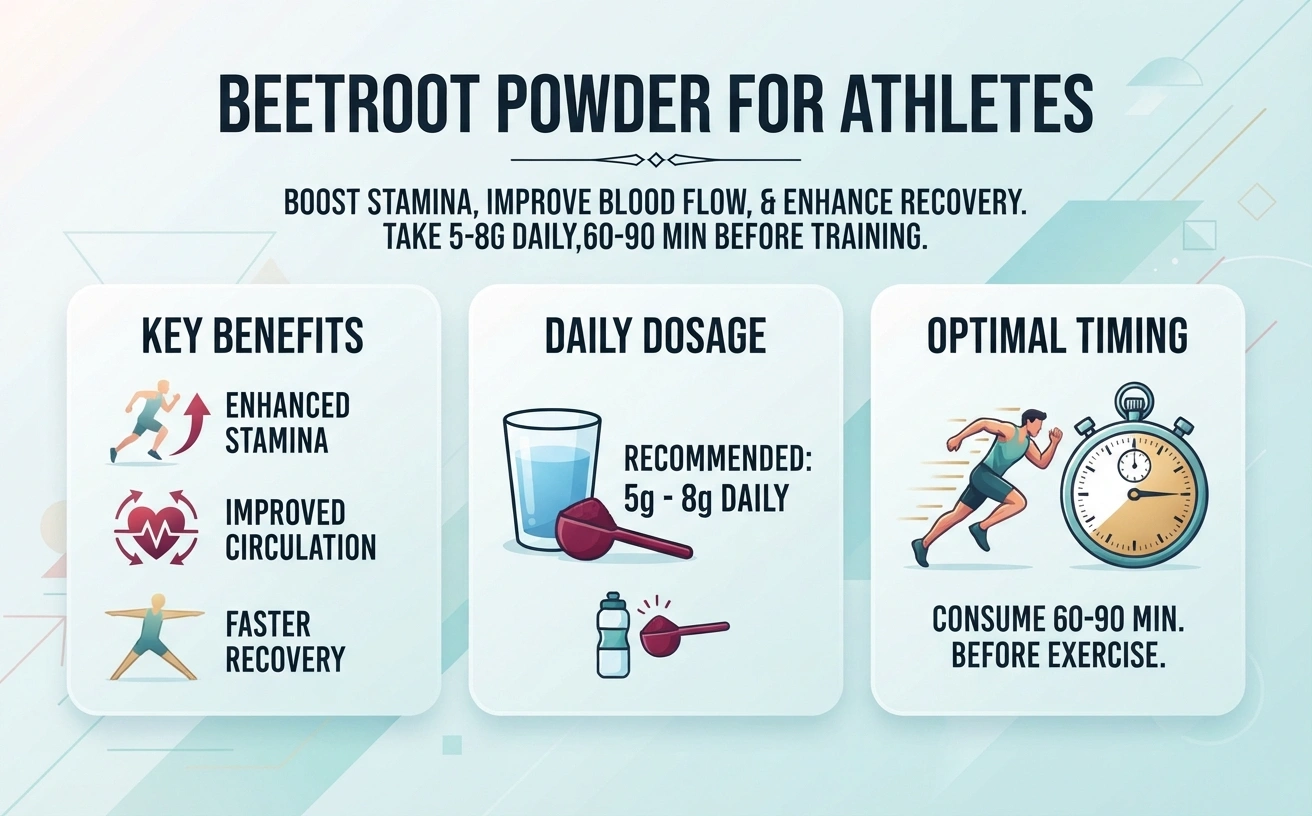
Most of the available research on beetroot supplementation used doses that provided roughly 300 to 600 milligrams of nitrate per serving, which typically corresponds to about one to two teaspoons, or 5 to 10 grams, of concentrated beetroot powder depending on the brand’s nitrate concentration. Because products vary in strength, it is always best to check the label on your specific beetroot supplement pakistan option and follow the manufacturer’s serving guidance rather than assuming every brand is dosed the same way. Beginners are usually advised to start at the lower end of the range for the first week to see how their body responds before increasing toward the upper end used in most performance studies.
Best Timing: When to Take Beetroot Powder
Timing depends on whether you want an acute, single session boost or a longer term training adaptation.
- For a single event or workout: Most research suggests taking beetroot powder about two to three hours before exercise, since this is roughly how long it takes for dietary nitrate to convert into circulating nitric oxide and reach peak levels in the blood.
- For ongoing training blocks: Some studies used a loading approach, where beetroot powder was consumed daily for three to seven days before a key event, which appeared to build up nitrate stores and produce a more consistent performance effect.
If you already follow a structured supplement schedule, it can help to review general guidance on the best time to take pre-workout for maximum energy and simply slot beetroot powder into the two to three hour pre-training window alongside your existing routine. A systematic review on sprint performance found this pre-exercise window, along with several days of consistent daily intake before a key event, to be the timing strategy most often linked with measurable results.

Who Should Be Cautious With Beetroot Powder
Beetroot powder is generally well tolerated, but a few groups should be more careful. People with a history of kidney stones should be aware that beets are relatively high in oxalates, which can contribute to certain types of stones in sensitive individuals. Anyone on blood pressure medication should talk to a doctor before adding a nitrate rich supplement, since combining the two could lower blood pressure more than intended. It is also common, and harmless, for beetroot to turn urine or stool a pink or reddish color, a condition known as beeturia, which some first time users mistake for a health concern.
How to Choose a Quality Beetroot Powder in Pakistan
When shopping for a beetroot supplement pakistan buyers should look for a few practical markers of quality: a clearly stated nitrate content per serving, minimal added fillers or artificial sweeteners, and third party batch testing where available. Since beetroot powder is often bought alongside other pre-workout or performance nutrition products, browsing the full supplement range at Nutritional World can help you compare options and build a stack that fits your training goals and budget.
Frequently Asked Questions
Is beetroot powder good for athletes?
Yes, beetroot powder can support athletes by improving oxygen efficiency and blood flow through its natural nitrate content. Evidence is strongest for endurance and repeated sprint performance, with more modest and mixed results for pure strength training.
How much beetroot powder should I take before a workout?
Most studies use doses providing around 300 to 600 milligrams of nitrate, often five to ten grams of powder. Always follow your specific product’s label, since nitrate concentration varies between beetroot powder brands.
When is the best time to take beetroot powder?
For a single workout, take it about two to three hours beforehand so nitrate has time to convert into nitric oxide. For events, some athletes load it daily for three to seven days beforehand for a steadier effect.
Can beetroot powder replace my regular pre-workout?
It can for people who want a stimulant free option focused on blood flow and endurance. Many athletes instead combine a small beetroot powder dose with their existing pre-workout routine for a broader effect.
Does beetroot powder have side effects?
Beetroot powder is generally safe, though it can turn urine or stool pink, which is harmless. People with kidney stone history or those on blood pressure medication should check with a doctor before regular use.