














Coenzyme Q10, better known as CoQ10, is one of the most talked about nutrients in heart health circles worldwide, yet it remains largely unfamiliar to most people in Pakistan. As awareness of preventive health grows in cities like Karachi, Lahore, and Islamabad, more people are asking whether a CoQ10 supplement in Pakistan is worth adding to their daily routine. This guide breaks down what CoQ10 actually does, the evidence behind its heart and energy benefits, and how to think about dosage safely.
Table of Contents
What Is CoQ10 and Why Does It Matter
CoQ10 is a naturally occurring compound found in almost every cell of the body. Its main job is helping mitochondria, the energy producing part of cells, convert food into usable energy. It also works as an antioxidant, helping protect cells from oxidative damage caused by everyday stress, pollution, and aging. Levels of CoQ10 are naturally highest in organs that demand the most energy, particularly the heart, kidneys, and liver.
The body produces CoQ10 on its own, but production tends to decline with age. Certain medications, particularly statins used for cholesterol management, are also known to lower CoQ10 levels. This is one of the main reasons coenzyme Q10 benefits are discussed so often alongside heart health and cardiovascular medication.
Coenzyme Q10 Benefits Worth Knowing
Research on CoQ10 spans several areas of health, though the strength of evidence varies by use case. Here is an honest look at what current studies suggest.
Heart function support. Several clinical studies have examined CoQ10 for people with heart failure and other cardiovascular concerns, with some research suggesting it may support heart muscle function when combined with standard medical care. It is not a replacement for prescribed heart medication, but rather a nutrient some cardiologists consider as a complementary approach.
Energy and fatigue. Because CoQ10 plays a direct role in cellular energy production, some people report reduced fatigue when levels are restored, particularly those who were previously deficient. The evidence here is more mixed than for heart health, and results vary between individuals. You can read more about how cells generate energy in our piece on glycogen and energy storage.
Antioxidant activity. CoQ10 helps neutralize free radicals, which supports the body’s broader defense against oxidative stress. This overlaps with the role other antioxidants play, which we cover in detail in our article on the role of antioxidants in reducing oxidative stress.
Statin related CoQ10 depletion. Because statins can lower natural CoQ10 levels, some doctors recommend supplementation for patients on long term statin therapy, though this should always be discussed with a physician rather than self-prescribed.
Migraine and exercise performance. Preliminary research has explored CoQ10 for migraine frequency and exercise recovery, but these areas need more robust studies before firm conclusions can be drawn.
CoQ10 for Heart Health in the Pakistani Context
Cardiovascular disease is one of the leading health concerns in Pakistan, driven by factors like diet, sedentary lifestyles, and rising rates of diabetes and hypertension. This has pushed more people to look beyond standard treatment and explore supportive nutrients like CoQ10 for heart health, alongside already familiar options such as omega-3s. If you are already exploring heart supportive nutrition, it is worth reading our guide on whether omega-3 is good for heart health, since the two nutrients are often discussed together as part of a broader cardiovascular support strategy.
Another nutrient frequently mentioned in the same conversation is L-carnitine, which also plays a role in cellular energy metabolism relevant to heart function. Our article on how L-carnitine supports heart and metabolic health explains this connection in more depth.
It is important to be clear that CoQ10 is not a treatment for heart disease and should never replace medication prescribed by a cardiologist. Anyone with an existing heart condition should talk to their doctor before starting any new supplement, including CoQ10.
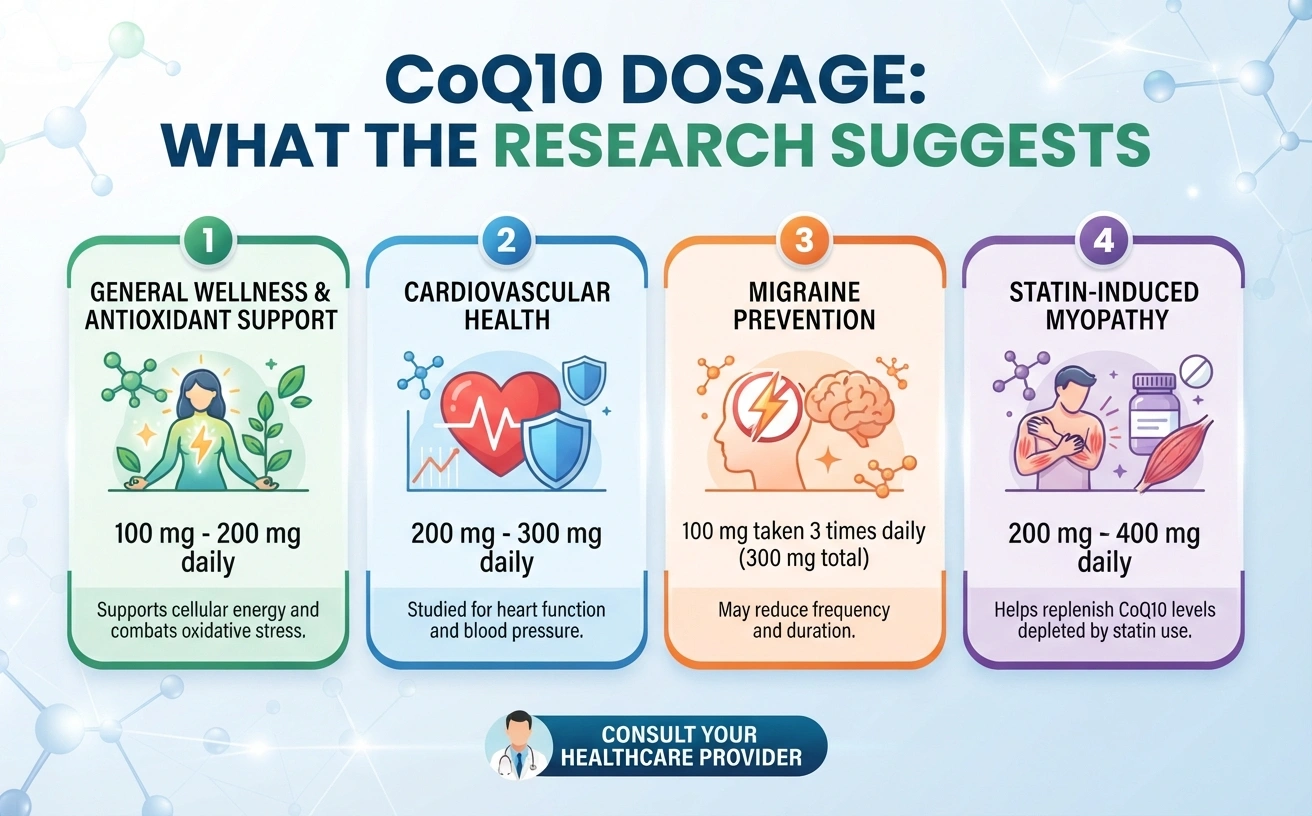
CoQ10 Dosage: What the Research Suggests
There is no single official recommended daily allowance for CoQ10 because it is not classified as an essential vitamin. That said, most clinical studies have used daily doses ranging from 90 mg to 200 mg, split across one or two doses with meals, since CoQ10 is fat soluble and absorbs better with dietary fat.
A few practical points on coq10 dosage to keep in mind:
- Start at the lower end of the range and monitor how your body responds before increasing.
- Take it with a meal containing some fat, such as with breakfast or dinner, rather than on an empty stomach.
- People on statins or blood thinning medication should consult a doctor first, since CoQ10 may interact with certain medications.
- Pregnant or breastfeeding women should avoid supplementing without medical guidance, as safety data in these groups is limited.
- Consistency matters more than high doses. CoQ10 tends to build up gradually in the body over several weeks.
Two Forms of CoQ10: Ubiquinone vs Ubiquinol
CoQ10 supplements generally come in two forms. Ubiquinone is the oxidized form and is more commonly available and affordable. Ubiquinol is the reduced, active form that the body absorbs slightly more easily, particularly in older adults whose natural conversion process slows down. For most healthy adults, ubiquinone is perfectly adequate, while ubiquinol may be considered by older individuals or those with absorption concerns, though it typically comes at a higher price point.
Food Sources of CoQ10
While supplementation is the most reliable way to raise CoQ10 levels significantly, small amounts are naturally present in foods such as organ meats, fatty fish, whole grains, and some vegetable oils. However, dietary intake alone rarely provides therapeutic amounts, which is why supplementation is generally the more practical option for anyone specifically targeting coenzyme q10 benefits.
Choosing a CoQ10 Supplement in Pakistan
When shopping for a CoQ10 supplement in Pakistan, look for products that clearly state the milligram dosage per capsule, the form of CoQ10 used, and third party testing where available. Pricing can vary widely depending on the brand and whether the product uses ubiquinone or ubiquinol, so comparing per-capsule cost rather than just the package price is a more reliable way to judge value.
If you are building a broader heart and energy focused supplement routine, it can help to look at your overall vitamin intake alongside CoQ10. Our roundup of the best multivitamin tablets available locally is a useful starting point for filling any other nutritional gaps. You can browse the full range of options on our shop page.
Final Thoughts
CoQ10 is a genuinely interesting nutrient with real, though not universal, evidence behind its role in heart function, cellular energy, and antioxidant defense. It is not a miracle fix and should be viewed as a complementary addition to a balanced diet and, where relevant, prescribed medical treatment. For most healthy adults in Pakistan interested in supporting long term heart and energy health, a moderate, consistent coq10 dosage combined with medical advice for anyone on existing medication is the most sensible approach.
Frequently Asked Questions
Is CoQ10 safe to take daily in Pakistan’s climate and diet?
Yes, CoQ10 is generally considered safe for daily use in healthy adults. Pakistan’s typical diet does not significantly affect its safety, though anyone on medication should consult a doctor first.
What is the best time to take a CoQ10 supplement?
Take CoQ10 with a meal containing some fat, ideally breakfast or dinner. This improves absorption since CoQ10 is fat soluble and poorly absorbed on an empty stomach.
Can CoQ10 replace heart medication?
No, CoQ10 is not a substitute for prescribed heart medication. It may offer complementary support, but treatment decisions should always involve a qualified cardiologist.
How long does it take to feel CoQ10 benefits?
Most people report noticing changes after four to twelve weeks of consistent use. CoQ10 builds up gradually in tissues, so patience and regular dosing matter more than high single doses.
Is ubiquinol better than ubiquinone for beginners?
Not necessarily. Ubiquinone works well for most healthy adults and costs less. Ubiquinol may suit older adults or those with absorption issues, but it is not essential for everyone.