













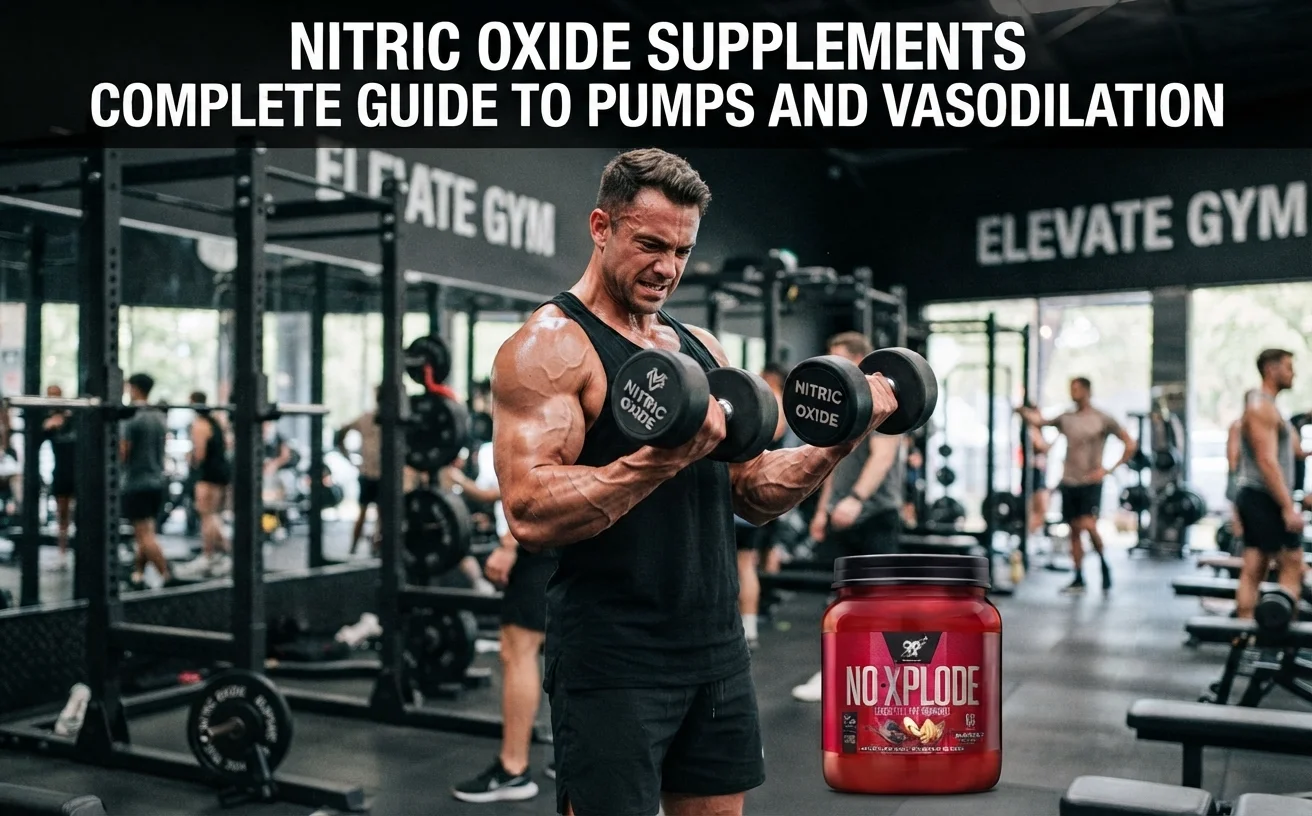
If you have ever finished a set and felt your muscles swell up tight against your skin, that is nitric oxide at work. This complete nitric oxide supplement guide breaks down how these products actually trigger vasodilation, which ingredients matter, and how to pick between the two most talked about compounds on every Pakistani gym shelf: L-arginine and L-citrulline.
Nitric oxide (NO) is a signalling molecule your body produces naturally. It relaxes the smooth muscle inside your blood vessel walls, which widens the vessels and lets more blood, oxygen and nutrients reach working muscles. That widening is called vasodilation, and it is the exact mechanism behind the “pump” lifters chase during training.
Table of Contents
What Nitric Oxide Actually Does During a Workout
When you train, your muscles demand more oxygen and glucose than at rest. Nitric oxide helps blood vessels open up to meet that demand. A stronger, faster pump means more nutrient delivery to the muscle, which many lifters associate with better performance and recovery, though the pump itself is a short term vascular effect rather than a direct measure of long term muscle growth.
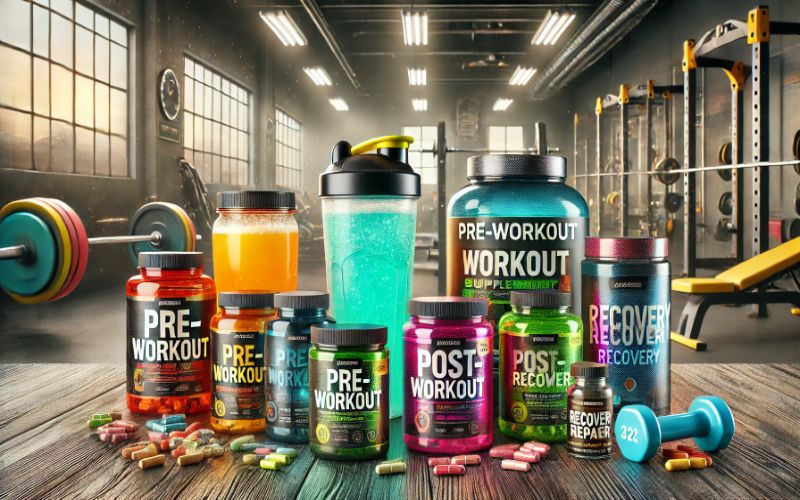
This is why nitric oxide supplements are almost always grouped with pre-workout supplements rather than post-workout recovery products. You want the vasodilation effect active while you are lifting, not after.

The Core Ingredients Behind NO Supplements
Your body does not absorb nitric oxide directly from a capsule. Instead, supplements provide the raw materials your body converts into nitric oxide through the arginine-nitric oxide synthase pathway or the nitrate-nitrite pathway.
L-Arginine
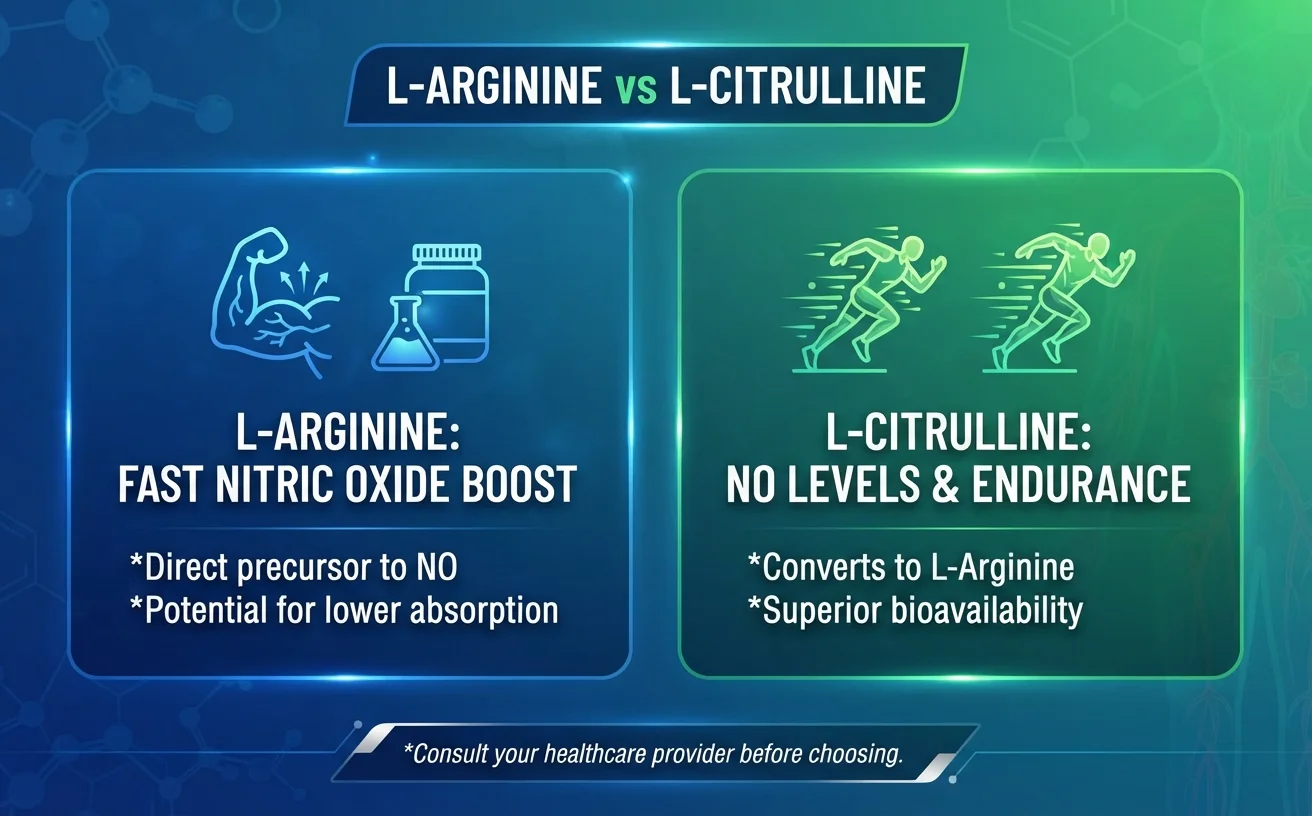
L-arginine is an amino acid and a direct precursor to nitric oxide. It has been used in supplements for decades, and you will find it in classic pump products. The issue is that a large share of oral arginine is broken down in the gut and liver before it reaches the bloodstream, so its effect on circulation can be inconsistent at typical doses. For a deeper look at how this pathway works, our post on L-arginine for circulation, benefits and dosage covers the practical side.
L-Citrulline and Citrulline Malate
L-citrulline takes a longer route. It is converted into arginine in the kidneys after absorption, which means more of it survives digestion and ultimately raises blood arginine levels more effectively than taking arginine directly. Citrulline malate, which pairs citrulline with malic acid, is the more common form in pre-workout formulas because it also supports energy production during exercise.
We compare these two compounds directly in our guide on citrulline malate vs L-arginine, which is worth reading before you decide which one fits your goals.
Other Nitric Oxide Boosting Ingredients
Beyond arginine and citrulline, many pump formulas add:
- Beetroot extract and nitrates, which feed the nitrate-nitrite-NO pathway, an alternate route to vasodilation that does not rely on arginine at all
- Agmatine sulfate, which some formulas include for extended pump duration
- Glycerol, which draws water into muscle tissue and adds to the visual fullness lifters chase alongside vasodilation
L-Arginine vs L-Citrulline: Which Should You Choose
This is the most common question in the nitric oxide supplement guide category, and the honest answer depends on your priorities.
Choose L-arginine if you want a lower cost option and are not overly sensitive to stomach discomfort, since higher doses of arginine can cause gastrointestinal upset in some users. Our Anabolic L-Arginine 120 Tablets and L-Arginine 120 Capsules are straightforward entry points if you want to test how your body responds.
Choose L-citrulline if you want a more reliable pump with fewer digestive side effects, since research generally shows citrulline raises plasma arginine more consistently. Our New L-Citrulline 1500 is formulated for this exact purpose and is a common addition for lifters who already use a stim-based pre-workout without built-in pump ingredients.
Pump Supplements Worth Knowing in Pakistan
A true pump supplement usually blends multiple nitric oxide precursors into one scoop rather than relying on a single ingredient. If you want a dedicated pump product rather than a full stimulant pre-workout, look at:
- Pump 3G Original 375g and Pump 3G Zero for a stimulant-free vasodilation stack
- BSN N.O.-Xplode 30 Servings, one of the original NO-focused pre-workouts on the market
- GAT Nitraflex 300g, which pairs arginine with a stimulant base for both pump and energy
- Mr Hyde Nitro-X 30 Servings for lifters who want an intense stim and pump combination
If you prefer a full stimulant pre-workout that also includes pump ingredients rather than a standalone NO product, our comparison of C4 pre-workout options in Pakistan and the breakdown of stim vs non-stim pre-workout will help you decide which category actually fits your training style.
How to Use Nitric Oxide Supplements Correctly
Timing matters more with NO supplements than with most other categories because the vasodilation effect is temporary.
- Take it 30 to 45 minutes before training. This gives citrulline enough time to convert to arginine and raise blood levels before your first working set.
- Stay consistent with dosing. Most research uses 6 to 8 grams of citrulline or 3 to 6 grams of arginine, and lower doses tend to underperform.
- Pair with adequate hydration. Blood volume plays a role in how effective vasodilation feels, so being dehydrated blunts the pump regardless of dose.
- Cycle stimulant-based pump products if needed. If your pump supplement also contains caffeine, review our guide on cycling pre-workout to avoid tolerance so the stimulant side does not stop working while the pump ingredients still do.
Who Should Be Careful With Nitric Oxide Supplements
Anyone on blood pressure medication, nitrate-based heart medication, or with a diagnosed cardiovascular condition should speak with a doctor before adding arginine or citrulline in supplement form, since these compounds directly affect blood vessel function. If you experience unusual flushing, headaches or a drop in blood pressure symptoms after use, stop and consult a physician.
Final Thoughts
A good nitric oxide supplement guide comes down to one decision: pick the pathway that fits your budget and tolerance, arginine for cost, citrulline for consistency, or a blended pump supplement for both. Whichever route you take, pair it with proper hydration and sensible timing, and treat the pump as one part of a broader training and nutrition plan rather than the whole plan itself. For a wider look at supporting compounds, our amino acids for older adults and antioxidants and oxidative stress posts round out the broader recovery picture around vascular health.
FAQs
Is L-citrulline better than L-arginine for pumps?
L-citrulline generally raises blood arginine levels more effectively than taking arginine directly, since it survives digestion better. It often causes less stomach discomfort too, making it the preferred choice for most lifters.
How long before a workout should I take nitric oxide supplements?
Take nitric oxide supplements 30 to 45 minutes before training. This window allows citrulline or arginine to convert and raise nitric oxide levels in time for your first working sets.
Can beginners use pump supplements?
Yes, pump supplements are generally safe for healthy beginners at standard doses. Start with a single ingredient like citrulline before moving to a blended pump formula so you can judge tolerance.
Do nitric oxide supplements help build muscle directly?
Not directly. They improve blood flow and nutrient delivery during training, which can support performance and recovery, but muscle growth still depends on training volume, protein intake and recovery.
Are nitric oxide supplements safe with blood pressure medication?
Not without medical advice. Arginine and citrulline affect blood vessel dilation, so combining them with blood pressure or nitrate-based medication should be discussed with a doctor first.