













If you have stood in a pharmacy aisle in Karachi or scrolled through supplement shops online wondering whether to pick krill oil or fish oil, you are not alone. Both promise the same core benefit, omega 3 fatty acids for your heart, brain, and joints, but they come from different sources, absorb differently in the body, and carry very different price tags. This guide breaks down the real differences so you can decide which one actually makes sense for your budget and your health goals in Pakistan.
Table of Contents
What Is the Real Difference Between Krill Oil and Fish Oil?
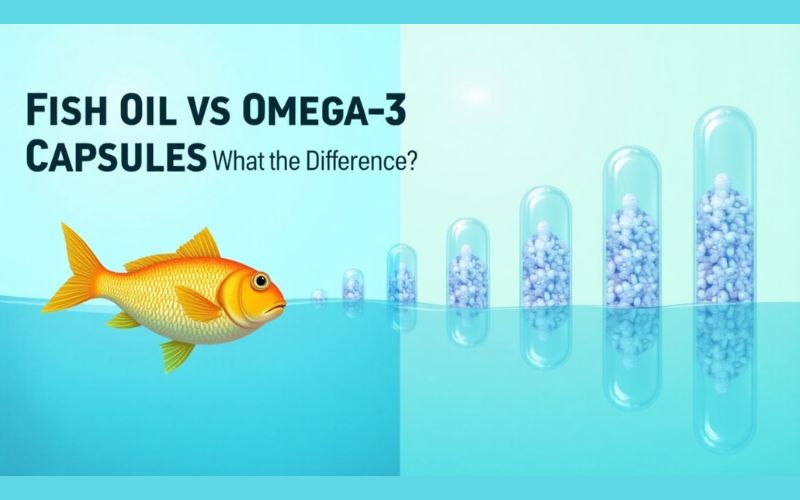
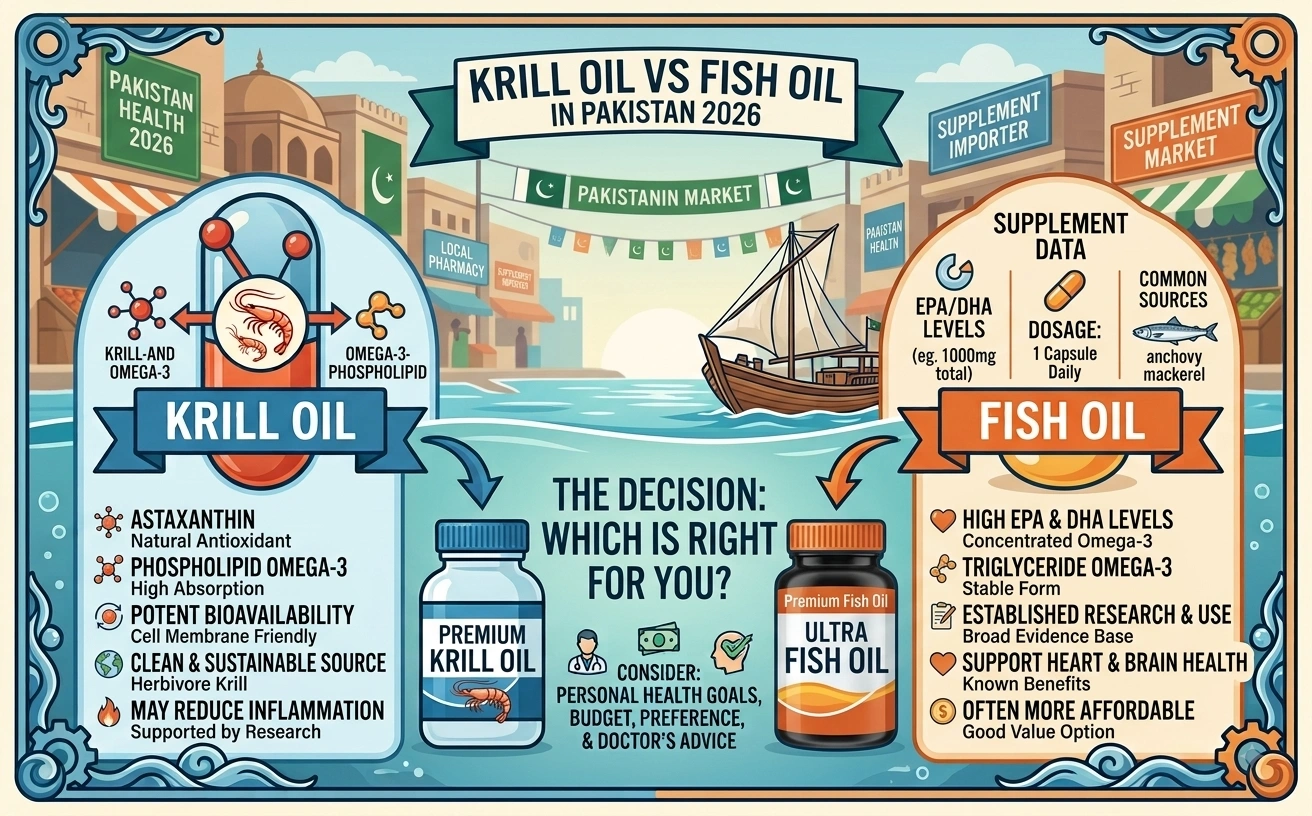
Fish oil is extracted from oily fish such as salmon, mackerel, sardines, and anchovies. The omega 3 fatty acids in fish oil, mainly EPA and DHA, are bound to triglycerides. Krill oil, on the other hand, comes from tiny shrimp-like crustaceans found in the Antarctic Ocean, and its omega 3 is bound to phospholipids instead. This structural difference is the main reason people compare the two so often. If you want a deeper breakdown of how these two sources differ chemically, our guide on omega 3 versus fish oil differences covers it in more detail.
Krill oil also naturally contains astaxanthin, an antioxidant that gives it a reddish colour and helps protect the oil from oxidation. Fish oil does not have this built in antioxidant, which is one reason fish oil capsules are more prone to that fishy, oxidised smell if stored poorly, something especially relevant during Pakistan’s hot summer months.
Absorption Comparison: Which One Does Your Body Actually Use Better?
This is where krill oil tends to win in most studies. Because the omega 3 in krill oil is attached to phospholipids, it is structurally closer to the fat found in human cell membranes. This means your body ca
n absorb and use it more efficiently, often at a lower dose compared to triglyceride based fish oil.
Fish oil is not poorly absorbed by any means, especially when taken with a meal that contains some fat. But for people who want maximum absorption per milligram, krill oil generally has the edge. If you are unsure how to read the EPA and DHA numbers on a label to judge actual potency, check our guide on reading fish oil labels for EPA vs DHA before comparing products.

The No Burp Advantage of Krill Oil
One of the most common complaints about fish oil in Pakistan is the fishy aftertaste and repeated burping that follows, especially in hot weather when oils can turn rancid faster. Krill oil capsules are generally smaller, and because the oil is bound differently, most users report far less of that fishy repeat and no lingering aftertaste.
This single factor is often the deciding one for people who tried fish oil before and gave up because of the smell. If burping and aftertaste have been your main complaint, our article on omega 3 with no fishy aftertaste lists options that address this directly, including enteric coated fish oil softgels that many Pakistani buyers now prefer over standard capsules.
Price Per EPA and DHA mg: Where the Real Comparison Happens
Here is the part most comparisons skip. Krill oil is almost always more expensive per capsule than fish oil, sometimes two to three times the price. But price per capsule is not the right way to compare them. What actually matters is the price per milligram of active EPA and DHA you are getting.
A typical fish oil softgel in Pakistan may contain 300 to 600 mg of combined EPA and DHA per serving, while krill oil often delivers a lower total of 100 to 250 mg per serving, since the doses are usually smaller and rely more on better absorption than higher raw content. Once you divide the pack price by total active omega 3 content across the bottle, fish oil usually comes out significantly cheaper per mg. This makes fish oil the more practical daily choice for most households, especially larger families managing budgets, while krill oil suits buyers who prioritise absorption over raw quantity and are willing to pay for it.
For a full breakdown of what fish oil actually costs across brands sold locally, see our detailed omega 3 fish oil price guide for Pakistan. It is also worth comparing a few top selling names side by side rather than picking the first one you see; our roundup of the best selling omega 3 brands in Pakistan compares pricing across the market.
Which One Should You Actually Buy?
If your priority is sensitivity to fishy burps, smaller capsule size, and you do not mind paying more for better absorbed omega 3, krill oil is worth the extra cost, provided you can find a genuine, well-stored batch. Krill oil is still relatively new to the Pakistani market and less widely stocked, so availability and authenticity can be inconsistent depending on where you buy from.
If your priority is daily heart and brain support at a sustainable long term cost, standard fish oil remains the more practical and widely available choice in Pakistan. Locally available options such as QN Omega 3 Fish Oil and ProScience Nutra Fish Oil softgels offer solid EPA and DHA content at a price that works for regular, ongoing use. For buyers who want a blended approach covering omega 3, 6, and 9, Tri Omega 3 6 9 is another option worth considering.
Whichever you choose, dosage still matters more than the source. Our omega 3 dosage guide explains how much EPA and DHA you actually need daily based on your age and health goals, and if halal certification is a concern for your household, our guide on choosing halal omega 3 in Pakistan walks through what to check on the label before buying either type.
Final Verdict
Krill oil is not automatically “better” than fish oil, it is better suited to a specific kind of buyer, someone who wants smaller capsules, no fishy aftertaste, and stronger absorption, and who is willing to pay a premium for it. Fish oil remains the more cost effective, widely available, and proven option for most people in Pakistan looking for consistent omega 3 intake without stretching their monthly budget. If you are also managing joint discomfort alongside general omega 3 supplementation, it is worth reading how omega 3 helps with joint pain and inflammation, since both krill and fish oil offer benefits here, just at different price points.
Frequently Asked Questions
Is krill oil better than fish oil for absorption?
Yes, krill oil is generally absorbed more efficiently because its omega 3 is bound to phospholipids rather than triglycerides. This means your body can use it more effectively per milligram, though fish oil still offers strong absorption when taken with meals.
Why is krill oil more expensive than fish oil in Pakistan?
Krill oil is harvested from Antarctic krill using a more complex extraction process, and it is less commonly stocked locally. Limited supply, higher production costs, and added antioxidants like astaxanthin all push the price above standard fish oil.
Does krill oil really cause less burping than fish oil?
Most users report significantly less fishy aftertaste and burping with krill oil due to its smaller capsule size and different fat structure. Fish oil can still be tolerated well if taken with food or in enteric coated softgel form.
What is the best krill oil supplement in Pakistan right now?
Genuine krill oil products are still limited in Pakistan compared to fish oil. Buyers should check for third party testing, proper storage, and authentic sourcing before purchasing, since availability varies significantly between local retailers and imported stock.
Should I choose fish oil or krill oil for daily long term use?
For most people, fish oil offers better long term value due to lower price per mg of EPA and DHA. Krill oil suits those prioritising absorption and tolerability who can afford the higher ongoing cost of regular supplementation.