














Life gets hectic. Between back-to-back meetings, long commutes, and packed schedules, sitting down for a proper meal often feels like a luxury. If you’re trying to build muscle or maintain your gains while juggling a busy workday, you’ve probably wondered: can a lean mass gainer actually replace a meal? It’s a smart question and the answer is more nuanced than a simple yes or no.
Let’s break it down properly, covering what lean mass gainers are, how they compare to whole-food meals, when it’s okay to use them in place of eating, and when it clearly isn’t.
Table of Contents
What Is a Lean Mass Gainer, Really?
Before you start swapping meals for shakes, it helps to understand what you’re actually drinking. A lean mass gainer is a supplement designed to deliver a calorie-dense blend of protein, carbohydrates, and fats without the excessive sugar and fat load you’d find in a traditional bulk gainer. The word “lean” matters here. These products are engineered to support muscle growth while keeping unnecessary fat gain to a minimum.
Typical lean mass gainers contain 400–700 calories per serving, 30–50 grams of protein, complex carbohydrates from oats or sweet potato powder, healthy fats, and micronutrients like vitamins and minerals. That macro profile already starts to resemble a balanced meal which is why so many athletes and busy professionals reach for them mid-day.
The Real-Life Scenario: A Busy Workday
Picture this: it’s 1 PM, you had an early gym session, your morning protein shake wore off hours ago, and you have three more hours before your next break. You don’t have time to cook, the office cafeteria is uninspiring, and ordering food will take 45 minutes. Sound familiar?
This is precisely the scenario where a weight gainer supplement can step in as a practical, nutritionally complete stopgap. The key is knowing the difference between using it as an occasional, strategic meal bridge versus relying on it to replace whole foods every single day.

When a Lean Mass Gainer Can Work as a Meal Replacement
There are genuine situations where reaching for a gainer shake instead of a full plate makes sense and doesn’t compromise your health or fitness goals:
- You’re in a caloric deficit from skipping meals and need quick, real calories to prevent muscle breakdown.
- You’ve had a morning training session and need a fast post-workout refuel with a solid macro breakdown.
- You’re travelling or commuting and genuinely cannot access clean food.
- You’re using it to supplement a light meal such as pairing it with fruit, nuts, or a small sandwich.
- Your goal is muscle gain, and you’re hitting your total daily calorie target regardless of how you get there.
Nutritional Completeness: Where Gainers Fall Short
Here’s where we need to be honest. Even the best lean mass gainer on the market is not a perfect 1:1 replacement for a whole-food meal. Real food comes with dietary fibre, enzymes, phytonutrients, and food synergies that simply can’t be replicated in a powder. If you’re swapping three meals a day for shakes, you’re trading short-term convenience for long-term nutritional gaps.
The main areas where gainers typically fall short include:
- Dietary fibre: Most gainers contain very little, which means your gut health and digestion can suffer over time.
- Micronutrient diversity: While some gainers are fortified, they rarely match the broad spectrum of vitamins and minerals found in vegetables, legumes, and whole grains.
- Satiety: Liquid calories digest faster than solid food, which means you may feel hungry again sooner.
- Hormonal response: Whole foods trigger more complex hormonal responses like sustained insulin management compared to shakes.
A practical workaround? Consider pairing your lean mass gainer shake with a handful of almonds, a banana, or even a multivitamin supplement to fill the micronutrient gaps.
Protein Quality and Muscle Preservation on Busy Days
One of the strongest arguments for using a lean mass gainer mid-day is protein timing. When you skip meals, you risk going into a catabolic state where your body starts breaking down muscle for energy. A shake rich in whey protein or a blend of fast and slow-digesting proteins acts as a muscle-sparing tool when you physically cannot eat.
For someone aiming to build lean muscle, this is not a trivial benefit. Missing a meal by several hours without any nutritional intake can stall your progress far more than the minor downsides of a liquid meal. In this context, a lean mass gainer functions less like junk food and more like a strategic nutritional insurance policy.
How to Optimise Your Shake for Better Meal Replacement Quality
You don’t have to accept a gainer shake at face value. With a few simple additions, you can significantly boost its nutritional completeness:
- Blend it with milk instead of water for added calcium and natural protein.
- Add a scoop of oats for slow-releasing carbohydrates and fibre.
- Throw in a banana or berries for natural sugars, potassium, and antioxidants.
- Include a serving of omega-3 capsules alongside your shake for healthy fats and anti-inflammatory support.
- Sprinkle flaxseed or chia seeds for added fibre and essential fatty acids.
This transforms a basic gainer shake into something much closer to a complete meal while still taking under three minutes to prepare.
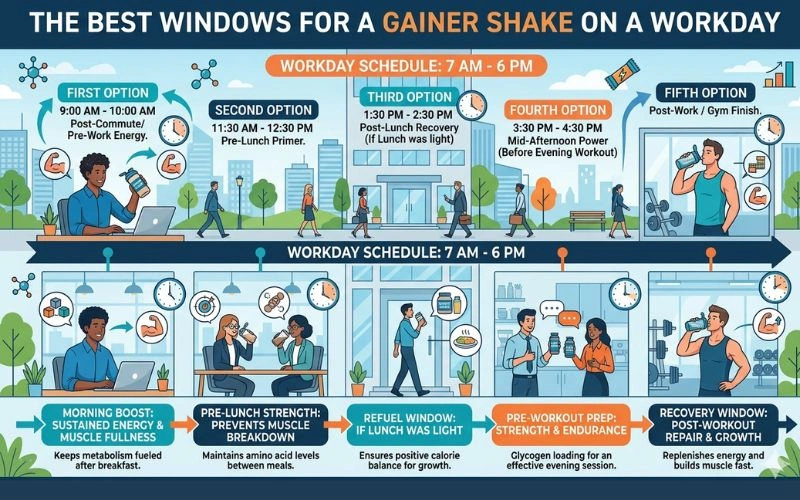
Timing: The Best Windows for a Gainer Shake on a Workday
Not all meal replacement moments are created equal. Where you place your lean mass gainer shake in your day has a real impact on how effectively your body uses those nutrients. Here are the three most strategic windows for busy professionals:
Mid-morning (10–11 AM): If you trained early and only had a light breakfast, this is a smart window to refuel your glycogen stores and deliver protein to recovering muscles before your lunch break.
Post-workout (any time): If you’re using a pre-workout supplement before your session, follow it up with a lean gainer shake within 45 minutes of finishing. The protein-carb combo kickstarts muscle protein synthesis during your highest absorption window.
Afternoon meal gap (2–4 PM): If lunch was light or skipped entirely, this window is dangerous for muscle loss. A gainer shake here prevents the body from entering a prolonged fasted state during working hours.
Lean Mass Gainer vs Bulk Gainer: Which Is Better for Meal Replacement?
The weight gainer category and wondering whether to go lean or bulk, the answer for meal replacement purposes is almost always lean. Here’s why:
- Lean gainers have fewer empty calories meaning you get more nutritional value per calorie consumed.
- They’re easier on digestion, which matters when you’re at your desk and can’t afford a food coma.
- The lower sugar content prevents the energy spike-and-crash cycle that comes with some bulk gainers.
- They align better with body composition goals, especially if you’re trying to add muscle without significant fat gain.
Bulk gainers are better suited for hardgainers who struggle to eat enough calories in total, not for replacing individual meals throughout a busy workday.
What Fitness Professionals Actually Recommend
Most certified nutritionists and sports dieticians agree on a sensible middle ground: use a lean mass gainer to bridge nutritional gaps on genuinely busy days, but never let it become the foundation of your diet. The rule of thumb most professionals follow is the 80/20 approach 80% of your nutrition comes from whole, real foods across the week, and 20% can come from strategic supplementation when circumstances demand it.
This philosophy keeps your gut microbiome healthy, ensures long-term micronutrient sufficiency, and still leaves room for supplements like BCAA, creatine, and amino acids to do their jobs effectively alongside your training program.
Choosing the Right Lean Mass Gainer in Pakistan
Quality matters enormously when choosing a product you’ll consume regularly. Cheap gainers often use maltodextrin-heavy formulas with poor protein quality and artificial ingredients that don’t serve your body well. At Nutritional World Pakistan, you’ll find a curated range of lean mass gainers from trusted international brands, including Applied Nutrition, Optimum Nutrition, and Dymatize all verified for quality and authenticity.
When evaluating a lean mass gainer for meal replacement use, look for these on the label:
- At least 30g of protein per serving from quality sources like whey, casein, or egg protein.
- Complex carbohydrates (oat powder, sweet potato, brown rice) rather than simple sugars.
- Moderate fat content with some healthy fat sources like MCTs or flaxseed.
- Added digestive enzymes to improve absorption is a big bonus if you’re using it frequently.
- Minimal artificial colours and fillers.
Frequently Asked Questions (FAQs)
1. Can I use a lean mass gainer as a daily meal replacement?
It’s fine occasionally, but not as a daily habit. Lean mass gainers lack the dietary fibre and phytonutrients found in whole foods. Use them strategically on genuinely busy or high-training days while keeping the majority of your nutrition from real, balanced meals for long-term health and performance.
2. Will drinking a lean mass gainer instead of eating cause fat gain?
Only if you exceed your total daily calorie needs. Lean mass gainers are designed for controlled caloric surplus. If you’re replacing a meal rather than adding on top of it, your total intake stays balanced. The key is tracking your macros and ensuring the shake fits within your overall daily calorie goal.
3. What’s the difference between a lean mass gainer and a standard protein shake?
A whey protein shake typically delivers 100–150 calories and 25–30g of protein with minimal carbs. A lean mass gainer provides 400–700 calories, combining protein with significant carbohydrates and fats. This makes the gainer a more complete meal substitute, while a protein shake is more of a targeted protein top-up.
4. Is it safe to use a lean mass gainer before going to the office?
Absolutely, and it can be a great time-saving breakfast alternative. Pair it with some fruit or a small bowl of oats for added fibre to avoid hunger before lunch. Just ensure the caloric load aligns with how active you’ll be that morning; very high-calorie shakes are better timed around training sessions.
5. How many times a week can I replace a meal with a lean mass gainer?
Most sports nutritionists suggest no more than three to five meal replacements per week from supplement shakes. This keeps your gut health intact, ensures you get adequate whole-food nutrition, and prevents supplement dependency. Reserve the practice for your most genuinely time-pressed days and always aim for real meals when possible.
Final Verdict: Smart Strategy, Not a Daily Shortcut
So, can you use a lean mass gainer as a meal replacement for busy workdays? Yes smartly and selectively. It’s one of the most practical tools in a working professional’s fitness arsenal, provided you treat it as a strategic bridge rather than a permanent diet solution. Pair it with smart additions, time it right around your training, and continue prioritising whole foods for the bulk of your nutrition.
Ready to find the right product? Explore the full range of lean mass gainers and other weight gain supplements at Nutritional World Pakistan with free shipping on orders above Rs. 2,500 and authentic products from verified international brands.