














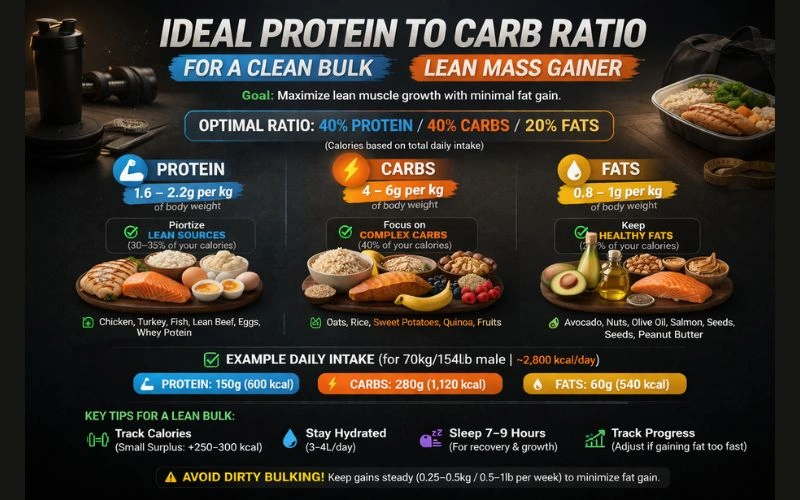
If you have been training consistently but struggling to put on quality muscle without piling on unnecessary fat, there is a good chance your macronutrient ratios are off. The truth is, building lean mass is not just about eating more it is about eating smarter. Getting the ideal protein to carb ratio for a clean bulk is the single most important nutritional variable that separates a successful lean bulk from a sloppy one. This guide breaks it down with real numbers, practical meal strategies, and supplement guidance you can actually use.
Table of Contents
What Is a Clean Bulk and Why Does the Ratio Matter?
A clean bulk is a caloric surplus that prioritizes muscle gain while minimizing fat accumulation. Unlike a “dirty bulk” where you eat anything in sight, a clean bulk involves hitting a controlled calorie surplus — typically 200 to 400 calories above your maintenance — using quality food sources and precise macronutrient ratios. The reason protein to carb ratio matters so much here is simple: protein drives muscle protein synthesis, while carbohydrates fuel the training sessions that trigger that synthesis in the first place.
Think of it this way — if protein is the bricks, carbohydrates are the workers who lay them. You need both, in the right proportion, or the building process stalls. Too little protein and you lose the anabolic signal. Too little carbs and your workouts suffer, cortisol rises, and your body starts cannibalizing muscle for energy instead of building it.
The Science-Backed Protein to Carb Ratio for a Lean Bulk
Sports nutrition research consistently points to a 1:2 protein to carbohydrate ratio as the sweet spot for most natural lifters in a clean bulk phase. This means for every gram of protein you consume, you pair it with approximately two grams of carbohydrates. In practice, a 75 kg athlete targeting around 2,800 calories would aim for roughly:
- 175–210g of protein (2.2–2.8g per kg of bodyweight)
- 350–420g of carbohydrates (the 1:2 ratio in action)
- 55–70g of healthy fats (the remaining 20–25% of total calories)
This ratio works because it keeps insulin response managed — enough carbs to shuttle nutrients into muscle cells and replenish glycogen, but not so many that excess glucose gets converted into triglycerides and stored as fat. For hardgainers or ectomorphs, sliding the ratio slightly toward 1:2.5 can help meet the higher caloric demands without overly increasing fat intake.
How a Lean Mass Gainer Fits Into This Picture
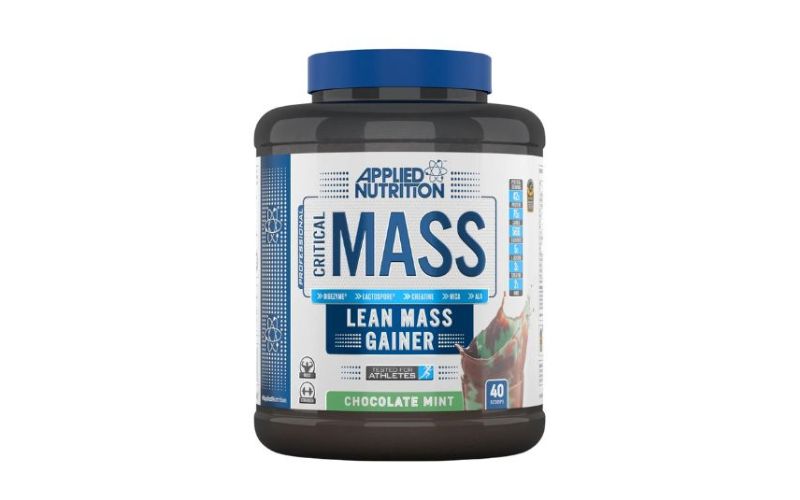
Hitting 175+ grams of protein and 400 grams of carbohydrates from whole food alone every single day is genuinely difficult — especially for students, professionals, and anyone with a busy schedule. This is precisely where a lean mass gainer earns its place in your nutrition stack. Unlike a regular bulk gainer that floods you with low-quality carbs and sugar, a quality lean mass gainer is formulated to deliver a controlled, nutritionally dense serving that mirrors the 1:2 protein-to-carb framework your body actually needs.
The key thing to look for when choosing a lean mass gainer is the macronutrient breakdown on the label. A good one will typically show somewhere between 30–50g of protein per serving, 60–100g of complex carbohydrates, minimal added sugars, and a fat content that stays below 10g. This makes it a practical, portable meal-replacement tool — not a sugar bomb with a gym-sounding name.
Quick Check: When reading a lean mass gainer label, divide the carb number by the protein number. If the result is between 1.8 and 2.5, you have a well-formulated product. Anything above 3 leans toward dirty bulking territory.
Timing Your Macros: When the Ratio Matters Most
The ratio is not just about total daily numbers — when you hit those macros during the day plays a meaningful role in your results. There are three critical windows to structure around.
- Pre-Workout (60–90 min before training): Lean toward a 1:2 ratio with slower-digesting carbs (oats, sweet potato) and a moderate protein source. This fuels performance and prevents muscle breakdown during the session.
- Post-Workout (within 45 min after training): This is the golden window. Shift to a 1:2.5 or even 1:3 ratio with fast-digesting carbs — your muscles are insulin-sensitive and primed to absorb glucose and amino acids together. A whey protein shake combined with a banana or dextrose is a classic move here.
- Before Bed: Cut carbs significantly and shift toward a higher protein ratio. Casein protein is ideal here it digests slowly and feeds your muscles through the overnight fast, when growth hormone is at its peak.
Sample Daily Macro Plan for a Clean Bulk
To make this tangible, here is how a day of eating could look for a 75 kg lifter following the 1:2 protein-to-carb ratio on a 2,800-calorie clean bulk. Notice how each meal contributes to the ratio rather than just hitting a calorie target.
| Meal | Protein (g) | Carbs (g) | Fats (g) |
| Breakfast (Eggs + Oats) | 35 | 70 | 12 |
| Mid-Morning (Lean Mass Gainer Shake) | 40 | 80 | 6 |
| Lunch (Chicken + Rice + Veggies) | 45 | 90 | 10 |
| Pre-Workout Snack | 25 | 50 | 5 |
| Post-Workout (Whey + Banana) | 30 | 60 | 2 |
| Dinner (Fish + Sweet Potato) | 35 | 55 | 14 |
| Total | 210 | 405 | 49 |
Protein Quality Matters as Much as Quantity
Not all protein sources are created equal when it comes to supporting a clean bulk. Your protein choices need to deliver a complete amino acid profile — specifically, all nine essential amino acids including the critical trio of leucine, isoleucine, and valine (the BCAAs). Leucine in particular acts as the primary trigger for muscle protein synthesis, and research suggests you need at least 2.5–3g of leucine per meal to activate that anabolic switch.
Whole food sources like eggs, chicken breast, lean beef, and fish are excellent leucine-dense choices. On the supplement side, whey isolate protein has one of the highest leucine contents of any protein source — making it arguably the best post-workout protein for a clean bulk. If budget is a concern, a well-formulated bulk gainer or lean mass gainer that uses whey as its primary protein source still delivers solid amino acid profiles at a lower per-serving cost.
Supporting Your Clean Bulk with Smart Supplementation
Getting your protein to carb ratio right is the foundation, but a few targeted supplements can significantly amplify the results of a well-structured clean bulk. These are not shortcuts — they are tools that enhance what you are already doing with your diet and training.
- Creatine Monohydrate: One of the most researched performance supplements in existence. Creatine increases phosphocreatine stores in your muscles, directly improving strength output and training volume — which is what drives hypertrophy in the first place. Take 3–5g daily.
- BCAAs / Amino Acids: Useful around training, particularly if you train fasted or if your overall protein intake occasionally falls short on a given day. BCAAs help preserve muscle tissue during your session. You can also consider broader amino acid formulas for more complete intra-workout support.
- Pre-Workout: A quality pre-workout ensures your sessions are intense enough to actually signal muscle growth. More training intensity means more stimulus and a better return on all the macros you are carefully timing.
- Multivitamins & Omega-3: Often overlooked during a bulk, multivitamins and minerals support the enzymatic processes behind protein metabolism, while Omega-3 fatty acids reduce training-related inflammation and support joint health keeping you consistent and injury-free.

Ready to build your lean bulk stack?
Browse quality lean mass gainers, whey proteins, and strength & endurance supplements at Nutritional World Pakistan’s trusted supplement store with branches in Lahore, Islamabad, and Faisalabad.
Common Mistakes That Ruin a Clean Bulk
Even with the right ratio in mind, many people unknowingly sabotage their clean bulk through a handful of avoidable errors. Awareness of these is half the battle.
- Skipping carbs out of fear of fat gain: Chronically under-eating carbs on a bulk leads to flat, glycogen-depleted muscles, poor workouts, and elevated cortisol. Carbs are not the enemy — the source and timing are what matter.
- Eating the same ratio on rest days as training days: On non-training days, pull carbs down by 20–25% since you are not depleting glycogen through exercise. Keep protein the same or slightly higher to support recovery.
- Using a dirty bulk gainer as a lean mass gainer substitute: If your “lean mass gainer” is delivering 150g of carbs per serving with 20g of sugar, you are not lean bulking — you are just bulking. Check the label. Visit the weight gainer category and compare the nutritional breakdowns carefully before purchasing.
- Ignoring sleep and recovery: Muscle is built during rest, not during the workout. Poor sleep elevates cortisol, blunts testosterone, and disrupts protein synthesis regardless of how perfect your macros are. A test booster can help support hormonal balance when combined with quality sleep.
Adjusting the Ratio for Different Body Types
There is no single ratio that works identically for every person. Your starting body composition, metabolic rate, and training style all influence how you should calibrate your macros. Here is a practical way to think about it by body type.
Ectomorphs (naturally lean, fast metabolism) typically need a higher carb intake to maintain energy balance and drive a caloric surplus. A 1:2.5 or even 1:3 ratio with a lean mass gainer taken twice daily can be particularly effective. Mesomorphs (athletic build, responds well to training) tend to do well right at the 1:2 standard ratio. Endomorphs (tendency to gain fat easily) may benefit from nudging the ratio down to 1:1.5, using slower-digesting carb sources, and cycling carbs more aggressively on rest versus training days.
The Bottom Line on Clean Bulk Nutrition
The ideal protein to carb ratio for a clean bulk lean mass gainer strategy is not a fixed magic number — it is a framework built around a starting point of 1:2, adjusted to your body type, training intensity, and daily schedule. What matters more than perfection is consistency. Hit your macros within 10% daily, time them intelligently around your training, support your diet with proven supplements, and you will see real, lean muscle gains over a 12 to 16 week bulk cycle.
The supplements are there to bridge the gap between what your diet provides and what your goals demand. Whether you are browsing for a lean mass gainer in Pakistan or building your full clean bulk stack, always read the macros, match them to your ratio, and stack intelligently. That is where the results come from.