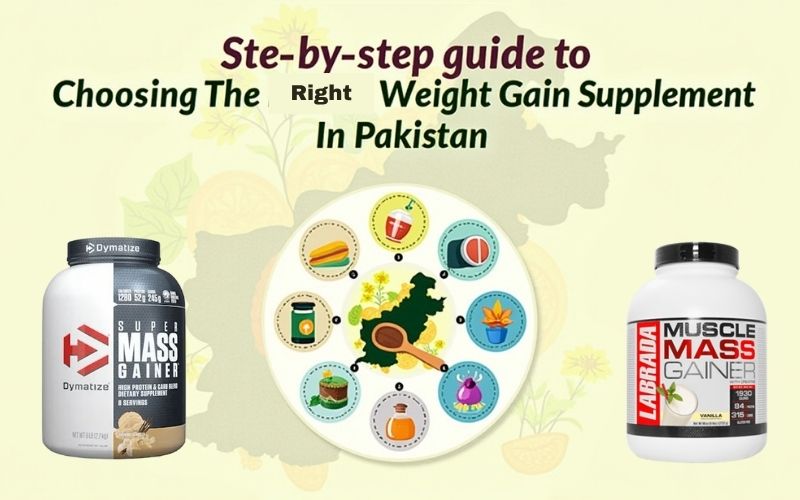













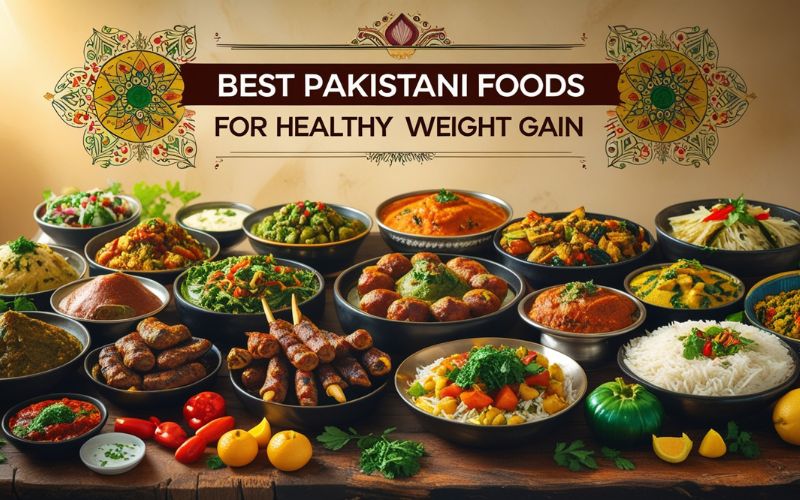
The best Pakistani foods for healthy weight gain are calorie-dense, protein-rich staples like desi ghee paratha, karahi, lassi, beef nihari, and full-fat dairy, paired with a daily calorie surplus of 500 to 700 calories above maintenance. Weight gain is a deliberate process, not just eating more of anything. This guide breaks down exactly which traditional Pakistani foods to prioritise, how to structure your meals, and when supplements make sense to complement your diet.
Weight gain is one of the most misunderstood health goals in Pakistan. Many people assume it simply means eating more of anything, while others turn to processed junk food that piles on fat rather than building real, functional muscle. The truth is that healthy weight gain is a deliberate process that requires nutrient-dense foods, consistent eating habits, and an understanding of what your body actually needs to grow stronger.
Pakistan’s culinary tradition is genuinely well-suited for this goal. From protein-packed slow-cooked meats to energy-dense dairy and wholesome whole-grain breads, desi foods can serve as a natural foundation for sustainable, muscle-supportive weight gain.
Table of Contents
The Role of a Caloric Surplus in Weight Gain
Before diving into specific foods, it helps to understand the single most important principle behind weight gain, which is that you must consistently consume more calories than your body burns. This is called a caloric surplus, and without it, no food or supplement will produce meaningful results regardless of how nutritious it is.
Not all calories carry the same value, however. Healthy calories from protein, complex carbohydrates, and good fats actively contribute to muscle development and sustained energy. Empty calories from sugary drinks and ultra-processed snacks may push the scale upward but tend to accumulate as fat rather than lean tissue. For most people aiming for controlled, quality weight gain, targeting an additional 500 to 700 calories per day above maintenance is a practical and effective starting point. This gradual surplus gives your body enough fuel to build muscle without flooding it with excess that ends up stored as fat.
If you are unsure how to calculate your starting point or structure your daily intake, building a balanced diet from the ground up provides a practical framework for beginners.
High-Calorie Pakistani Foods for Healthy Weight Gain
Traditional Pakistani cuisine is full of calorie-dense, nutrient-rich foods that naturally support weight gain when eaten in the right portions and combinations. The following staples are among the most effective options available in any Pakistani household.
Desi Ghee Paratha is one of the most calorie-efficient breakfast foods in Pakistan. Made from whole wheat flour and cooked generously in pure ghee, it delivers a meaningful dose of healthy fats and complex carbohydrates in a single meal. Pairing it with a yogurt or a two-egg omelette adds protein to the plate and turns it into a genuinely well-rounded morning meal.
Lassi, whether sweet or salted, is a thick yogurt-based drink that is easy to consume, high in calories, and packed with probiotics that support gut health. Full-fat lassi made with whole milk and natural yogurt delivers a solid combination of protein, fat, and carbohydrates that works well as a between-meal calorie boost or a pre-bedtime drink.
Karahi, prepared with chicken or mutton, is one of the richest protein sources in Pakistani cooking. The combination of lean meat, butter or ghee, and aromatic spices creates a dish that delivers a balanced mix of protein and healthy fats. Eaten with two to three pieces of naan, a karahi meal can easily provide 700 to 900 calories with solid macronutrient coverage.
Aloo Bharta made with mashed potatoes, butter, and spices served alongside roti is a simple but underrated source of complex carbohydrates. Potatoes are one of the most calorie-dense whole foods available, and when prepared with ghee or butter, they become a reliable energy source for those in a caloric surplus.
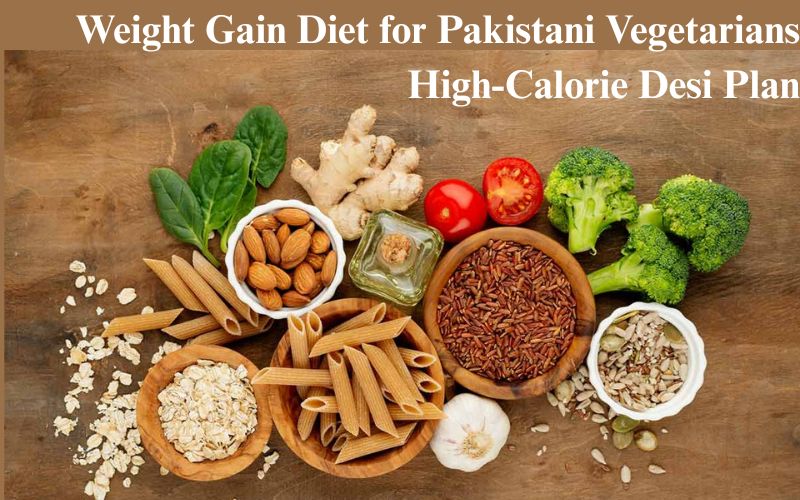
Mixed dry fruits including almonds, walnuts, cashews, and dates are among the most calorie-dense natural snacks available. A single 50-gram handful can add 300 or more calories to your daily intake while delivering healthy fats, fibre, and essential micronutrients. They are particularly useful for people who struggle to eat large meals frequently. Understanding how gaining weight without excess belly fat works in practice, including the role of snack quality and timing, is worth reviewing before you build out your own routine.
Protein-Rich Pakistani Foods to Build Muscle Mass
Calories get you into a surplus, but protein is what directs that surplus toward muscle rather than fat. Every serious weight-gain plan needs an adequate protein foundation, and Pakistani cuisine offers several excellent sources worth incorporating into your daily routine.
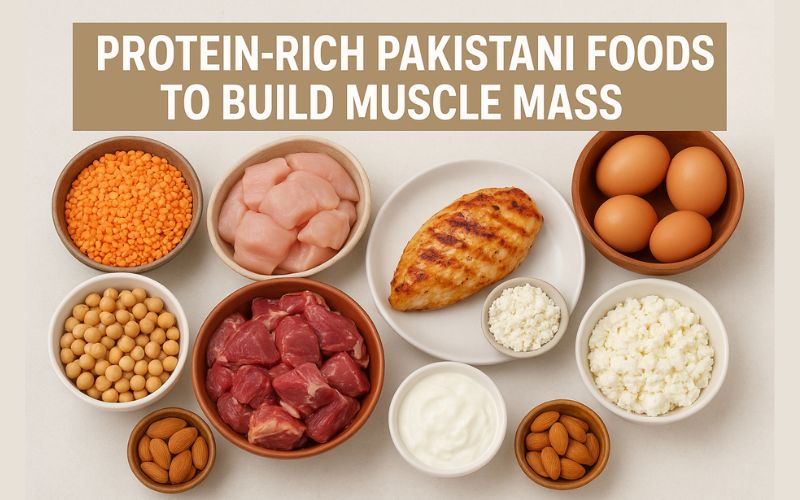
Beef Paya (Trotter Soup) is a slow-cooked dish rich in protein, collagen, and essential minerals like calcium and phosphorus. The collagen content in particular supports joint health and muscle connective tissue, making paya a strong recovery meal after intense training sessions.
Chicken Seekh Kabab is a lean, high-protein option that works well as part of both lunch and dinner. Paired with roti or brown rice, seekh kababs provide a muscle-building meal without excessive fat content, which makes them suitable for those aiming for lean mass rather than bulk.
Anda Paratha is a Pakistani breakfast classic that delivers exactly what a weight gain morning meal should, which is fast-digesting protein from eggs alongside carbohydrates from the paratha that fuel training and daily activity. Two eggs with a generous paratha can provide around 500 to 600 calories with strong macronutrient balance.
Chana (Chickpea) Curry is an excellent plant-based protein source that is also high in fibre and complex carbohydrates. For those who eat vegetarian meals on certain days or need a budget-friendly protein option, chana curry with rice or roti is one of the most practical and calorie-supportive choices available. The broader approach to weight gain for vegetarians in Pakistan covers this and other plant-based options in detail.
Full-fat dairy products including whole milk, malai, and paneer are consistently underutilised by people trying to gain weight. Dairy provides a unique combination of casein and whey protein, calcium, and calorie density that supports both muscle growth and bone health. A glass of full-fat milk before bed is one of the simplest additions anyone can make to their routine.
Healthy Fats Traditional Foods That Support Sustainable Weight Gain
Fats are the most calorie-dense macronutrient, delivering nine calories per gram compared to four from protein or carbohydrates. In a weight gain diet, including the right types of fat is not just acceptable, it is essential for hormonal balance, joint health, and energy storage. Pakistani cooking naturally incorporates several excellent fat sources.
Desi Ghee is perhaps the most traditionally celebrated fat source in Pakistani cuisine. Pure clarified butter ghee is calorie-dense, free from trans fats, and rich in fat-soluble vitamins. Adding a teaspoon to roti, rice, or dal is one of the easiest ways to increase daily calorie intake without dramatically increasing meal volume.
Makhan (homemade butter) is another natural fat source that has been used in desi cooking for generations. Spread over warm roti or mixed into warm dishes, it adds meaningful calories with minimal effort and pairs well with almost any traditional meal.
Beef Nihari is a slow-cooked, deeply nourishing dish that is rich in both protein and fat. The long cooking process breaks down collagen and connective tissue, making the nutrients highly bioavailable. Nihari eaten post-workout with naan and a side of yogurt makes for an exceptional muscle recovery meal.
Peanuts and peanut butter are among the most affordable and calorie-efficient foods available in Pakistan. A two-tablespoon serving of peanut butter contains around 190 calories, 8 grams of protein, and 16 grams of healthy fat. Adding peanut butter to a pre-bedtime shake or spreading it on toast between meals is a low-effort, high-impact way to hit calorie targets consistently.
Smart Meal Planning for Effective Weight Gain
Even the best individual foods will not produce results without a structured eating pattern. Consistency and timing matter as much as food quality when you are trying to gain weight deliberately. Below is a practical daily meal plan built around traditional Pakistani foods that can realistically deliver a 500 to 700 calorie surplus for most individuals.

Breakfast: Anda paratha with two eggs, cooked in desi ghee, and a glass of full-fat milk
Mid-Morning Snack: A handful of mixed dry fruits and a banana
Lunch: Chicken karahi with two pieces of naan and a side of yogurt
Afternoon Snack: Lassi (full-fat, sweet or salted) or peanut butter on whole wheat bread
Dinner: Beef nihari with basmati rice and a fresh salad
Pre-Bedtime: A glass of full-fat milk or a protein shake blended with peanut butter
Structuring meals this way ensures a steady flow of calories and nutrients throughout the day, which is far more effective than trying to consume everything in two or three large sittings. If you want a more detailed framework for organising your weekly food intake, the weekend meal prep approach for weight gain is a practical resource worth revisiting regularly. For a cost-conscious approach, comparing homemade calorie surplus costs against supplement-based bulking helps you understand the real economics of each method.
Supplements to Support Weight Gain
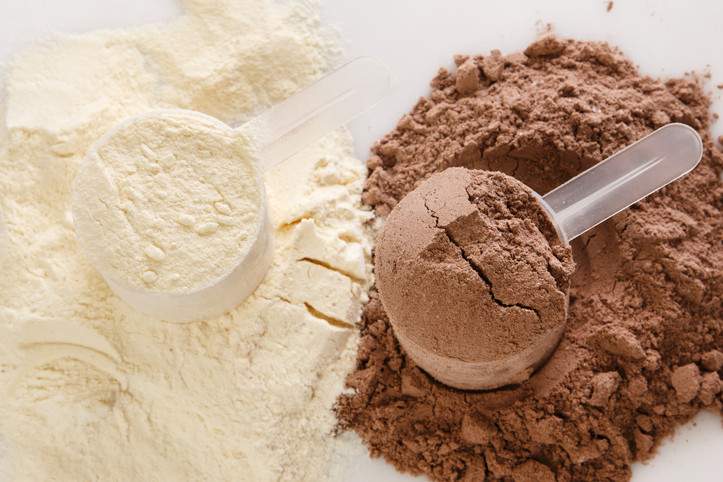
Whole foods form the foundation of any effective weight gain plan, but supplements become genuinely useful when diet alone cannot consistently meet your calorie and protein targets, especially for those with high metabolisms, demanding training schedules, or simply limited appetite. The following products are among the most well-regarded carbohydrate-rich mass gainer options in Pakistan.
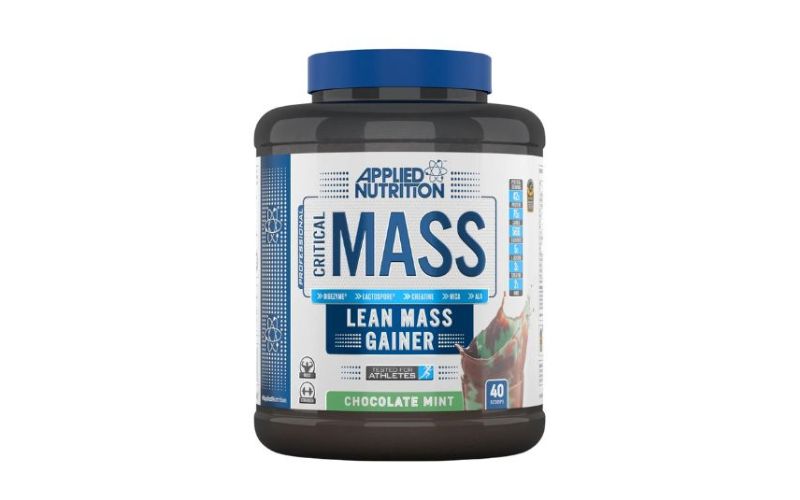
Critical Mass 2.4 kg is a calorie-dense gainer designed for individuals who need to bulk up efficiently. It delivers a balanced ratio of carbohydrates, proteins, and healthy fats in each serving, making it one of the more complete options on the market for those who need reliable daily caloric support.
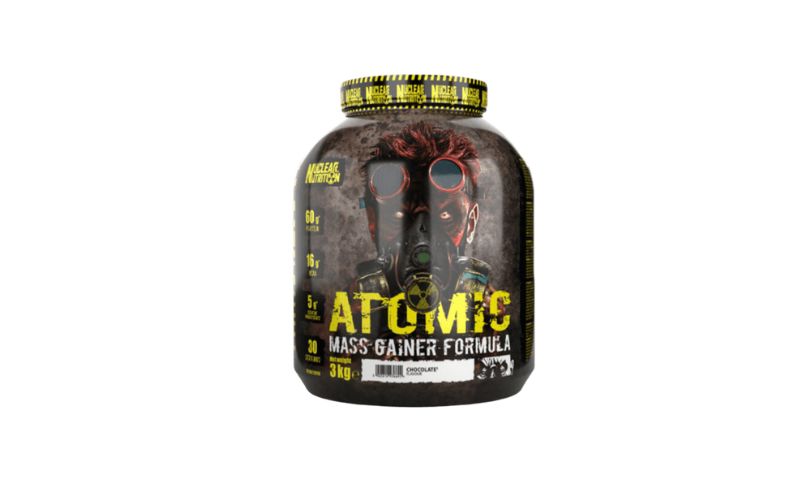
Atomic Mass Gainer 3 kg combines a potent mix of proteins and fast-absorbing carbohydrates specifically formulated to support muscle recovery after training while pushing overall caloric intake high enough to stimulate meaningful weight gain.
Mass Tech Extreme 2000 7 lb is a powerful option for those who struggle to hit their daily calorie targets through food alone. It is packed with high-quality whey protein and essential amino acids that support the muscle-building process alongside a significant caloric contribution.
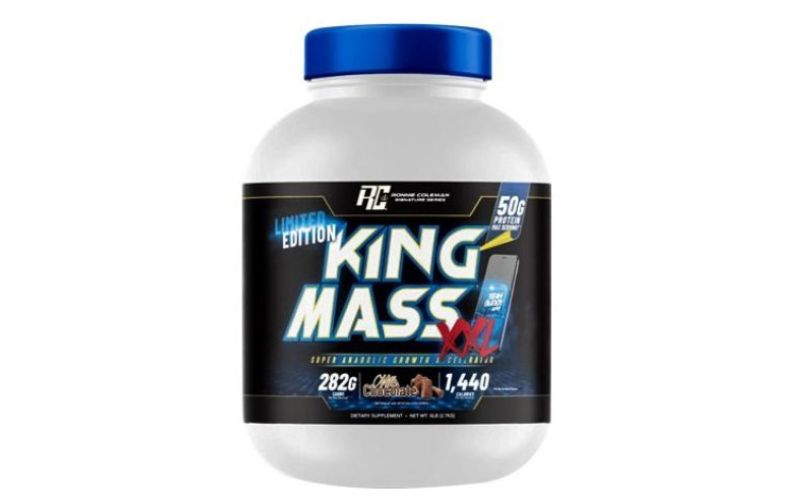
King Mass XXL 6 lb provides a dense calorie and nutrient profile designed to support both muscle building and overall weight gain without encouraging excess fat accumulation. It suits individuals who train regularly and need a reliable supplement to bridge the gap between what they eat and what their body actually requires.
Using a quality mass gainer alongside a balanced Pakistani diet can meaningfully accelerate results, particularly for ectomorphs or individuals with naturally high metabolisms who find it difficult to stay in a caloric surplus through food alone. Browsing the bulk gainer options for hard gainers and ectomorphs is a good place to start when comparing which type of product suits your body type. For those weighing clean whole-food sources against supplement-based bulking, the analysis of high-calorie versus high-protein gainer formulas explains the key differences in practical terms.
Where to Buy Genuine Mass Gainers in Pakistan
Authenticity matters just as much as choosing the right formula, so buying from a verified source is worth the extra care.
- Check stock at the Lahore branch for in-person purchase if you are based in central Punjab.
- Visit the Islamabad branch location for buyers in the capital region.
- Check the Faisalabad branch availability for buyers in the surrounding industrial belt.
Every online order is also backed by a clear return and refund policy, so you can order with confidence even without visiting a branch first.
A Balanced Approach to Weight Gain
Gaining weight in a healthy and sustainable way is not about eating mindlessly or chasing a number on the scale. It is about making consistent, informed food choices that give your body the raw materials it needs to become stronger, more energised, and more resilient over time.
For those just beginning this journey, the practical overview of using weight gain supplements alongside a Pakistani diet walks through the process in straightforward steps. With the right food choices and a genuine commitment to building healthier habits, lean and healthy weight gain is entirely within reach.
Frequently Asked Questions
What are the best Pakistani foods for healthy weight gain?
Pakistani foods like eggs, chicken, beef, daal, rice, potatoes, milk, yogurt, nuts, and whole-wheat roti can support healthy weight gain. Choose nutrient-dense meals that provide enough protein, carbohydrates, healthy fats, and calories to gradually increase body weight.
Can I gain weight by eating traditional Pakistani meals?
Yes, traditional Pakistani meals can support weight gain when portions and ingredients are balanced. Add calorie-dense foods such as milk, yogurt, nuts, dates, rice, eggs, and healthy oils while maintaining adequate protein throughout the day.
Is rice good for healthy weight gain?
Rice is an excellent carbohydrate source for people trying to gain weight because it provides energy and is easy to include in larger meals. Pair rice with chicken, beef, daal, vegetables, and yogurt for a balanced, calorie-rich Pakistani meal.
Which Pakistani snacks are good for gaining weight?
Healthy snacks include dates with milk, banana shakes, roasted nuts, peanut butter with whole-wheat bread, yogurt with fruit, and boiled eggs. These options provide additional calories, protein, carbohydrates, and healthy fats without relying heavily on highly processed foods.
How can I increase calories in Pakistani food for weight gain?
Increase calories by adding nutrient-dense ingredients such as milk, yogurt, nuts, seeds, peanut butter, olive oil, or moderate amounts of desi ghee. Increasing meal portions gradually and adding one or two nutritious snacks daily can make weight gain easier.