














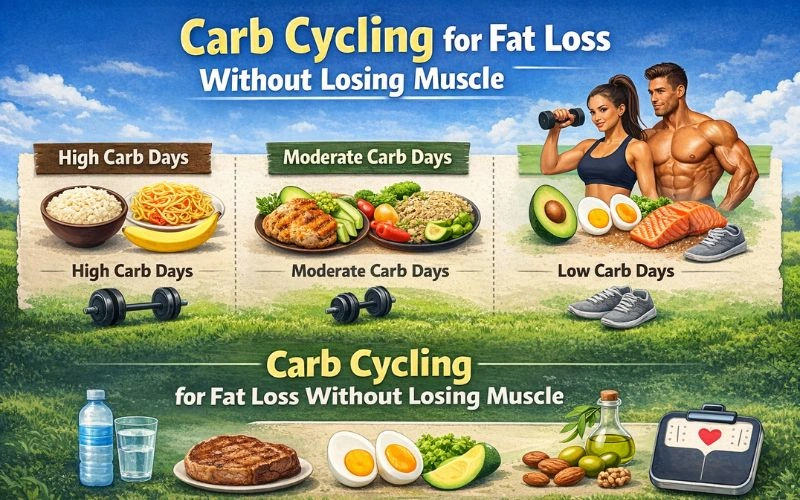
Traditional fat loss diets often come with an unfortunate side effect: muscle loss. While you’re shedding pounds on the scale, you’re also sacrificing hard-earned lean mass that took months or years to build. Carb cycling offers a more sophisticated approach that optimizes fat burning while protecting,or even building,muscle tissue.
By strategically alternating between high, moderate, and low carbohydrate days, you leverage the benefits of both high-carb and low-carb dieting without the drawbacks of committing to either extreme full-time. For Pakistani fitness enthusiasts looking to maintain strength while getting lean, carb cycling represents one of the most effective nutritional strategies available..
Table of Contents
Understanding Carb Cycling: The Science Behind the Strategy
Before implementing any nutrition strategy, understanding the underlying mechanisms helps you make informed decisions and adjust the approach to your individual needs. Carb cycling isn’t magic,it’s strategic manipulation of your macronutrients to optimize hormonal responses, energy availability, and metabolic adaptation.

What Is Carb Cycling?
Carb cycling involves intentionally varying your carbohydrate intake across different days of the week while keeping protein consistently high and adjusting fat intake inversely to carbohydrates. On high-carb days, you eat more carbohydrates and less fat. On low-carb days, you reduce carbohydrates and increase fat slightly. Protein remains stable throughout to support muscle maintenance and growth.
Typical weekly structure:
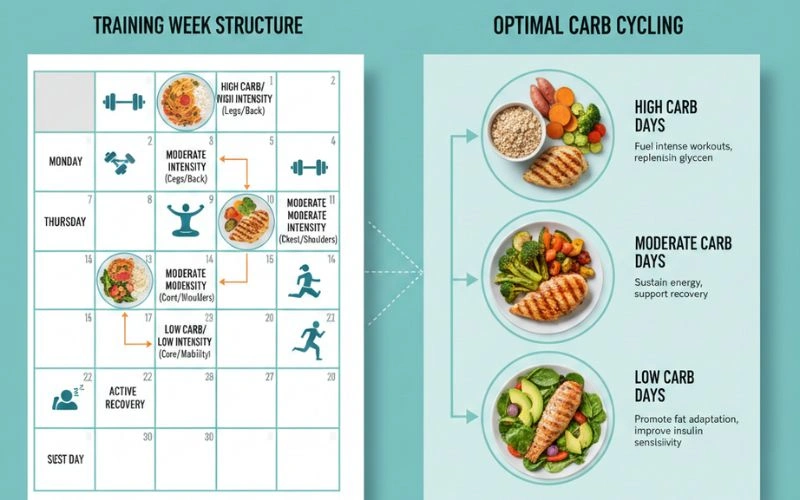
- 3 high-carb days: Aligned with intense training sessions (legs, back, chest)
- 2 moderate-carb days: Aligned with moderate training or active recovery
- 2 low-carb days: Aligned with rest days or light cardio
This approach allows you to maintain training intensity and performance on heavy training days while creating a caloric deficit on rest days through reduced carbohydrate intake. The result is accelerated fat loss without the performance decline or muscle loss associated with constant low-carb dieting.
The Hormonal Advantages of Carb Cycling
Carb cycling optimizes several key hormones that influence body composition:
- Leptin regulation: Leptin is your body’s master fat-burning hormone. During prolonged caloric restriction, leptin levels plummet, slowing metabolism and increasing hunger. High-carb days provide periodic leptin boosts, preventing the metabolic adaptation that stalls fat loss plateaus.
- Insulin optimization: Strategic high-carb days maximize insulin’s anabolic effects,shuttling nutrients into muscle cells for growth and recovery,while low-carb days enhance insulin sensitivity and promote fat oxidation.
- Thyroid function: Extended low-carb dieting can suppress thyroid hormones (T3), reducing metabolic rate. Regular high-carb refeeds maintain thyroid function, keeping metabolism elevated throughout your fat loss phase.
- Cortisol management: Chronic low-carb intake combined with intense training elevates cortisol, a catabolic hormone that breaks down muscle tissue. High-carb days lower cortisol, protecting hard-earned muscle.
- These hormonal advantages explain why carb cycling often produces superior results compared to consistent low-carb or balanced macro approaches. You get the metabolic benefits of carbohydrate restriction without the hormonal penalties of prolonged deprivation.
Why Carb Cycling Preserves Muscle Better Than Standard Dieting
Muscle preservation during fat loss requires three critical factors: adequate protein intake, progressive training stimulus, and sufficient energy to fuel hard training. Carb cycling addresses all three:
- Maintains training intensity through strategically timed carbohydrates when you need them most
- Provides glycogen for muscle fullness and volumization, supporting the anabolic environment
- Prevents metabolic slowdown that makes your body more likely to catabolize muscle for energy
- Optimizes recovery between training sessions through enhanced protein synthesis on high-carb days
Combined with adequate protein intake from quality sources and strategic supplementation, carb cycling creates the optimal environment for simultaneous fat loss and muscle preservation.
Calculating Your Carb Cycling Macros
Success with carb cycling requires precision. Unlike flexible dieting where you can have significant macro variation, carb cycling demands calculated targets for each day type. Follow this systematic approach to determine your personalized numbers.
Step 1: Establish Your Baseline Maintenance Calories
Calculate your Total Daily Energy Expenditure (TDEE) using an online calculator or the following formula:
Men: 10 × weight (kg) + 6.25 × height (cm) – 5 × age (years) + 5 = BMR
Women: 10 × weight (kg) + 6.25 × height (cm) – 5 × age (years) – 161 = BMR
Multiply BMR by activity factor:
- Sedentary (little/no exercise): BMR × 1.2
- Lightly active (1-3 days/week): BMR × 1.375
- Moderately active (3-5 days/week): BMR × 1.55
- Very active (6-7 days/week): BMR × 1.725
Step 2: Set Your Protein Target (Constant Across All Days)
Protein remains consistent on all carb cycling days to ensure continuous muscle protein synthesis and prevent catabolism. For fat loss with muscle preservation:
- Target: 2.2-2.6 grams per kilogram of body weight
- For a 75kg person: 165-195 grams daily
- Higher end during aggressive cuts, lower end during maintenance-level fat loss
Quality whey protein supplements make hitting these targets manageable, especially on busy days when whole food preparation isn’t practical. Calculate protein calories: grams of protein × 4 = protein calories.
Step 3: Calculate Carbohydrate Targets for Each Day Type
This is where carb cycling differentiation happens. Start with your TDEE, subtract 300-500 calories for fat loss, then allocate carbohydrates based on training intensity:
High-carb days (heavy training):
- Eat at or slightly below maintenance (-100 to -200 calories)
- Carbs: 3.5-5.0 grams per kg body weight
- For 75kg person: 260-375g carbs
Moderate-carb days (moderate training):
- Moderate deficit (-300 calories from TDEE)
- Carbs: 2.0-3.0 grams per kg body weight
- For 75kg person: 150-225g carbs
Low-carb days (rest or light activity):
- Larger deficit (-500 to -600 calories from TDEE)
- Carbs: 0.5-1.5 grams per kg body weight
- For 75kg person: 40-115g carbs
Step 4: Fill Remaining Calories with Healthy Fats
After setting protein and carbohydrates for each day type, fill remaining calories with fats. Fat intake will be inversely correlated with carb intake:
- High-carb days: Lower fat (0.3-0.5g per kg body weight)
- Moderate-carb days: Moderate fat (0.6-0.9g per kg body weight)
- Low-carb days: Higher fat (1.0-1.3g per kg body weight)
Calculate: Total calories – (protein calories + carb calories) = remaining fat calories. Divide fat calories by 9 to get fat grams. Prioritize healthy fats from omega-3 sources, nuts, avocados, and olive oil.
Structuring Your Training Week for Optimal Carb Cycling
The strategic alignment of carb intake with training demands makes carb cycling so effective. Your weekly schedule should match carbohydrate availability with intensity and volume requirements.
Sample Weekly Training and Carb Schedule
- Monday – HIGH CARB: Legs (Squats, Deadlifts, Leg Press) – Highest volume, glycogen-demanding workout
- Tuesday – MODERATE CARB: Upper Body Push (Chest, Shoulders, Triceps) – Moderate intensity
- Wednesday – LOW CARB: Active Recovery (Light cardio, stretching, mobility work)
- Thursday – HIGH CARB: Back and Biceps (Rows, Pulldowns, Curls) – High volume pulling session
- Friday – HIGH CARB: Full Body or Lower Body Focus – Intense compound movements
- Saturday – MODERATE CARB: Arms and Abs or Upper Body Pull – Moderate intensity accessory work
- Sunday – LOW CARB: Complete Rest or very light activity – Recovery and adaptation day
Adjusting the Schedule for Your Training Split
The example above follows a 5-day training split. Adjust based on your program:
- 4-day Upper/Lower Split: High-carb on both lower body days, moderate on upper days, low-carb on three rest days
- 3-day Full Body: High-carb on all three training days, moderate on one active recovery day, low-carb on three rest days
- 6-day Push/Pull/Legs: High-carb on leg days and heavy pull days, moderate on push days, low-carb on one complete rest day
The principle remains constant: match carbohydrate intake to training demands. Highest carbs fuel your most demanding sessions, ensuring strength and muscle-building performance don’t suffer during your cut.
Food Choices and Meal Planning for Each Carb Day
Here’s how to structure your eating on each day type with Pakistani-friendly food options.
High-Carb Day Meal Structure
On high-carb days, emphasize complex carbohydrates around your training window while maintaining high protein. Keep fats minimal but present for essential fatty acid needs.
Sample High-Carb Day (2,400 calories, 180g protein, 320g carbs, 45g fat):
- Breakfast: 4 egg whites + 2 whole eggs scrambled, 2 slices whole wheat toast, 1 banana, black coffee
- Mid-Morning Snack: Protein shake (30g whey isolate) with 1 cup oats and berries
- Pre-Workout: 150g grilled chicken breast, 1 cup white rice, vegetables
- Post-Workout: Protein shake (30g whey) with 2 bananas
- Dinner: 200g lean beef or fish, 1.5 cups basmati rice, large mixed salad with minimal oil
- Evening Snack: 200g fat-free Greek yogurt with 1 cup berries
Low-Carb Day Meal Structure
Low-carb days require higher fat intake to maintain energy and satiety. Focus on fibrous vegetables for volume and micronutrients while keeping starchy carbs minimal.
Sample Low-Carb Day (1,900 calories, 180g protein, 80g carbs, 85g fat):
- Breakfast: 3 whole eggs + 3 egg whites scrambled with spinach and mushrooms, 1/2 avocado
- Mid-Morning: Protein shake (30g whey isolate) with 1 tablespoon almond butter
- Lunch: 200g grilled chicken or fish, large mixed vegetable curry with coconut cream, small side salad
- Snack: 30g mixed nuts, 100g cottage cheese
- Dinner: 200g beef or lamb with roasted vegetables in olive oil, side of leafy greens
Supplementation Strategy for Carb Cycling Success
Strategic supplementation enhances carb cycling effectiveness by filling nutritional gaps, supporting performance, and optimizing recovery. While not mandatory, these supplements provide significant advantages during aggressive fat loss phases.
Essential Supplements for Carb Cycling
Strategic supplementation helps preserve muscle, maintain performance, and optimize results throughout different carb phases.
- Whey Protein Isolate: Non-negotiable for hitting daily protein targets conveniently. Quality whey isolate provides 25-28g protein per serving with minimal carbs and fat, fitting perfectly into any carb day type.
- Creatine Monohydrate: 5g daily maintains strength and muscle fullness during fat loss. Creatine is zero-calorie and works synergistically with carb cycling by enhancing performance on high-carb training days.
- BCAAs or EAAs: Consider amino acid supplements on low-carb days or during fasted training to prevent muscle breakdown when glycogen is depleted.
- Omega-3 Fatty Acids: Support fat metabolism, reduce inflammation, and maintain hormone production during caloric restriction. Take 2-3g daily regardless of carb day.
- Multivitamin: Caloric restriction can create micronutrient gaps. A comprehensive multivitamin ensures baseline nutritional adequacy throughout your carb cycling phase.
- Pre-Workout (High-Carb Days): Quality pre-workout supplements maximize training intensity on demanding sessions. Look for caffeine, beta-alanine, and citrulline malate.

Tracking Progress and Making Adjustments
Carb cycling isn’t set-and-forget. Regular assessment and intelligent adjustments based on results ensure continued progress rather than frustrating plateaus.
Metrics to Monitor Weekly
Tracking the right performance and physique indicators ensures your carb cycling plan is delivering fat loss without sacrificing muscle.
- Body weight: Weigh daily under identical conditions (morning, after bathroom, before eating). Average weekly weights to account for fluctuations from glycogen and water.
- Body measurements: Measure waist, hips, chest, arms, and thighs weekly. Fat loss shows more clearly in measurements than scale weight during muscle preservation.
- Progress photos: Weekly photos in consistent lighting and poses reveal changes invisible to daily mirror checks. Front, side, and back views provide complete assessment.
- Training performance: Track weights, reps, and sets. Maintaining or increasing strength indicates successful muscle preservation. Significant strength loss signals inadequate recovery or excessive deficit.
- Energy and recovery: Subjective but important. Chronic fatigue, poor sleep, or extended muscle soreness may indicate your carb cycling plan needs adjustment.
When and How to Adjust Your Carb Cycling Plan
If progress has stalled despite consistent effort, small strategic adjustments can restart fat loss without sacrificing muscle or performance.
Fat loss stalling (no change for 2+ weeks):
- First: Verify tracking accuracy,most plateaus stem from untracked calories creeping in
- Second: Reduce carbs by 20-30g on moderate and low days while maintaining high days
- Third: Add one additional low-carb day if fat loss remains stalled after 2 weeks
Strength declining consistently:
- Increase carbs by 30-50g on high training days
- Consider adding one extra high-carb day per week
- Ensure protein intake remains at upper range (2.4-2.6g/kg)
Excessive hunger on low-carb days:
- Increase fiber through more vegetables
- Add 15-20g healthy fats to improve satiety
- Consider converting a low-carb day to moderate if unsustainable
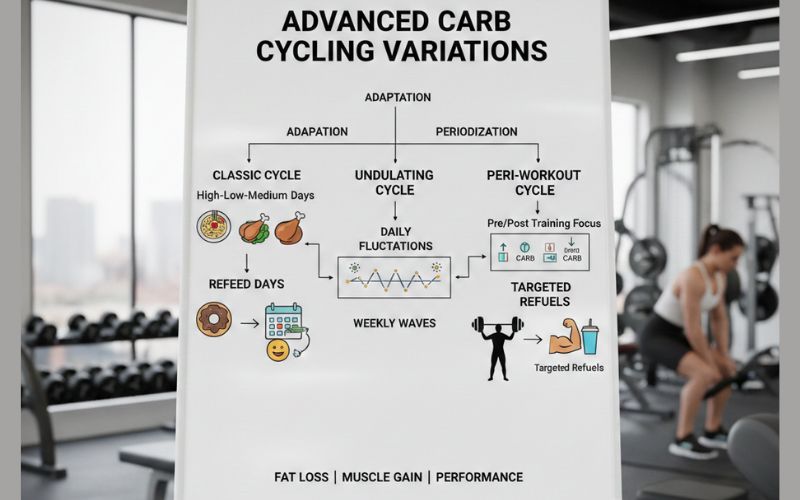
Advanced Carb Cycling Variations
Once you’ve mastered basic carb cycling, advanced variations can fine-tune results for specific goals or break through stubborn plateaus.
The Aggressive Carb Cycling Protocol
For those needing accelerated fat loss with maximum muscle preservation:
- 2 high-carb days (only on biggest training days,legs and back)
- 2 moderate-carb days (secondary training sessions)
- 3 low-carb days (rest and light activity)
This creates a larger weekly deficit while still providing glycogen for critical training sessions. More demanding psychologically but highly effective for contest prep or rapid transformation phases.
The Recomposition Protocol
For building muscle while losing fat simultaneously:
- 3-4 high-carb days at maintenance or slight surplus (+100-200 calories)
- 1-2 moderate-carb days at maintenance
- 2 low-carb days with larger deficit (-500 calories)
This approach provides enough calories on training days to support muscle growth while creating a deficit on rest days for fat loss. Slower than pure cutting but builds muscle simultaneously for impressive transformations over 12-16 weeks.
Implementing Your Carb Cycling Strategy
Carb cycling for fat loss without muscle loss isn’t just theory,it’s a practical, effective strategy that thousands of Pakistani fitness enthusiasts have used to achieve impressive transformations. The key lies in precision, consistency, and intelligent adjustment based on individual response.
Give carb cycling a genuine 6-8 week trial before judging effectiveness. The first 1-2 weeks involve adaptation as your body adjusts to the varying carbohydrate intake. Real results become apparent in weeks 3-6 when fat loss accelerates while strength and muscle mass remain stable or improve.
For Pakistani fitness enthusiasts navigating the supplement landscape, invest in quality imported supplements from reputable sources. Authentic products with proper certification ensure you’re getting exactly what the label promises, crucial when precise macro tracking determines your results.