














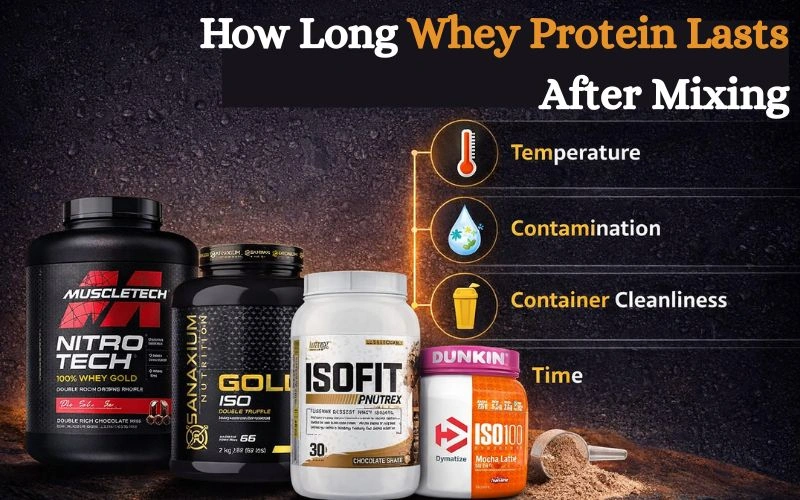
How Long Does Whey Protein Last After Mixing?
Whether you are blending a shake at home before heading to the gym or prepping one the night before an early workout, understanding exactly how long it stays fresh protects both your health and the money you spent on quality protein. Below is a complete breakdown of storage windows, the factors that shorten or extend them, and the warning signs that tell you a shake has gone past its safe point.
Table of Contents
How Long Mixed Whey Protein Lasts by Storage Condition
The safe window for a mixed shake depends heavily on what you mixed it with and where you kept it. Here is how the timing breaks down across the most common storage scenarios.
- Room temperature, water based shake: 1 to 2 hours
- Refrigerated, water based shake: up to 24 hours
- Room temperature, milk based shake: less than 1 hour
- Refrigerated, milk based shake: 12 to 24 hours
Shakes that include fruit, nut butter, yogurt, or other perishable add ins have an even shorter usable window, since these ingredients ferment or oxidize on their own timeline regardless of how well the protein itself is holding up. A shaker bottle left in a hot car, a gym bag, or direct sunlight will spoil far faster than the numbers above suggest, so treat these ranges as best case estimates rather than guarantees.
What Determines How Fast a Mixed Shake Spoils
Several variables work together to decide how long your shake stays safe once it leaves the shaker. Knowing what pushes that timeline in either direction helps you plan preparation around your actual schedule instead of guessing.
- Liquid base. Water keeps a shake stable the longest, while dairy milk introduces sugars and fats that feed bacteria more quickly. Plant based milks tend to sit somewhere in the middle. If you are still deciding which protein form suits your mixing habits, comparing whey isolate and concentrate absorption rates can help you settle on the right formula before you commit to a routine.
- Temperature. Warm environments accelerate bacterial activity fast. A shake left out during a Lahore summer afternoon degrades noticeably faster than one kept in an air conditioned room.
- Air exposure. Oxidation starts as soon as the shake is exposed to open air, gradually shifting its taste and texture even before it becomes unsafe.
- Added ingredients. Bananas, berries, peanut butter, and yogurt all carry their own spoilage clock, which shortens the safe window regardless of the liquid base you used.
- Shaker cleanliness. Residue left behind from a previous shake gives bacteria a head start before you even add fresh protein. Rinsing thoroughly after every use, following basic shaker bottle hygiene practices, removes this risk almost entirely.
If you are also weighing up which protein product fits your training goals and preparation style, working through a short checklist for picking the right whey protein for your goals is worth doing before you settle on a brand.
Best Ways to Store a Mixed Shake
Good storage habits are simple to build and make a real difference in how long your shake stays both safe and pleasant to drink. The three options below cover most real world situations, from drinking immediately to prepping ahead of time.
- Drink it right away. Finishing your shake within 30 minutes of mixing is the safest and most nutritionally effective option, especially with milk based shakes.
- Refrigerate what you cannot finish. Sealing the shake in an airtight container and placing it in the fridge extends its safe life to up to 24 hours. Give it a firm shake before drinking since some settling is normal.
- Use an insulated bottle for the gym. An insulated shaker with a small ice pack keeps a shake cold for several hours on the way to and from a workout, without needing a fridge at all.
If you like adding variety to your shakes, folding your protein into a few different smoothie combinations for your protein routine keeps things interesting. Just remember that any perishable ingredients you blend in shorten the safe drinking window, so smoothies should be consumed sooner rather than stored for later.
Signs a Mixed Shake Has Gone Bad
Even with careful storage, it helps to know the warning signs that tell you a shake is no longer safe to finish. Your senses are the most reliable tool here, more reliable than the clock alone.
- Off smell. A sour, rancid, or fermented odor is the clearest sign of spoilage. A fresh shake should smell neutral or mildly sweet depending on the flavor.
- Separation or clumping. Light settling after sitting for a while is normal, but thick curds, chunky lumps, or a heavily separated liquid layer point to bacterial activity.
- Off taste. A metallic, bitter, or sharply sour taste signals oxidation and protein breakdown, even if the shake still looks fine visually.
When any of these signs show up, discard the shake rather than risk it. Wasting one serving costs far less than dealing with the digestive discomfort that spoiled protein can cause.
Best Practices for Preparing and Storing Whey Protein
Building a few consistent habits around preparation is the most effective way to protect every shake you mix, and none of these steps take more than a minute or two of extra effort.
- Mix only what you need. Single servings reduce both waste and the time a shake spends exposed to air, while batch prepping several servings at once raises spoilage risk.
- Start with cold liquids. Chilled water or cold milk slows early bacterial activity and keeps the shake cooler for longer once mixed.
- Clean the shaker after every use. Leftover residue creates a bacterial environment before your next shake even goes in, so rinse immediately and deep clean on a regular schedule.
- Refrigerate within 30 minutes if you cannot drink it right away. The longer a shake sits at room temperature, the faster its quality declines.
- Label any shakes prepared in advance. Writing the mixing time on the container lets you track freshness at a glance instead of guessing.
- Time your intake around training. Lining up consumption with your workout window supports both freshness and recovery, and reviewing general guidance on optimal whey protein timing around workouts can help you plan preparation more precisely.
For women building whey protein into a regular routine, understanding how whey protein supports female fitness and health goals adds useful context for deciding when and how often to prepare shakes in advance.
Getting the Most Out of Every Shake
A well prepared shake is a small but meaningful part of a consistent fitness routine, and how you handle it after mixing matters just as much as the quality of the powder itself. Freshness is not optional if you want the full nutritional benefit from every serving.
Buying from a source you trust also plays a role here. Learning how to verify authentic whey protein before buying ensures the product going into your shaker is as clean as your storage habits. If you are also comparing protein sources, understanding the practical differences between whey and collagen protein can help you decide whether the two make sense together in your routine.
By paying attention to liquid choice, storage conditions, and the early signs of spoilage, you can drink every shake with confidence instead of second guessing it. Browse the full range of whey protein available in Pakistan to find a formula that fits your goals and your budget.
Conclusion
How long whey protein lasts after mixing comes down to your liquid base, your storage method, and how quickly you drink it. Water based shakes kept sealed in the fridge stay safe for up to 24 hours, while milk based shakes are best finished the same day. Room temperature shakes should always be consumed within 1 to 2 hours. Building these habits alongside a steady training routine protects both your health and the money you put into quality supplementation.
Nutritional World stocks 100% original whey protein with nationwide delivery and walk in branches in Lahore, Islamabad, and Faisalabad, so you can shop with confidence wherever you are training. Orders that need to be returned or exchanged are covered under the site’s return and exchange policy.
Frequently Asked Questions
Can I drink whey protein after 3 hours at room temperature
It is not recommended. Whey protein left at room temperature for more than 2 hours, particularly in warm climates like Pakistan, can develop unsafe bacterial levels. To avoid digestive discomfort, discard the shake and mix a fresh one instead.
How long does mixed whey protein last in the fridge
A mixed shake stored in an airtight container in the refrigerator stays safe for up to 24 hours. Shake it well before drinking and discard it right away if the smell, texture, or taste has changed in any way.
Does whey protein spoil faster when mixed with milk
Yes. Dairy milk contains natural sugars and fats that speed up bacterial growth, especially outside refrigeration. A milk based shake should be finished within 1 hour at room temperature or within 12 to 24 hours if refrigerated.
Can I prepare my whey protein shake the night before a workout
Yes, as long as it is stored in a sealed shaker bottle in the refrigerator. Keep it chilled until you are ready to drink it and finish it within 24 hours of mixing for both safety and taste.
How can I tell if my mixed whey protein has gone bad
Spoiled whey protein typically develops a sour or rancid smell, a bitter or metallic taste, or visible separation with chunky lumps. If any of these signs appear, discard the shake regardless of how long it has been stored.
Is it safe to drink whey protein that has been left out overnight
No. A shake left unrefrigerated overnight, whether mixed with water or milk, should be discarded without tasting it. Overnight exposure at room temperature gives bacteria more than enough time to reach unsafe levels.
Does freezing a whey protein shake extend its shelf life
Freezing can extend safety, but it changes the texture once thawed, often leaving the shake grainy or separated. If you do freeze a shake, thaw it in the refrigerator rather than at room temperature and consume it the same day.
Why does my whey protein shake smell different after a few hours
A mild shift in smell after refrigeration is often just settling and is not necessarily a safety issue. A sour, sharp, or fermented smell, however, means the shake has started to spoil and should not be consumed.