












If you have been training consistently but the scale refuses to move, the problem is rarely your workout. It is usually your calories. Most hard gainers underestimate how much food they need to build mass, and that is where whey protein for weight gain in Pakistan becomes a genuinely useful tool. Whey is not magic. It simply gives you a fast, controllable way to close a calorie and protein gap that is hard to fill with desi meals alone when your appetite is average. This guide shows you how to use it, how many scoops you need, which type suits bulking, and how to pair it with the food you already eat.
Table of Contents
Why Hard Gainers Struggle and What Whey Protein Actually Fixes
Before looking at scoops and recipes, it helps to understand the real obstacle, because it is not what most people think.
The Calorie Gap Behind Slow Progress
Here is why eating enough every single day is harder than it sounds for people with fast metabolisms.
A 70 kg man trying to bulk up typically needs around 3,000 to 3,500 calories daily, depending on activity level. That is a lot of biryani. The moment appetite drops, travel disrupts meals, or a busy day cuts lunch short, the surplus collapses and muscle growth stalls.
What a Single Shake Adds to Your Day
This is where a shake earns its place, because it fills gaps without demanding a big appetite.
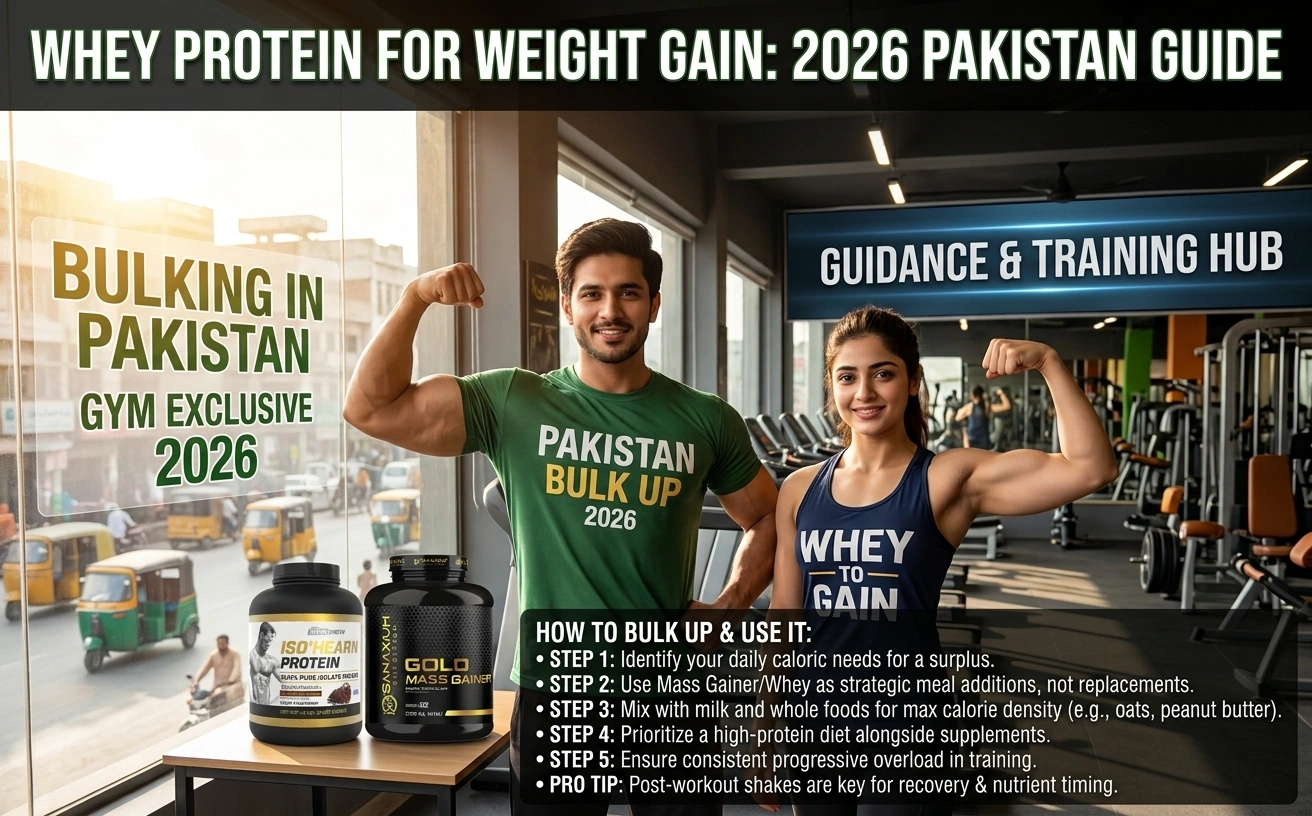
Whey does not replace food. It supplements the gaps. A well-timed shake adds 150 to 400 calories depending on how you mix it, delivers 24 to 30 grams of fast-absorbing protein, and takes about 90 seconds to prepare. If your usual meals are protein-light (roti, daal, rice, sabzi), a couple of strategic shakes can shift the needle. To understand the wider category, how protein supplements work is a useful starting point, and you can browse the whey protein range once you know what you need.
Can Whey Protein Help You Gain Weight Without a Mass Gainer?
Many people assume a mass gainer is the only route to weight gain, so it is worth clarifying what whey can and cannot do on its own.
Yes, whey can support weight gain without a mass gainer, as long as you control what goes into the shaker. Mixed with water, a scoop gives you protein and very little else. Mixed with full-fat milk, a banana, or peanut butter, the same scoop becomes a 300 to 600 calorie drink. The powder supplies the protein. Your mix-ins supply the calories.
For most beginners and moderate hard gainers, this approach is enough. A mass gainer only becomes necessary when food plus whey still cannot get you into a surplus, which is covered later in this guide.
Concentrate vs Isolate: Which Whey Is Better for Bulking?
This is one of the most common questions among Pakistani gym-goers, and for weight gain the answer is fairly clear: whey concentrate is the better fit for bulking.
Isolate is filtered to remove most fat and carbohydrate, leaving a product that is 90 percent or more protein. That suits cutting phases and lactose sensitivity. For bulking, the small amounts of fat and carbohydrate left in concentrate are actually an advantage, and concentrate is usually easier on the budget per serving. If you want a deeper breakdown, this comparison of isolate and concentrate differences covers filtration, lactose, and absorption in detail.

Here is how the three common forms compare for someone trying to gain weight:
- Whey Concentrate: Around 120 to 150 calories per scoop and 24 to 26g of protein, with natural fats and carbs intact. Better calorie density for hard gainers.
- Whey Isolate: Around 90 to 110 calories per scoop and 25 to 27g of protein, with very little fat or carbohydrate. Better for lean phases or lactose intolerance, but not ideal when the goal is mass. Those who need it can look at low-lactose isolate protein.
- Whey Blend (Concentrate + Isolate): A middle ground with good protein quality and moderate calories. A solid everyday option if you want both performance and some mass support.
Calorie Comparison: Whey With Water vs Milk vs Doodh Patti
The biggest lever a hard gainer can pull is not the brand of powder. It is what the powder is mixed into, and the difference is dramatic.
The table below shows approximate values for one 30g scoop of standard whey concentrate across four common mixing options in Pakistan:
| Mix Option | Approx Calories | Protein (g) | Best For |
| Whey + Water (250 ml) | ~130 cal | ~25g | Cutting / Low Calorie |
| Whey + Full-Fat Milk (250 ml) | ~280 cal | ~33g | Bulking / Hard Gainers |
| Whey + Doodh Patti (250 ml) | ~340 to 380 cal | ~34g | Max Calorie Bulk |
| Whey + Milk + Banana + Peanut Butter | ~550 to 600 cal | ~38g | Extreme Hard Gainers |
Doodh patti, the strong full-fat milk tea that most Pakistani homes make daily, is one of the most calorie-dense liquid bases you can use. The milk and sugar add real calories without changing the texture much once it has cooled. Always let it cool to room temperature first, because hot liquid makes whey clump. Swapping your post-workout water shake for a cooled doodh patti shake is a zero-extra-effort upgrade.
How Many Scoops Per Day to Gain Weight by Body Weight
A common mistake is taking one scoop a day and expecting major changes, so this section gives realistic starting points.
One scoop after training supports recovery, but it does very little to push you into a calorie surplus. If you are a complete beginner, start with one scoop daily after your workout for the first week or two, then add a second scoop once you know how your stomach handles it. The table below assumes you train at least three days per week and eat regular Pakistani meals:
| Body Weight | Daily Protein Target | Scoops Per Day | Best Timing |
| 50 to 60 kg | 90 to 120g | 1 to 2 scoops | Post-workout + Morning |
| 60 to 75 kg | 110 to 150g | 2 scoops | Post-workout + Before Bed |
| 75 to 90 kg | 135 to 180g | 2 to 3 scoops | Morning + Post-workout + Night |
| 90 kg and above | 160 to 200g | 3 scoops | Split across 3 meals |
These are guidelines, not rules. Total daily calories come first and protein second. If you already hit your protein through chicken, eggs, and daal, one scoop for recovery is enough. If you want to fine-tune when each shake goes in, the best timing for whey shakes is worth a read. Pairing your shakes with proven muscle building exercises is what turns the extra calories into muscle rather than fat.
Desi Meal Pairing Ideas That Actually Work for Bulking
Pakistani food is calorie-rich, but high-protein meals are often lower in calories than expected and high-calorie meals are often low in protein, so pairing whey with your normal meals closes both gaps.
The ideas below need no overhaul of what you already eat. For more general guidance, fitting whey into a Pakistani diet goes deeper on everyday meal structure.
- Paratha Breakfast + Morning Shake: Two parathas with egg and a whey shake made with full-fat milk deliver roughly 700 to 800 calories and 45 to 50g of protein. A strong foundation for a bulking day.
- Post-Workout Doodh Patti Shake: Cool your doodh patti, add one scoop of chocolate whey, and shake or blend well. Expect about 350 to 380 calories and 34g of protein in a drink that does not feel like a supplement.
- Rice and Daal with an Evening Shake: A plate of rice and daal gives carbohydrates and moderate protein. A full-fat milk shake before bed fills the protein gap that grain-heavy dinners leave behind.
- Banana and Peanut Butter Whey Shake: One ripe banana, one tablespoon of peanut butter, one scoop of whey, and 300 ml of full-fat milk give about 550 to 600 calories. It works as a full meal replacement for anyone who skips breakfast. More blends are collected in these whey smoothie ideas.
- Oatmeal Boosted with Whey: Cook oats in milk, let them cool slightly, and stir in half a scoop. You can check oatmeal with milk calories to plan portions.
A Simple Day Plan When Your Appetite Is Low
If you struggle to finish big plates, spreading calories across the day works better than forcing huge meals.
Try this structure for a typical bulking day:
- Breakfast: Parathas with eggs plus a whey and full-fat milk shake.
- Mid-morning: A handful of nuts or a banana with peanut butter.
- Lunch: Your usual rice, daal, chicken, or sabzi without skipping the protein portion.
- Post-workout: A cooled doodh patti whey shake within an hour of training.
- Dinner: A normal desi dinner, finished with a small milk-based shake if protein is low.
Liquid calories are easier to finish than solid food, which is exactly why this approach suits people with an average appetite. A good protein shaker bottle makes mixing and carrying shakes easy during a busy day.
Whey Protein vs Mass Gainer: What Is the Difference?
Whey and mass gainers are often mixed up, but they solve different problems, so it helps to see them side by side.
Whey is a protein source with modest calories. A mass gainer is a high-calorie blend of carbohydrates, protein, and fats designed to deliver a large surplus in one serving.
| Feature | Whey Protein | Mass Gainer |
| Calories per serving | 120 to 150 (powder only) | 600 to 1,250 |
| Protein per serving | 24 to 30g | 30 to 50g |
| Main purpose | Protein and recovery | Large calorie surplus |
| Best for | Beginners and moderate hard gainers | Very hard gainers with low appetite |
If you have followed two to three scoops of whey per day, eaten proper meals, and trained regularly for four to six weeks without gaining, your surplus is probably too small. That is when it makes sense to learn how mass gainers work and look at a weight gainer or a bulk gainer supplement. If you gain fat too quickly, a lean mass gainer keeps the surplus smaller, and anyone avoiding dairy can explore vegan weight gain options.
Mass gainers are a tool, not a shortcut. If you gain too much fat, reduce the serving and eat more whole food. If you are still not gaining, increase it gradually.
How to Choose a Whey Protein for Bulking
Rather than chasing one brand, it is smarter to check a few label details that matter for weight gain.
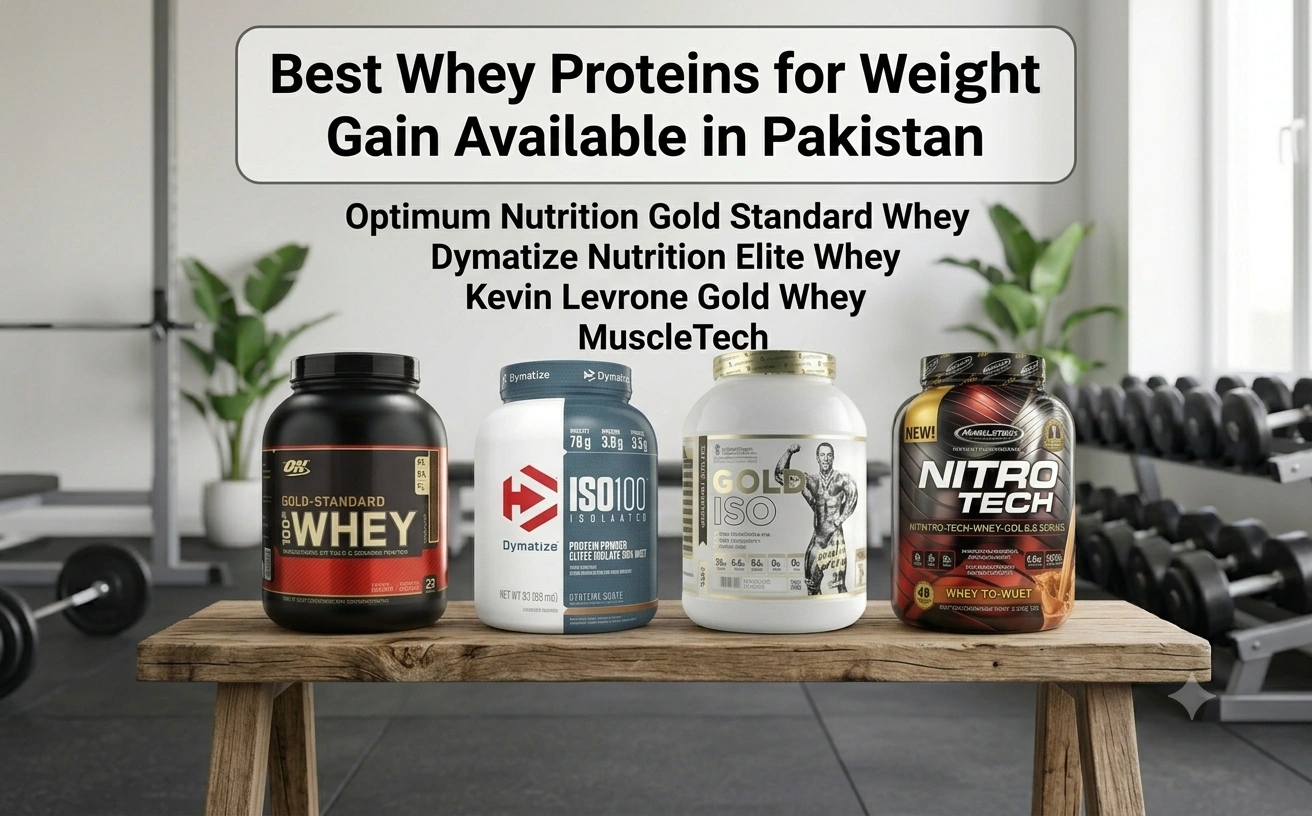
Look for these points when comparing products:
- Concentrate-based or blended formula: Better calorie density and taste in milk-based shakes.
- 24 to 30g of protein per scoop: A realistic range for quality whey.
- Authenticity and sealed packaging: Buy from a trusted retailer to avoid fake or expired stock.
- Flavour you will actually finish: Chocolate and vanilla usually blend best with milk and doodh patti.
- Mixability: A shake that clumps is a shake you will skip.
Once you know what suits you, the full concentrate and blended whey selection is easy to filter by these points.
Final Thoughts
Whey protein supports weight gain only when it helps you hit a calorie surplus, so mix it with milk or doodh patti, take two to three scoops where your body weight needs it, and keep your meals consistent. Pair that with regular training, a smart workout plan for body gain, and enough sleep, and results usually follow within weeks. If you have a kidney condition or any medical concern, speak to your doctor before raising your protein intake.
Frequently Asked Questions
These are the questions Pakistani hard gainers ask most often about using whey for weight gain.
Q1. Does whey protein help gain weight in Pakistan?
Yes, whey protein supports weight gain when it helps you reach a daily calorie surplus. Mixed with full-fat milk or doodh patti instead of water, a single shake can add 280 to 380 calories. Combined with regular meals and training, this creates the consistent surplus that muscle growth needs.
Q2. How many scoops of whey protein per day for weight gain?
Most hard gainers need two to three scoops per day, depending on body weight and how much protein their meals already provide. Aim for 1.6 to 2.2 grams of protein per kilogram of body weight daily from all food sources combined.
Q3. How much whey protein should a beginner take per day?
A beginner can start with one scoop (about 25 to 30g of protein) after training. After one or two weeks, if digestion is comfortable, add a second scoop in the morning or before bed. Total daily food intake still matters more than the number of scoops.
Q4. Can whey protein help with weight gain without a mass gainer?
Yes. Whey mixed with full-fat milk, banana, or peanut butter can deliver 300 to 600 calories per shake, which is enough for many people. A mass gainer is only needed if food plus whey still cannot create a calorie surplus after four to six weeks.
Q5. Is whey concentrate better than isolate for bulking?
Yes, concentrate keeps natural fats and carbohydrates, so it is more calorie-dense per scoop. Isolate is filtered to remove them, which suits cutting but works against weight gain. Choose concentrate for bulking and save isolate for lean phases.
Q6. Can I mix whey protein with doodh patti for weight gain?
Yes. Cooled doodh patti is one of the most calorie-dense liquid bases in Pakistani kitchens. With a scoop of chocolate or vanilla whey, it delivers about 340 to 380 calories and around 34 grams of protein. Let it cool first so the whey does not clump.
Q7. What is the difference between whey protein and a mass gainer?
Whey is mainly protein with modest calories, while a mass gainer is a high-calorie mix of carbohydrates, protein, and fats that delivers 600 to 1,250 calories per serving. Start with whey and food, and switch to a mass gainer only if you cannot reach your calorie target.