












If bloating, cramping, or digestive discomfort follows every protein shake, gluten or lactose may be the culprit, not the protein itself. Finding a gluten free protein powder Pakistan consumers can trust has become easier in 2026, but knowing which products are truly safe versus which ones simply carry no wheat ingredients on the label is a different question entirely. As demand for gluten free protein powder in Pakistan continues to grow, more brands are entering the market, making it essential to understand ingredient labels and certification standards. This guide covers the three safest protein categories for sensitive stomachs, what to watch for on Pakistani supplement shelves, and which brands available right now are worth your money.
Table of Contents
Why Gluten Is a Problem in Some Protein Powders
Gluten is a protein found in wheat, barley, and rye. It has no place in a pure protein supplement, yet it frequently shows up in two ways: as a direct ingredient in flavoring systems, thickeners, or maltodextrin sources, and as an invisible contaminant from shared manufacturing facilities that also process wheat-containing products.
For individuals with celiac disease, even trace amounts of gluten trigger an immune response that damages the intestinal lining. For those with non-celiac gluten sensitivity (NCGS), which is far more common, the response is less severe but still causes significant digestive discomfort, brain fog, and fatigue. People exploring gluten-free shake options for weight management in Pakistan often discover that switching protein sources resolves symptoms they had been attributing to other causes entirely.
The Three Safest Protein Categories for Sensitive Stomachs
Not all protein powders carry the same gluten or lactose risk. Understanding where each protein type sits on the sensitivity spectrum helps you make a smarter purchase decision.
Whey Protein Isolate: Naturally Low in Gluten and Lactose
Whey isolate goes through additional filtration steps beyond concentrate, specifically cross-flow microfiltration or ion-exchange processing, that strips out most fat, carbohydrates, and lactose. The result is a product that is typically 90% or more pure protein with lactose levels low enough that most lactose-intolerant individuals tolerate it without issue.
Gluten is not a natural component of whey, so isolates are inherently gluten-free at the ingredient level. The risk comes from manufacturing, which is covered in the cross-contamination section below. For a full breakdown of the differences between whey isolate, concentrate, and hydrolysate, the filtration method used directly determines how stomach-friendly the final product is. Men and women who have struggled with protein digestion due to lactose sensitivity consistently report better tolerance on isolate versus concentrate.
Plant-Based Protein: The True Gluten-Free Option
For individuals who need a certified gluten-free protein without any dairy risk, plant proteins are the cleanest category. Pea protein, brown rice protein, and hemp protein are all naturally free of both gluten and lactose. A quality vegan protein blend combining pea and rice protein delivers a complete amino acid profile that rivals whey for muscle building purposes.
Individuals comparing pea protein versus whey protein for muscle and digestive tolerance will find that modern plant blends have closed the amino acid gap significantly. For those managing weight alongside digestive issues, plant-based versus dairy protein for body composition goals covers the performance tradeoffs honestly.
Hydrolyzed Whey: Pre-Digested for Maximum Tolerance
Hydrolyzed whey has been broken down into smaller peptide chains through enzymatic processing, making it the fastest-absorbing and easiest-to-digest form of whey available. Lactose content is virtually zero. Gluten risk depends entirely on facility practices. Athletes who want to understand why hydrolyzed whey absorbs faster and digests more easily will find the pre-digestion process particularly relevant for anyone with a sensitive gut.
Shared Facility Warning: The Hidden Gluten Risk
This is the most important section for anyone with celiac disease or severe gluten sensitivity. A product can contain zero gluten ingredients and still cause a reaction if it is manufactured in a facility that also processes wheat, oats, or barley on the same equipment.
In Pakistan’s supplement market, many imported products are manufactured in large multi-product facilities abroad. The label may say “gluten-free” based on the ingredient list alone, without any testing for cross-contamination. True gluten-free certification requires:
- Third-party testing to confirm gluten levels below 20 ppm (the international threshold for celiac safety)
- Dedicated gluten-free manufacturing lines or a fully gluten-free facility
- Certification from a recognized body such as GFCO (Gluten-Free Certification Organization) or NSF
If you have celiac disease, always look for a certified gluten-free logo on the physical product label, not just claims made on a website.
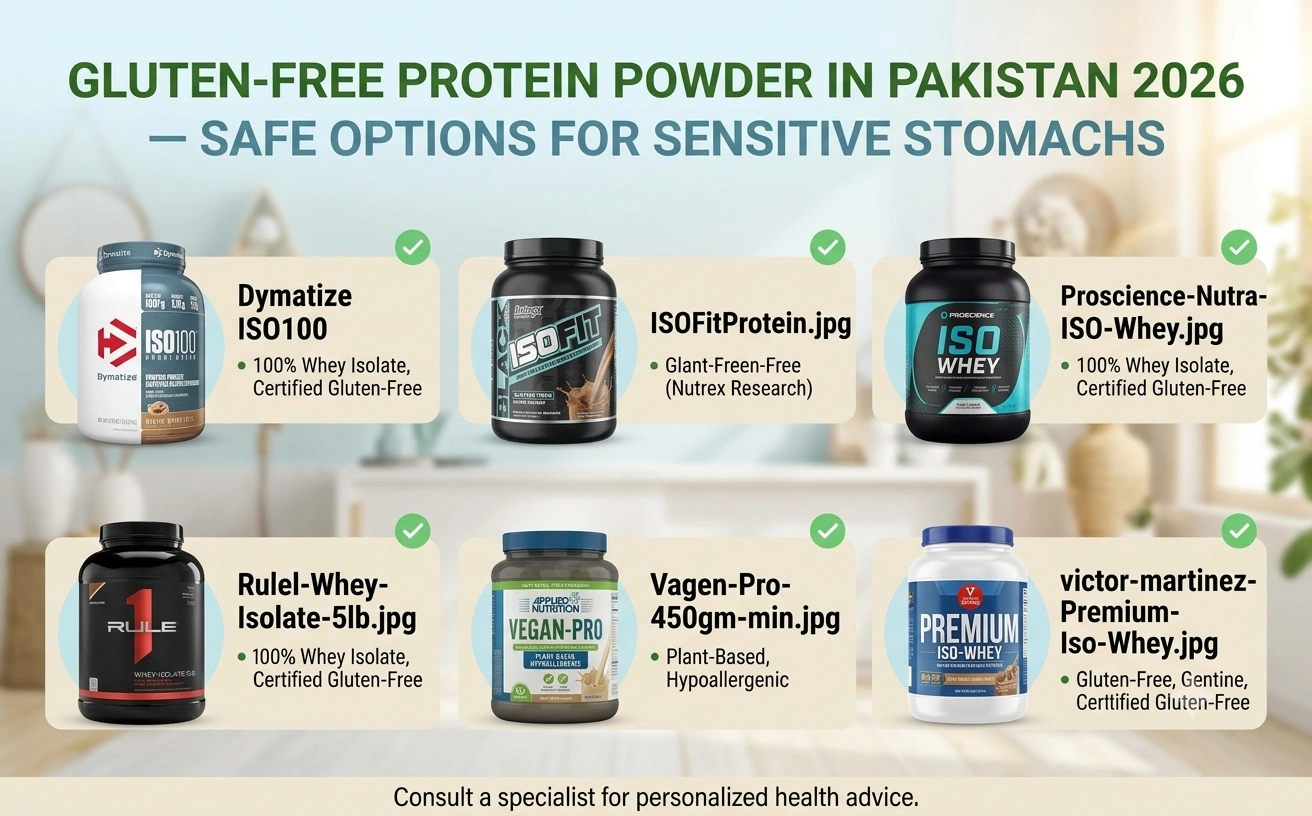
Gluten-Free Protein Powder: Brand Comparison Table (Pakistan 2026)
The table below covers the most relevant protein options currently available at NutritionalWorld.com.pk, rated by gluten risk level, lactose content, and approximate PKR pricing.
| Product | Type | Gluten Risk | Lactose | Approx. PKR Price |
| Dymatize ISO 100 | Hydrolyzed Whey Isolate | Very Low (gluten-free certified) | Trace only | Rs. 18,800 |
| Rule 1 Whey Isolate | Whey Isolate | Low (no gluten ingredients) | Very low | Rs. 32,320 |
| Nutrex Isofit Isolate | Whey Isolate | Low (no gluten ingredients) | Very low | Rs. 18,400 |
| ProScience Nutra Isolate | Whey Isolate | Low (no gluten ingredients) | Very low | Rs. 27,360 |
| Vegan Pro | Plant-Based Blend | Very Low (dairy-free, wheat-free) | Zero | Rs. 4,500 |
| Victor Martinez ISO Whey | Whey Isolate | Low (no gluten ingredients) | Very low | Rs. 29,360 |
Note: Prices are approximate and subject to change. Always check current listings at NutritionalWorld.com.pk for the latest pricing and stock availability.
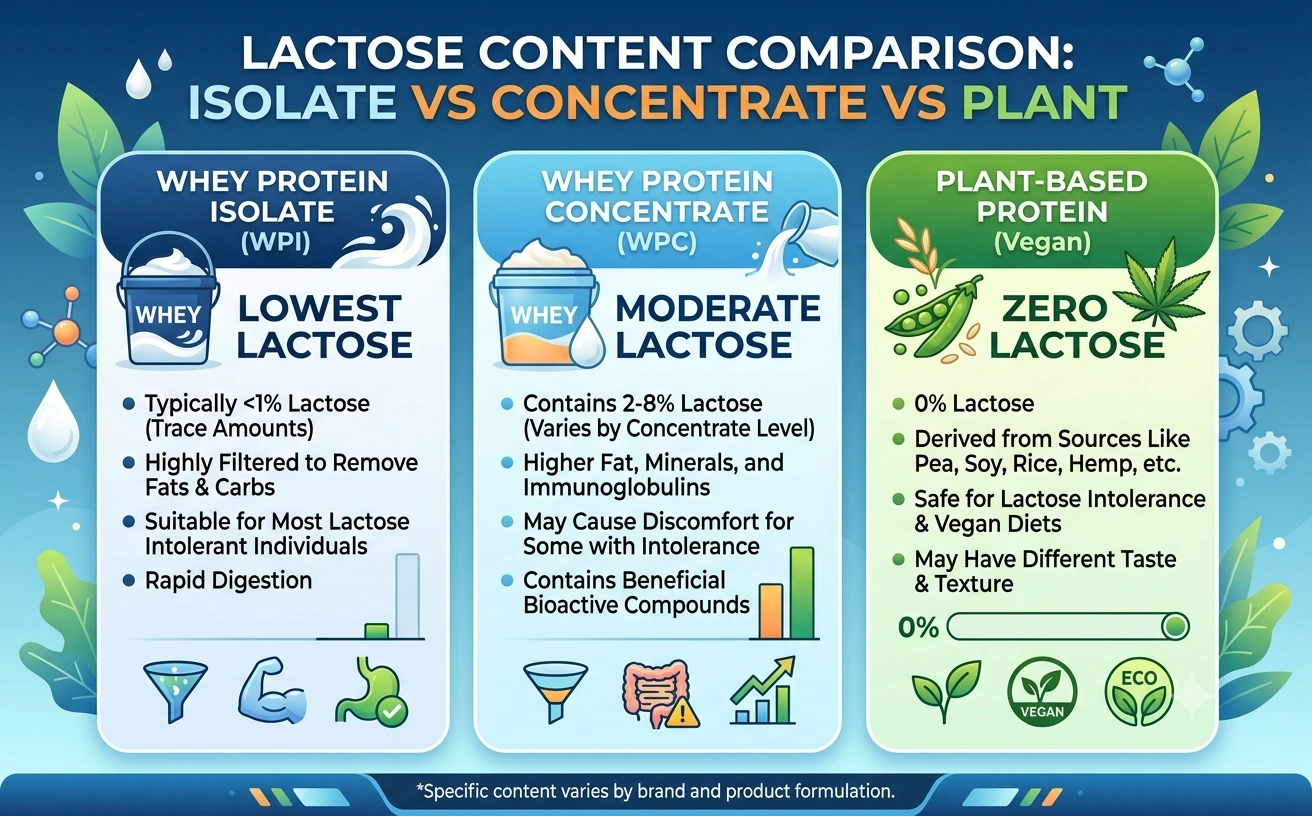
Lactose Content Comparison: Isolate vs Concentrate vs Plant
Lactose intolerance is significantly more common in Pakistan than celiac disease, and the two are often confused because they produce overlapping digestive symptoms. This comparison clarifies where each protein type sits on the lactose spectrum.
- Whey Concentrate: Contains 3 to 8% lactose per serving. The most common cause of protein shake-related bloating in Pakistan.
- Whey Isolate: Contains less than 1% lactose. Tolerated by the vast majority of lactose-sensitive individuals without any digestive issue.
- Hydrolyzed Whey (e.g. Dymatize ISO 100): Lactose essentially zero. The safest whey option for severe lactose intolerance.
- Plant-Based Protein: Zero lactose. The guaranteed option for anyone who cannot tolerate any dairy-derived protein.
Runners and endurance athletes dealing specifically with lactose-free protein options for training performance will isolate the most practical balance between digestive tolerance and amino acid delivery. Those wondering whether lactose-intolerant individuals can safely use Dymatize ISO 100 will find the answer is generally yes, precisely because of how thoroughly the lactose is removed during hydrolysis.
Which Option Is Right for You?
Choosing the right protein comes down to the nature and severity of your sensitivity.
- Lactose intolerance only: A high-quality whey isolate like Rule 1 Whey Isolate or Nutrex Isofit will work well. Most users see symptoms disappear completely when switching from concentrate.
- Gluten sensitivity (non-celiac): Any quality whey isolate from a reputable brand is appropriate. The risk from shared facilities is low but present.
- Celiac disease: Only certified gluten-free products should be used. Dymatize ISO 100 is the most widely available certified option in Pakistan. Vegan Pro is an excellent alternative that avoids all dairy and gluten risk simultaneously.
- Both lactose and gluten sensitivity: Vegan Pro is the cleanest choice with zero dairy and no wheat ingredients.
For those also managing weight alongside digestive concerns, whey isolate options best suited for a cutting phase explains how low-carb, low-fat isolates serve both body composition and gut-health goals at the same time.
FAQs
Is whey protein isolate gluten-free in Pakistan?
Whey isolate contains no gluten ingredients by nature. However, cross-contamination from shared manufacturing facilities is possible. For mild gluten sensitivity, any quality isolate is safe. For celiac disease, only certified gluten-free products like Dymatize ISO 100 should be used.
What is the best protein powder for a sensitive stomach in Pakistan?
Dymatize ISO 100 (hydrolyzed whey isolate) is the top choice for maximum digestive comfort due to its near-zero lactose and gluten-free certification. Vegan Pro is the best plant-based option for those who need to avoid dairy entirely.
Can I use whey protein if I am lactose intolerant?
Yes, in most cases. Whey isolate and hydrolyzed whey contain so little residual lactose that the majority of lactose-intolerant individuals tolerate them comfortably. If you have severe intolerance, a plant-based protein is the safest route.
Are plant proteins as effective as whey for muscle building?
Modern plant protein blends combining pea and rice protein deliver a complete amino acid profile and have been shown in clinical studies to support muscle gain comparably to whey when total protein intake is matched. The digestion rate is slightly slower, which some athletes find beneficial for sustained amino acid delivery.