












Iron deficiency anemia is one of the most common nutrition problems in Pakistan, especially among women, growing children, and anyone following a diet low in meat and leafy greens. If you feel tired all the time, get breathless climbing stairs, or your doctor has flagged low hemoglobin, choosing the right iron deficiency anemia supplements matters more than picking a random bottle off the pharmacy shelf. This guide walks through what causes anemia in the Pakistani context, which forms of iron actually work, how to dose them safely, and how to pick the best iron supplement in Pakistan for your situation.
Table of Contents
What Is Iron Deficiency Anemia
Iron deficiency anemia develops when the body does not have enough iron to make healthy red blood cells. Red blood cells carry oxygen using hemoglobin, and hemoglobin needs iron as a core building block. When iron stores run low, hemoglobin production drops, oxygen delivery slows down, and the body responds with fatigue, weakness, and poor concentration.
Why Anemia Is So Common in Pakistan
Several factors line up to make Pakistan a high risk country for iron deficiency anemia:
- Diets heavy in wheat, rice, and tea with limited red meat, organ meat, or leafy vegetables
- Tea consumption right after meals, which blocks iron absorption due to compounds called tannins
- High rates of anemia during pregnancy and breastfeeding due to increased iron needs
- Heavy menstrual bleeding in many women that goes unaddressed for years
- Limited routine blood testing, so anemia often goes undiagnosed until symptoms are severe
Women of reproductive age and children under five carry the highest burden. If you have already read our general guide to iron supplements in Pakistan, this article goes deeper into the anemia specific side of iron use, including dosage and treatment timelines.
Common Signs and Symptoms of Anemia
Anemia symptoms build up slowly, which is why many people ignore them for months. Watch for:
- Constant tiredness that does not improve with sleep
- Pale skin, nail beds, or inner eyelids
- Breathlessness during normal activity like walking or climbing stairs
- Dizziness, headaches, or cold hands and feet
- Brittle nails, hair thinning, or unusual cravings for ice or clay
These symptoms overlap with vitamin B12 deficiency as well, which is also widespread in Pakistan. You can compare the two in our article on the symptoms of vitamin B12 deficiency, since a blood test is the only reliable way to tell them apart.
Types of Iron Supplements Available in Pakistan
Not all iron tablets are the same. The active compound affects absorption, side effects, and cost.
Ferrous Sulfate
Ferrous sulfate is the most widely available and affordable iron form in Pakistani pharmacies. It delivers a high dose of elemental iron per tablet and has decades of clinical use behind it, but it commonly causes constipation, nausea, or stomach cramps in sensitive users.
Ferrous Fumarate
Ferrous fumarate contains a similar amount of elemental iron to ferrous sulfate but is often better tolerated. It is a common choice for people who stopped ferrous sulfate due to stomach upset.
Ferrous Gluconate
This form has a lower elemental iron content per tablet, meaning gentler dosing and fewer side effects, though it may require more tablets to reach the same total intake.
Iron Bisglycinate (Chelated Iron)
Iron bisglycinate is a gentler, better absorbed form that causes significantly less gastrointestinal discomfort. It costs more than ferrous sulfate but is worth considering for anyone who cannot tolerate the standard options.
How to Choose the Best Iron Supplement in Pakistan
Picking the right anemia treatment depends on a few practical factors rather than marketing claims:
- Severity of deficiency: A doctor will typically recommend a higher elemental iron dose for confirmed anemia than for mild, borderline low ferritin
- Tolerance: If ferrous sulfate upsets your stomach, a gentler form like bisglycinate or fumarate may work better long term
- Budget: Ferrous sulfate remains the most budget friendly option for most households in Pakistan
- Pregnancy status: Pregnant women need specific dosing guided by an obstetrician, not a generic over the counter plan
- Combination formulas: Some multivitamins include iron alongside folic acid and B12, which can help with mild cases; our best multivitamin tablets guide covers which formulas include meaningful iron content
Dosage and Safe Usage Guidelines
Typical adult treatment doses for confirmed iron deficiency anemia range from 60 to 120 mg of elemental iron per day, often split into one or two doses to improve tolerance. Doses this high should be confirmed by a doctor based on your blood work, not self selected. Taking iron on an empty stomach improves absorption but increases the chance of nausea, so many people take it with a small amount of food instead. Consistency matters more than perfect timing. According to the Centers for Disease Control and Prevention, correcting iron deficiency anemia through supplementation typically takes several months of steady daily intake, not days or weeks.
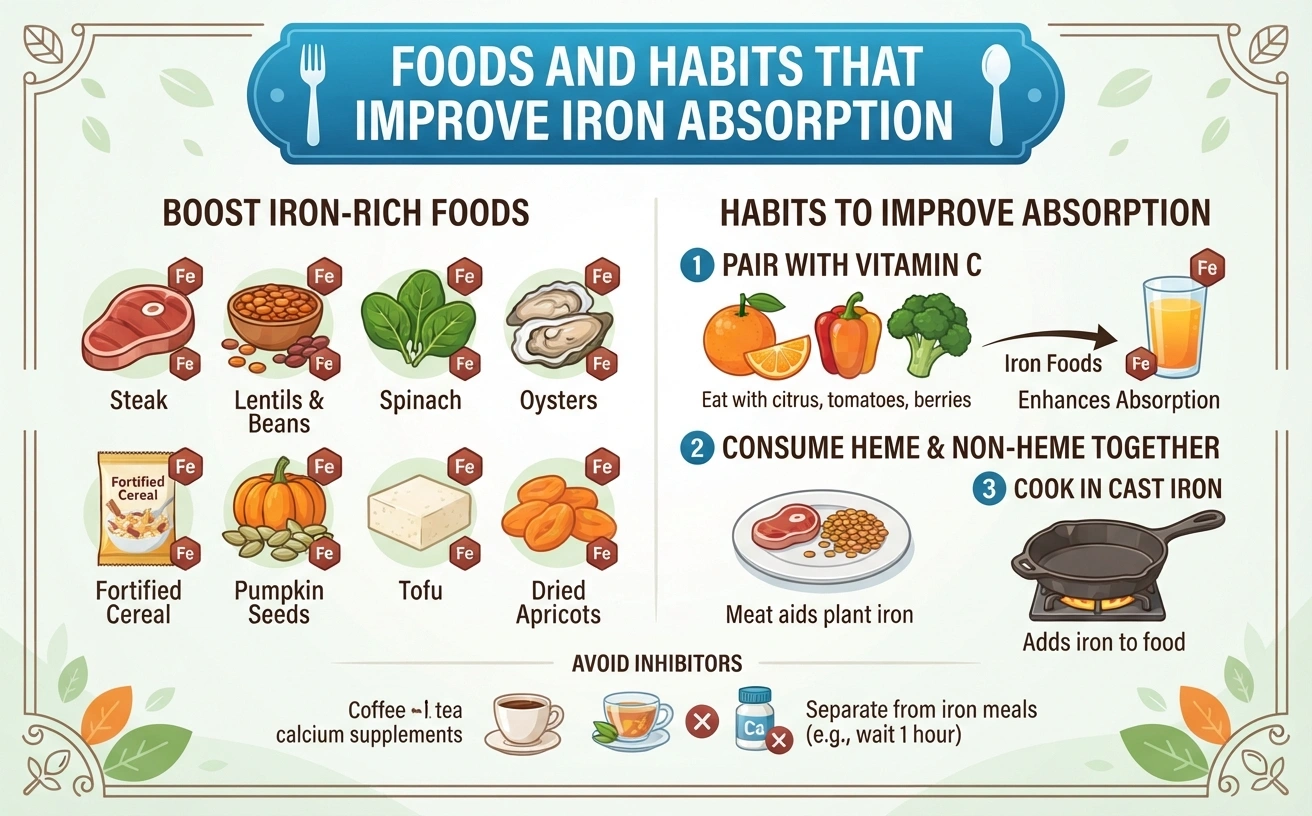
Foods and Habits That Improve Iron Absorption
Supplements work better alongside the right food pairing habits:
- Pair iron tablets with vitamin C rich foods such as citrus fruit, guava, or amla to boost absorption; our guide to foods high in vitamin C lists options that work well in a Pakistani kitchen
- Avoid tea or coffee within two hours of taking iron, since tannins reduce absorption significantly
- Separate calcium supplements or dairy from iron dosing by at least two hours
- Include red meat, liver, lentils, and dark leafy greens like spinach in regular meals
- Cooking in cast iron pans can modestly increase the iron content of food
Iron Supplements and Related Nutrient Gaps
Anemia in Pakistan rarely shows up in isolation. Many people dealing with low iron also run low on vitamin B12, since both nutrients are tied to the same dietary gaps common in local diets. Our article on why Pakistanis are B12 deficient despite eating meat explains why cooking methods and gut health play a bigger role than diet alone. If fatigue persists even after your iron levels normalize, it is worth checking B12 status as well, and a general multivitamin that covers iron, B12, and folic acid together can help close multiple gaps at once, particularly for women of childbearing age.
When to See a Doctor
Self-treating anemia with over the counter iron is reasonable for mild, confirmed cases, but see a doctor if you experience heavy menstrual bleeding, blood in stool, unexplained weight loss, or if symptoms do not improve after two to three months of consistent supplementation. These can point to an underlying cause that supplements alone will not fix, such as ulcers, heavy periods needing treatment, or a different type of anemia altogether.
Choosing Trusted Products
Nutritional World stocks quality vitamin C and multivitamin formulations that support iron absorption and overall anemia recovery alongside a doctor recommended iron supplement. Our vitamin C tablets are a practical pairing for anyone starting iron therapy, and our essential vitamins for women formula covers several of the nutrients that commonly run low alongside iron. We do not currently list a dedicated standalone iron tablet in our catalog, so for the iron supplement itself, buy from a pharmacy on your doctor’s recommendation and use these formulas to support absorption and cover related gaps. Always check current stock and pricing on the Nutritional World product pages before ordering.
Frequently Asked Questions
How do I know if I need an iron supplement for anemia?
A blood test showing low hemoglobin, low ferritin, or low serum iron confirms iron deficiency anemia. Fatigue, pale skin, and breathlessness are common signs, but only lab results and a doctor’s advice should guide supplement use and dosage.
What is the best iron supplement in Pakistan for anemia?
Ferrous sulfate is the most common and affordable option in Pakistan and is well studied for treating anemia. Ferrous fumarate and iron bisglycinate cost more but often cause less stomach upset, which helps with long term consistency.
Can I take iron supplements without a prescription in Pakistan?
Iron tablets are sold over the counter in most Pakistani pharmacies, but self dosing without a confirmed diagnosis can mask other conditions or cause iron overload. A checkup and blood test before starting is the safer route.
How long does it take for iron supplements to fix anemia?
Energy levels often improve within two to three weeks, but hemoglobin typically takes six to eight weeks to normalize. Ferritin stores need three to six months of consistent supplementation to fully rebuild, so do not stop early.
What foods or drinks should I avoid with iron supplements?
Avoid taking iron with tea, coffee, milk, or calcium supplements, since they block absorption. Pair iron tablets with vitamin C rich foods like citrus or guava instead, and space out tea or dairy by at least two hours.