











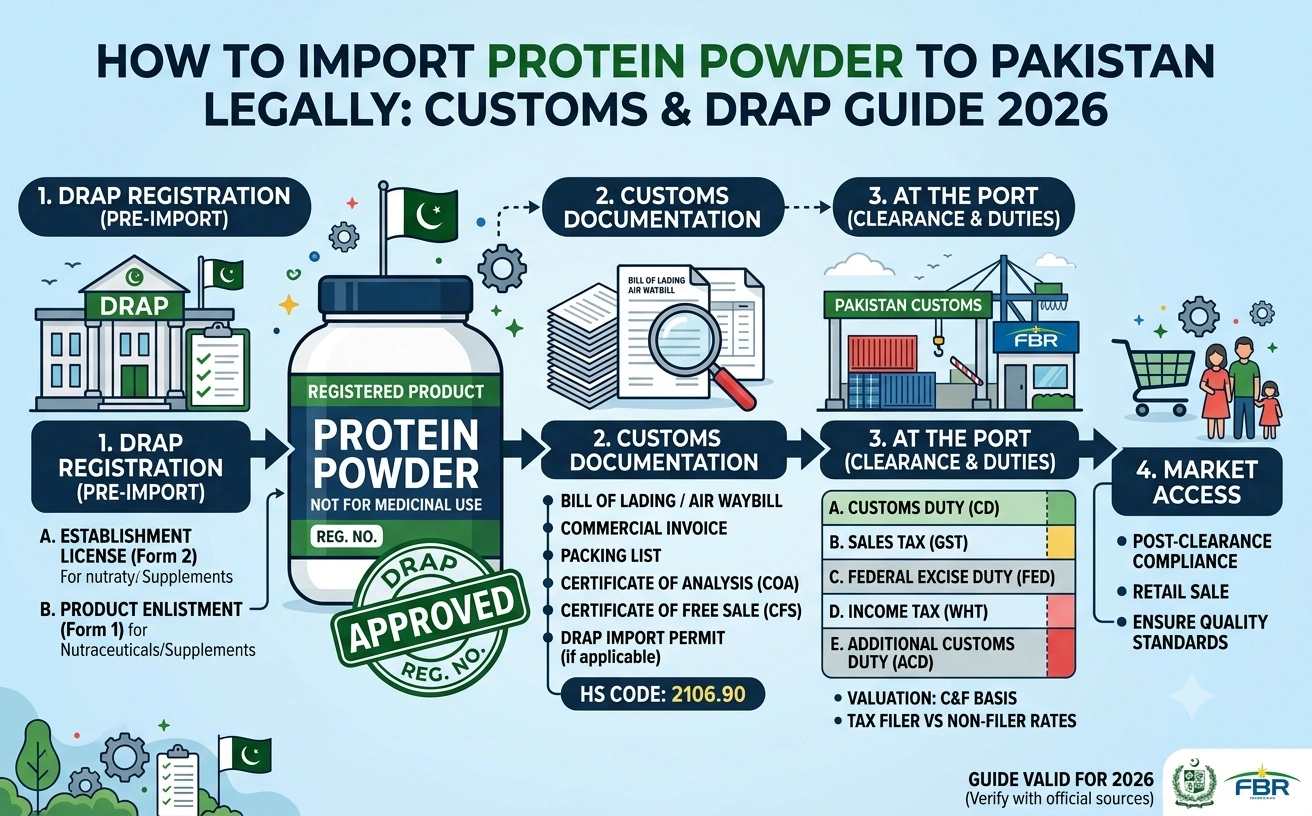
Every month, hundreds of Pakistani gym goers try to bring in a tub of whey from abroad or order it online, only to get stuck at customs, hit with an unexpected duty bill, or have the parcel held for weeks. If you are trying to figure out how to import supplements to Pakistan the right way, this guide walks you through the real process: DRAP registration, customs duty on protein powder in Pakistan, and the paperwork most people forget until it is too late.
We will also explain why so many serious lifters have stopped importing altogether and instead buy from stores that already hold imported vs local supplements in stock, cleared and ready to ship the same week.
Table of Contents
Why Importing Supplements Into Pakistan Is Not as Simple as It Looks
Protein powder, creatine, and pre-workouts fall under food and health related products, which means they are not treated like ordinary parcels. Pakistan Customs and the Drug Regulatory Authority of Pakistan, better known as DRAP, both have a say in what crosses the border. A product that is perfectly legal to buy in the United States or the UK can still be delayed, taxed heavily, or refused entry here if it does not meet local requirements.
This is one reason why choose imported supplements is a more complicated question than it sounds. Quality and brand reputation matter, but so does the legal route the product takes to reach you.
DRAP Supplement Import Rules: The Basics
DRAP regulates supplements in Pakistan the same way it regulates other health related products. Before a business can legally bring in and sell protein powders, multivitamins, or amino acids commercially, the product generally needs to go through a registration or listing process with DRAP. This confirms the formula, labeling, and manufacturing source meet Pakistan’s safety standards.
For individuals importing a single tub for personal use, the rules are lighter but not absent. Customs officers still check quantity, declared value, and whether the item looks like it is for personal consumption or resale. Bringing in one or two containers as a traveler is usually treated differently from repeatedly ordering large quantities online, which customs may flag as an undeclared commercial import.
If you want to understand which products are already cleared and trusted locally, it helps to check a DRAP approved food supplements list before you place an order from abroad. Buying a brand that is already recognized saves you from the guesswork of whether it will even be allowed through.

Customs Duty on Protein Powder in Pakistan
This is the part that catches most first time importers off guard. Customs duty on protein powder in Pakistan is calculated on the declared value of the product plus shipping, and then additional taxes are layered on top, including sales tax and sometimes withholding tax. Depending on the courier and the value bracket, the final amount you pay on clearance can end up close to, or even higher than, the original price of the product.
A few practical points worth knowing:
- Duty and tax rates change from year to year, so a figure you saw quoted last year may no longer apply.
- Couriers like DHL or FedEx often charge their own clearance and handling fees on top of government duty.
- Under declaring value to reduce duty is illegal and can lead to the shipment being seized entirely.
- Multiple small orders in a short period can still be treated as a pattern of commercial importing.
Once you add courier charges, duty, taxes, and the wait time of two to four weeks, many buyers realize the customs duty on protein powder Pakistan costs them more than simply buying the same brand from a local supplement store that already imported it in bulk and cleared it properly.
Documents You Actually Need
If you are importing for personal use, keep these ready:
- A clear invoice or receipt showing the product name, quantity, and value.
- Proof of payment matching the invoice amount.
- Your CNIC and contact details for the courier’s clearance form.
- If asked, a simple note confirming the item is for personal use, not resale.
For anyone importing commercially, DRAP registration documents, a business import license, and a Sales Tax Registration Number become necessary, along with proper labeling in line with DRAP’s requirements before the product can legally be sold in stores or online.
The Risks of DIY Importing
Beyond the cost, there are real risks worth weighing before you order supplements from an overseas website:
- Counterfeit stock. Some overseas sellers, especially on marketplaces, ship counterfeit tubs that never had proper manufacturing oversight. Learning how to identify fake imported supplements becomes essential if you go this route.
- Seizure at customs. Products lacking proper documentation or exceeding personal use limits can be held or destroyed.
- No accountability. If something goes wrong with an unregistered product, there is no local authority you can approach for a refund or complaint.
- Hidden costs. Between duty, tax, and courier fees, the landed price is rarely what the checkout page showed you.
This is also why counterfeit awareness matters even for locally bought products. If you are based in Punjab, our guide on how to identify fake supplements in Lahore is worth a read regardless of where you eventually buy from.
Why Buying Local Stocked Supplements Is the Easier Path
A growing number of Pakistani buyers have simply stopped importing on their own. Instead, they order from established local suppliers who have already handled DRAP compliance, customs clearance, and quality checks in bulk. This means:
- No customs duty surprises added to your final bill.
- No waiting weeks for a parcel stuck in clearance.
- Verified, authentic stock with batch tracking.
- Easy exchanges or support if a product has an issue.
If you want a properly sourced tub of whey without the DRAP paperwork or customs risk, browsing a trusted shop that already stocks internationally recognized brands is the simplest route. Many buyers compare this directly to ordering abroad in our breakdown of imported vs local testosterone boosters price in Pakistan, where the same duty and shipping math applies to most supplement categories, not just protein.
For those still weighing the decision, our guide on how to choose the best whey protein covers what to check on the label regardless of where the product ships from, and our overview of what are protein supplements is a good starting point if you are new to this altogether. If you are based near a major city, you can also check stock and pickup options through our Lahore, Islamabad, or Faisalabad pages.
Final Word
Importing supplements to Pakistan legally is possible, but it involves more steps than most people expect: DRAP awareness, correct documentation, and a realistic understanding of customs duty on protein powder. For personal, occasional use it can work, but for anyone who wants consistent access to authentic protein powder without duty shocks or delays, buying from a supplier that has already done the legal groundwork is almost always the more practical choice.
Frequently Asked Questions
Is it legal to import protein powder into Pakistan for personal use?
Yes, individuals can bring in reasonable quantities for personal use with proper invoices and payment proof. Large or repeated orders may be treated as commercial imports, which require DRAP registration and additional customs documentation before clearance.
How much is customs duty on protein powder in Pakistan?
Duty is calculated on declared value plus shipping, then combined with sales tax and courier handling fees. Rates change yearly, so the final landed cost is often higher than buyers expect when ordering from abroad.
Do all supplements need DRAP approval to be sold in Pakistan?
Commercial sellers generally need DRAP registration or listing before selling supplements locally. Personal imports face lighter requirements, but products without proper documentation risk delay, seizure, or refusal at the customs point.
Why do imported parcels get stuck at customs?
Parcels get held when documentation is incomplete, declared value looks inaccurate, or quantity suggests resale rather than personal use. Missing invoices or unclear product labeling are the most common reasons for delays.
Is it cheaper to import supplements myself or buy locally stocked stock?
After adding customs duty, courier fees, and wait time, self importing rarely saves money. Buying from a supplier that already cleared and stocked authentic brands is usually faster, cheaper, and far less risky.