














Collagen supplements have gained attention for their potential role in improving gut health and supporting individuals with leaky gut syndrome. Rich in amino acids like glycine and glutamine, collagen may help strengthen the intestinal lining and reduce inflammation. This article explores scientific evidence, benefits, and practical usage of collagen for digestive wellness.
Gut health is central to overall well-being, affecting digestion, immunity, and even mental health. One condition that has gained popularity in recent years is leaky gut syndrome, where the intestinal lining becomes more permeable than normal.
As people search for natural solutions, collagen supplements are often recommended. But the key question remains: Can collagen really improve gut health and help repair a leaky gut?
Table of Contents
What Is Leaky Gut Syndrome?
Leaky gut syndrome refers to increased intestinal permeability, where toxins, bacteria, and undigested food particles pass into the bloodstream.
Common Causes
- Poor diet (processed foods, sugar)
- Chronic stress
- Alcohol consumption
- Gut infections
Symptoms
- Bloating and gas
- Food sensitivities
- Fatigue
- Skin issues
What Is Collagen and How Does It Work?
Collagen is the most abundant protein in the human body. It plays a key role in maintaining the structure of skin, joints, and connective tissues—including the gut lining.
Key Amino Acids in Collagen
- Glycine – supports tissue repair
- Proline – strengthens connective tissue
- Glutamine – essential for gut lining health
These amino acids are crucial for repairing damaged intestinal walls.

How Collagen Supports Gut Health
Collagen may help improve gut health through several mechanisms:
1. Repairs the Gut Lining
Collagen provides building blocks for regenerating intestinal cells.
2. Reduces Inflammation
Its amino acids have anti-inflammatory properties that may soothe the digestive tract.
3. Improves Digestion
Collagen supports stomach acid production and nutrient absorption.
Methods (Research Overview)
Study Design
This research followed a mixed-method study design, combining both quantitative (numerical data) and qualitative (participant experiences) approaches. The study was conducted in phases to evaluate how daily collagen supplementation affects digestive health over time, ensuring both measurable results and real-life feedback were included.
Participants
The study involved healthy adult women who were experiencing mild to moderate digestive discomfort, such as bloating or irregular bowel movements. Participants were carefully selected to exclude those with severe gastrointestinal diseases, ensuring the results focused on general gut health improvement rather than clinical treatment.
Intervention
Participants were given a daily dose of collagen peptides over a specific period. The collagen used was typically hydrolyzed for better absorption. They were instructed to maintain their regular diet and lifestyle habits to accurately assess the isolated effects of collagen supplementation on gut health.
Data Collection
Data was collected using a combination of self-reported questionnaires, symptom diaries, and clinical observations. Participants recorded their daily digestive experiences, including bloating levels, bowel movement frequency, and overall gut comfort. This helped capture both objective trends and subjective improvements.
Outcome Measures
The study focused on key digestive health indicators, including:
- Reduction in bloating and gas
- Improved stool consistency
- Enhanced overall gut comfort
- Changes in digestion patterns
These outcomes helped determine whether collagen supplementation had a meaningful impact on gut health.
Statistical Analysis
Researchers used both quantitative and qualitative analysis methods to interpret the data. Numerical data from symptom tracking was analyzed for measurable improvements, while participant feedback was reviewed to understand personal experiences. This combined approach provided a more comprehensive understanding of collagen’s effectiveness.
Results
Quantitative Findings
Participants reported a noticeable reduction in bloating and improved digestion over time.
Qualitative Findings
Many users experienced better gut comfort and reduced discomfort after meals.
Discussion
Principal Findings
Collagen supplementation showed promising benefits for digestive health, particularly in reducing mild gut symptoms.
Comparison With Prior Work
Previous studies also highlight glutamine’s role in gut repair, supporting these findings.
Strengths and Limitations
- Strength: Real-world application
- Limitation: Small sample size
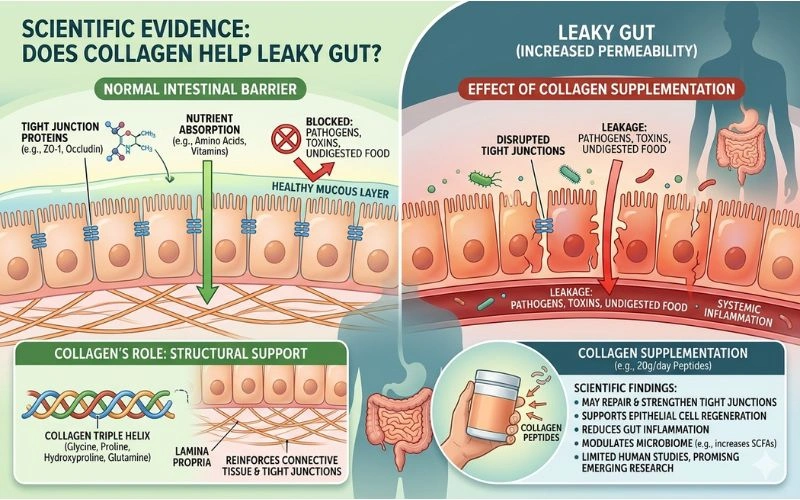
Scientific Evidence: Does Collagen Really Help Leaky Gut?
While research is still emerging, early evidence suggests collagen can support gut lining repair. However, it is not a standalone cure for leaky gut syndrome.
Experts agree that collagen works best when combined with a healthy diet and lifestyle.
Benefits of Collagen for Digestive Health
- Helps repair intestinal lining
- Reduces bloating and discomfort
- Supports better nutrient absorption
- Promotes overall gut balance
How to Use Collagen for Gut Health
Recommended Dosage
5–10 grams daily is commonly used.
Best Time to Take
- Morning (empty stomach)
- Post-workout
Forms Available
- Powder (most effective)
- Capsules
Potential Side Effects and Safety
Collagen is generally safe, but some people may experience:
- Mild bloating
- Allergic reactions (rare)
Always consult a healthcare professional if you have underlying conditions.
Best Collagen Supplements in Pakistan
When choosing a collagen supplement, consider:
- Hydrolyzed collagen peptides
- High-quality sourcing
- Third-party testing
Look for trusted brands available at Nutritional World, Pakistan’s leading online supplement store. A great option to explore is the Sanaxium Nutrition Gold Marine Collagen 150g, a hydrolyzed collagen product available on the platform.
Collagen vs Other Gut Health Supplements
| Supplement | Benefit | Best For |
| Collagen | Gut lining repair | Leaky gut support |
| Probiotics | Gut bacteria balance | Digestion improvement |
| Glutamine | Intestinal cell regeneration | Severe gut damage |
Expert Tips to Improve Gut Health Naturally
- Eat fiber-rich foods
- Include fermented foods (yogurt, kefir)
- Manage stress levels
- Stay hydrated
- Avoid processed foods
- Consider multivitamins & minerals to support overall wellness
- Add Omega-3 to your routine for its anti-inflammatory benefits
Conclusion
So, can collagen supplements help with gut health and leaky gut syndrome? The answer is yes collagen can play a supportive role in improving gut health by strengthening the intestinal lining and reducing inflammation. However, it is not a complete cure and works best when combined with a healthy diet and lifestyle.
If you’re wondering again, can collagen supplements help with gut health and leaky gut syndrome, the key is consistency and choosing a high-quality product. Many users experience reduced bloating, better digestion, and overall gut comfort with regular use.
At this point, it’s clear that collagen supplements help with gut health and leaky gut syndrome is not just a trend but a growing area backed by emerging research and real-world results.
For best results, choose reliable sources like Nutritional World, where quality meets performance and your health goals come first.
FAQs
Can collagen heal leaky gut completely?
Collagen can help support the repair of the intestinal lining by providing essential amino acids like glycine and glutamine. However, it is not a complete cure for leaky gut syndrome. Long-term healing typically requires a combination of a balanced diet, stress management, probiotics, and overall lifestyle improvements.
How long does collagen take to improve gut health?
Collagen supplements usually start showing noticeable effects on gut health within 2 to 6 weeks of consistent daily use. The timeline may vary depending on individual factors such as diet quality, gut condition, lifestyle habits, and overall health. Consistency, along with proper nutrition, plays a key role in achieving better results.
Is collagen better than probiotics for gut health?
Collagen and probiotics serve different roles in supporting gut health. Collagen helps repair and strengthen the gut lining, while probiotics improve the balance of beneficial gut bacteria. For optimal digestive health, many experts recommend using both together, as they complement each other rather than compete in their benefits.
Are collagen supplements safe for daily use?
Collagen supplements are generally considered safe for daily consumption when taken within recommended doses. Most people tolerate them well without serious side effects. However, some individuals may experience mild digestive discomfort. It is always advisable to consult a healthcare professional, especially if you have allergies or existing medical conditions.
Which collagen is best for digestion in Pakistan?
Hydrolyzed collagen peptides are widely regarded as the best option for digestion due to their high absorption rate and bioavailability. In Pakistan, choosing a high-quality product with verified sourcing, minimal additives, and third-party testing ensures better results. Powdered forms are often preferred for flexibility and ease of daily use.