














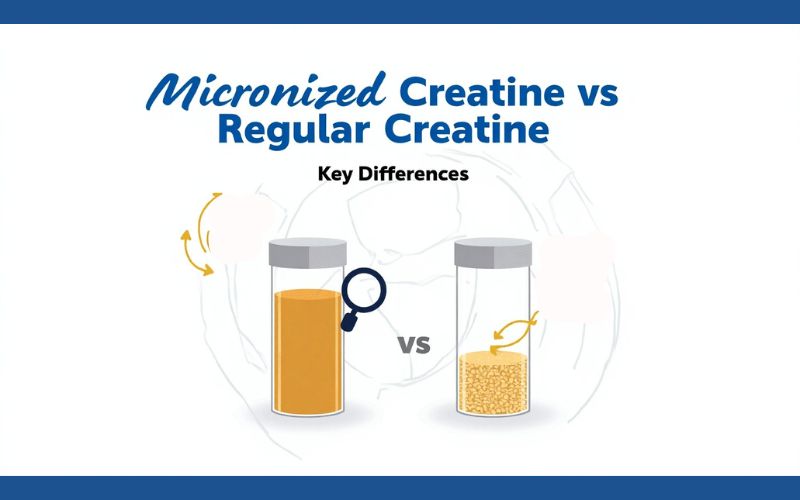
Creatine is one of the most researched and popular supplements in the fitness world. Whether you are a seasoned athlete or just starting your fitness journey, you have probably heard of it. But when it comes to micronized creatine vs regular creatine, many people are unsure which one is better for their needs. Let us break down the differences, benefits, and which one might be the right fit for you.
Table of Contents
What Is Creatine?
Creatine is a naturally occurring compound found in your muscles. It helps produce ATP (adenosine triphosphate), the primary energy currency of your cells. During high intensity activities like weightlifting or sprinting, ATP is rapidly used, and creatine plays a major role in replenishing it. Understanding what creatine monohydrate actually is is a good starting point if you are new to the supplement altogether.
You can get creatine from foods like red meat and fish, but for those who want optimal performance, supplementation becomes necessary.
Regular Creatine Monohydrate: The Classic Choice
Before comparing the two forms directly, it helps to understand the original version that most people start with. Creatine monohydrate is the most studied and trusted form of creatine. It is known for its effectiveness in increasing muscle mass, improving strength, and enhancing performance during high intensity exercise.
Benefits of Regular Creatine Monohydrate
Given how long this form has been on the market, it is worth listing exactly why it remains the default choice for most lifters. Regular creatine monohydrate is trusted, effective, and backed by decades of science when it comes to boosting strength, muscle mass, and overall workout performance.
- Proven Effectiveness: Decades of research support its use for strength and muscle gain.
- Cost Effective: One of the most affordable supplements on the market.
- Widely Available: Found in most supplement stores and online retailers.
However, regular creatine monohydrate tends to have larger particles, which might not dissolve completely in water, leading to sedimentation or a gritty texture.
What Is Micronized Creatine?
With the classic version covered, it is worth understanding what actually changes when a manufacturer micronizes it. Micronized creatine is essentially the same creatine monohydrate, but the particles are processed into much smaller sizes. The goal is to improve solubility, absorption, and reduce digestive discomfort that some users may experience with regular creatine.
Micronized Creatine vs Regular Creatine: Core Differences
With both forms defined, it is time to compare them directly across the factors that actually matter for daily use. Understanding these differences can help you make a smarter, more personalized choice.
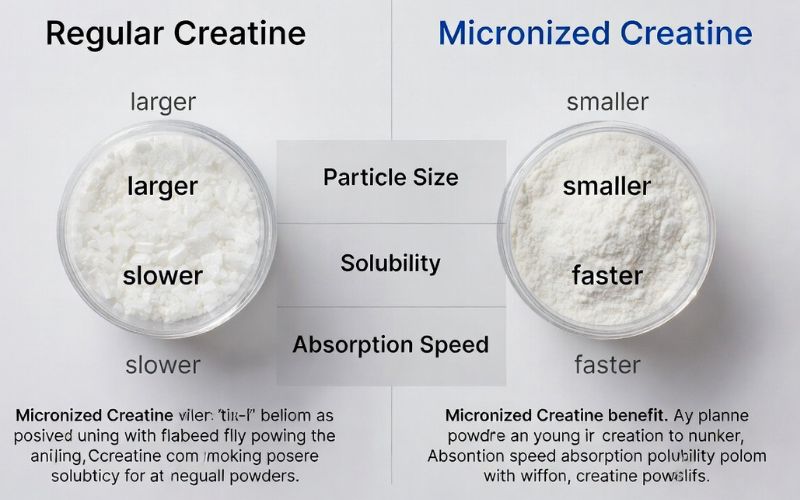
1. Particle Size and Solubility
The most obvious difference between the two shows up the moment you mix them into water.
- Micronized Creatine: Finely ground particles that dissolve easily in water or any beverage, resulting in a smoother drink with no gritty residue.
- Regular Creatine: Larger particles that may not dissolve fully, often settling at the bottom of the glass.
2. Absorption and Digestive Comfort
Beyond how it mixes, particle size may also influence how comfortably your body handles each dose.
- Micronized Creatine: May offer better absorption due to the smaller particle size, which some users claim leads to less bloating or stomach discomfort.
- Regular Creatine: Effective but may cause bloating or cramping in individuals with sensitive digestive systems, an issue covered further in this breakdown of the most common creatine side effects.
3. Effectiveness
Solubility and comfort aside, the question most people actually care about is whether one works better than the other.
Both types are equally effective in terms of performance and muscle growth, as they contain the same active ingredient, creatine monohydrate. This is consistent with what how creatine works inside the body explains about the compound’s underlying mechanism, since particle size does not change how creatine functions once absorbed.
However, micronized creatine may work slightly faster for some due to improved solubility and absorption, but this is not a universal experience.
4. Price
Finally, cost is often the deciding factor once performance and comfort are roughly equal between the two.
- Micronized Creatine: Slightly more expensive due to additional processing.
- Regular Creatine: Budget friendly and still highly effective, and this ranking of the most affordable creatine by price per gram is a useful reference if budget is your main priority.
Which One Should You Choose?
Choosing between micronized and regular creatine depends on your preferences and sensitivities.
- If you prefer smoother texture, easy mixing, and potentially faster absorption, micronized creatine is a great option.
- If you are on a tight budget and do not mind a bit of grit in your drink, regular creatine will serve you just as well. If you are curious about other alternatives beyond these two, this comparison of creatine HCL against standard monohydrate is worth a look, as is this overview of buffered creatine and whether it lives up to the hype.
How to Use Creatine Properly
Whichever form you settle on, the way you take it matters just as much as which one you pick. To get the most out of your creatine supplement, follow these general guidelines.
- Loading Phase (Optional): 20g per day for 5 to 7 days, split into 4 doses, a pattern explained further in this comparison of creatine loading versus a steady maintenance dose.
- Maintenance Phase: 3 to 5g per day consistently, which this creatine dosage guide for beginners breaks down further for anyone new to the routine.
- Timing: Taking it after training is often considered ideal, especially with a carbohydrate rich meal or shake to enhance absorption, and the best time of day to take creatine covers this in more detail.
- Hydration: Drink plenty of water to avoid cramps or dehydration.
Are There Any Side Effects?
Since safety is often the first concern for new users, it is worth addressing this directly before you commit to either form. Creatine is safe for long-term use in healthy individuals, a point supported further in this review of what long-term studies say about creatine safety. Some minor side effects might include:
- Water retention
- Mild stomach discomfort
- Bloating, more common with regular creatine
Choosing micronized creatine may help mitigate these minor effects, and if kidney health is a specific concern for you, this look at creatine’s relationship with kidney health addresses it directly.
Scientific Backing and Trustworthiness
Beyond individual experience, it also helps to know that this supplement is backed by more than just marketing. Creatine’s safety and benefits are backed by reputable institutions, including:
- The International Society of Sports Nutrition (ISSN), which recognizes creatine monohydrate as one of the most effective and well-researched supplements
- Dozens of peer-reviewed studies confirming its benefits for muscle performance, cognitive function, and recovery
This kind of evidence supports the EEAT (Experience, Expertise, Authoritativeness, and Trustworthiness) principles Google prioritizes in high quality content.
FAQs
To close out, here are quick answers to the questions people ask most often when comparing these two forms of creatine.
Is micronized creatine better than regular creatine?
It depends on your preferences. Both are effective, but micronized creatine is easier to mix and may be gentler on the stomach.
Can I switch from regular to micronized creatine?
Absolutely. Since both contain creatine monohydrate, you can switch without disrupting your supplement routine.
Do I need a loading phase?
Not necessarily. A loading phase can help saturate your muscles faster, but you will still get benefits with consistent daily dosing.
Does micronized creatine cause water retention?
Yes, like regular creatine, it can cause some water retention in the muscles, which is normal and even beneficial for performance.
Can creatine harm your kidneys?
No, creatine has been shown to be safe for healthy individuals when taken as recommended. If you have kidney issues, consult your doctor before use.
Conclusion: Which Creatine Is Right for You?
Both micronized and regular creatine offer outstanding benefits for strength, endurance, and recovery. If you are looking for better solubility and digestion, micronized creatine might be the better choice. But if you are budget conscious and do not mind a little texture in your shake, regular creatine delivers the same results.
No matter which one you choose, the key is consistency. Make creatine part of your daily supplement routine to see the full range of benefits.
Ready to elevate your fitness game with high quality creatine supplements? Visit Nutritional World today for trusted, authentic products that support your strength and performance goals.