














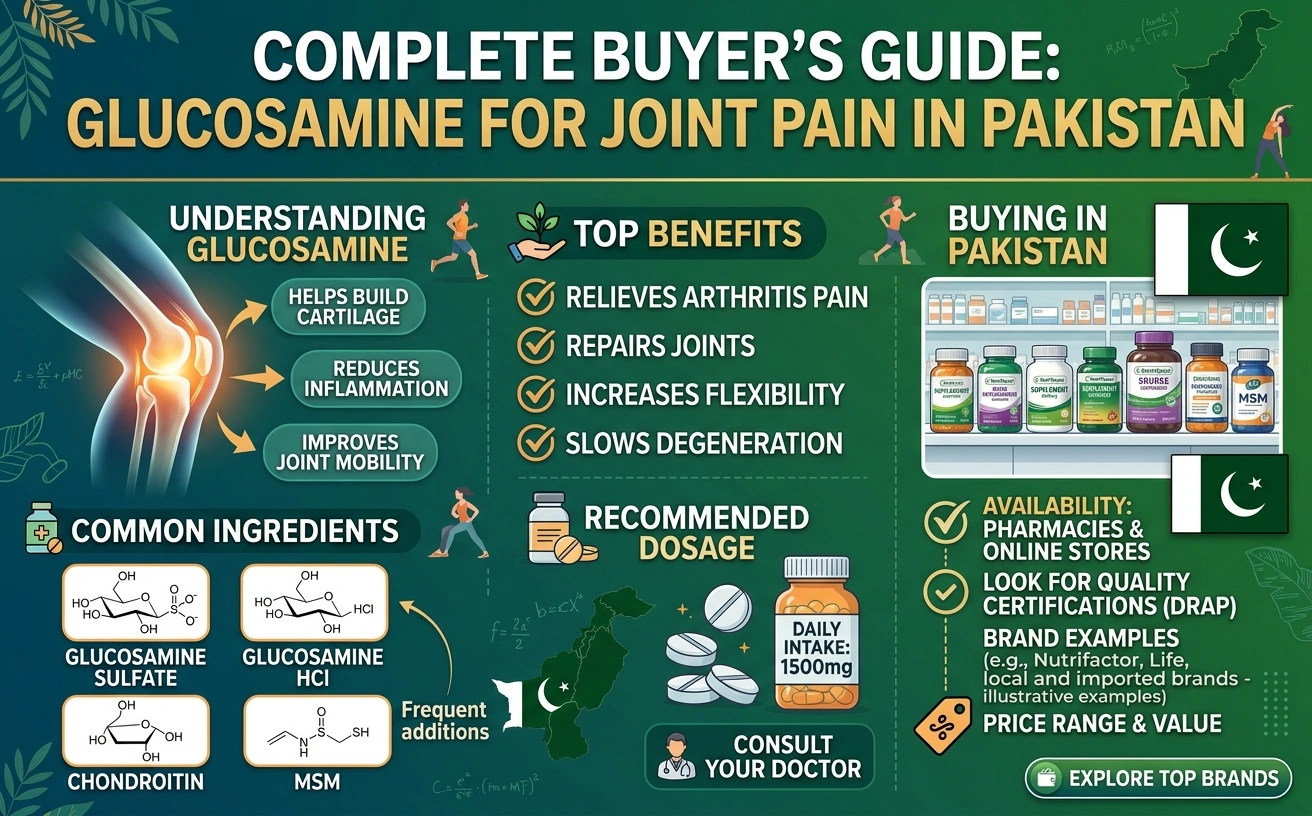
Knee stiffness after a long day standing in a Lahore bazaar, sore joints climbing the stairs of an Islamabad apartment, or aching wrists after a heavy gym session in Karachi are complaints that bring more Pakistanis to pharmacies every year. Glucosamine for joint pain in Pakistan has become one of the most searched supplement categories, and for good reason. Whether you are an older adult managing early arthritis or a lifter putting stress on your knees and shoulders week after week, understanding how glucosamine works can help you make a smarter buying decision. This guide breaks down the science, the dosage, and how to choose between the many joint supplements Pakistan shelves now carry.
Table of Contents
What Is Glucosamine and How Does It Work
Glucosamine is a natural compound found in the fluid around your joints and in the cartilage that cushions your bones. As people age, natural glucosamine production slows, and cartilage begins to wear down faster than the body can repair it. This is a major contributor to osteoarthritis, the most common cause of joint pain in older adults. Supplementing with glucosamine is thought to support cartilage structure and may slow the rate of joint deterioration, particularly in the knees. It will not regrow cartilage overnight, but consistent use over several weeks is commonly associated with less stiffness and easier movement.

Glucosamine Chondroitin: Why the Combination Matters
Most modern joint formulas pair glucosamine with chondroitin sulfate, another natural cartilage component. Chondroitin helps cartilage retain water, which keeps it flexible and better able to absorb shock during walking, squatting, or climbing stairs. Together, glucosamine chondroitin supplements aim to support two different sides of joint health at once, the building blocks of cartilage and its ability to stay cushioned. If you are comparing joint supplements in Pakistan, checking whether a product contains both ingredients, rather than glucosamine alone, is one of the simplest ways to judge its quality.
Who Actually Needs Joint Supplements in Pakistan
Joint supplements are not only for people already diagnosed with arthritis. Several groups in Pakistan tend to benefit the most:
- Adults over 45 who notice morning stiffness or knee discomfort on stairs
- Gym goers and lifters who place repeated load on the knees, hips, and shoulders
- People recovering from a joint injury or minor surgery
- Individuals who are overweight, since extra body weight increases pressure on the knees
- Anyone with a family history of early arthritis
If daily movement is starting to feel harder than it used to, that is usually the signal to look into knee pain supplements before the discomfort becomes chronic.
Signs You May Need Knee Pain Supplements
Not every ache means you need a supplement, but a few patterns are worth paying attention to. A dull ache after sitting for long periods, a clicking or grinding sensation when bending the knee, swelling after exercise, or reduced range of motion in the morning are common early indicators of cartilage wear. Many people also notice their joints feel worse in humid weather or after long travel, which is common across Pakistani cities where sitting in traffic for hours is routine. Recognizing these signs early gives supplementation a better chance to slow further wear.
How to Choose the Right Glucosamine Supplement
With so many joint supplements available in Pakistan, a few checks make the decision easier:
- Look for glucosamine sulfate rather than glucosamine hydrochloride, since sulfate forms are more widely studied for joint comfort
- Check whether chondroitin sulfate is included alongside glucosamine
- Confirm the product lists a clear dosage per serving on the label
- Choose sealed, properly stored stock, since Pakistan’s summer heat can affect capsule stability over time
- Pair it with other joint-friendly nutrients where needed, such as collagen for joint and skin support or omega 3 for joint pain and inflammation
If a listed brand is unavailable, a reliable collagen peptide supplement or a quality fish oil capsule can support joint comfort as part of the same routine while you source a dedicated glucosamine product.
Glucosamine Dosage Guide
The most commonly researched dosage for adults is 1500 mg of glucosamine sulfate per day, often split into two or three smaller doses to reduce stomach upset. When paired with chondroitin, a typical daily amount is 1200 mg of chondroitin sulfate. Results are rarely immediate. Most people need four to eight weeks of consistent daily use before noticing a meaningful difference in stiffness or comfort. Taking the supplement with food generally improves tolerance. As with any supplement, anyone on blood thinners, with a shellfish allergy, or who is pregnant should speak with a doctor before starting, since some glucosamine products are derived from shellfish shells.
Natural Ways to Support Joint Health Alongside Supplements
Supplements work best as part of a broader routine rather than a standalone fix. Maintaining a healthy body weight reduces direct load on the knees and hips. Low impact movement such as swimming, cycling, or walking keeps joints mobile without adding excessive strain, and our guide on low impact exercises for joint pain covers safe options for people managing existing discomfort. Adequate calcium for bone strength and sufficient vitamin D also support the bones surrounding the joint, since vitamin D deficiency is common across Pakistan and can indirectly affect musculoskeletal comfort. A calcium magnesium supplement can be a useful addition for people whose diet falls short on these minerals.
Are There Side Effects
Glucosamine is generally well tolerated. Some people report mild digestive discomfort, nausea, or headache when starting out, which usually settles once the body adjusts or the dose is split across meals. It is not recommended for people with a known shellfish allergy unless the product is specifically labeled shellfish free. People with diabetes should monitor blood sugar closely when starting glucosamine, since some early research suggested a possible mild effect on insulin sensitivity, though more recent studies have found this effect to be minimal for most users. As always, checking with a healthcare provider before starting any new supplement is the safest approach, especially for those managing an existing health condition.
Glucosamine Versus Other Joint Support Options
Glucosamine chondroitin is not the only route to joint support. Omega 3 fatty acids are widely used for their anti-inflammatory properties and can complement glucosamine rather than replace it. Collagen protein is another popular option, since collagen is a direct structural component of cartilage and connective tissue. Many people managing joint discomfort in Pakistan combine two or three of these approaches for a more complete routine, rather than relying on a single ingredient. A well rounded multivitamin can also help fill any general nutrient gaps that may be slowing recovery.
According to the National Institutes of Health, research on glucosamine and chondroitin for osteoarthritis has shown modest but meaningful benefits for joint comfort in some studies, while results vary depending on the individual and the severity of joint wear.1 This makes it a reasonable option to try for mild to moderate joint discomfort, alongside lifestyle changes and medical guidance where needed.
Final Thoughts
Joint pain does not have to be accepted as a normal part of getting older or training hard. Glucosamine for joint pain in Pakistan, especially when combined with chondroitin, offers a well studied, low risk option worth considering for anyone dealing with stiffness, clicking joints, or reduced mobility. Pair it with the right nutrients, a sensible exercise routine, and patience, since joint supplements typically need weeks rather than days to show their full effect. Browse our full range of supplements to find products that support joint health as part of a complete wellness routine.
Frequently Asked Questions
Is glucosamine safe to take every day for joint pain?
Yes, glucosamine is generally safe for daily long term use in healthy adults. Most studies use continuous daily dosing for several months. People with shellfish allergies or diabetes should consult a doctor before starting a daily routine.
How long does glucosamine take to work for knee pain?
Most people notice initial improvement after four to eight weeks of consistent daily use. Glucosamine works gradually by supporting cartilage over time, so it is not a fast acting painkiller and requires patience for full results.
Can I take glucosamine with omega 3 or collagen supplements?
Yes, glucosamine, omega 3, and collagen are commonly combined since each supports joint health differently. There are no known negative interactions between them, making this combination popular among people managing ongoing joint discomfort.
What is the difference between glucosamine sulfate and hydrochloride?
Glucosamine sulfate is the more widely researched form for joint comfort and cartilage support. Glucosamine hydrochloride is often paired with other ingredients but has less independent research backing its effectiveness for osteoarthritis symptoms specifically.
Do gym goers and lifters need glucosamine, not just older adults?
Yes, repeated joint stress from heavy training can wear cartilage faster than normal aging alone. Many lifters use glucosamine preventively to support joint health, especially those doing frequent squats, deadlifts, or high impact training.