













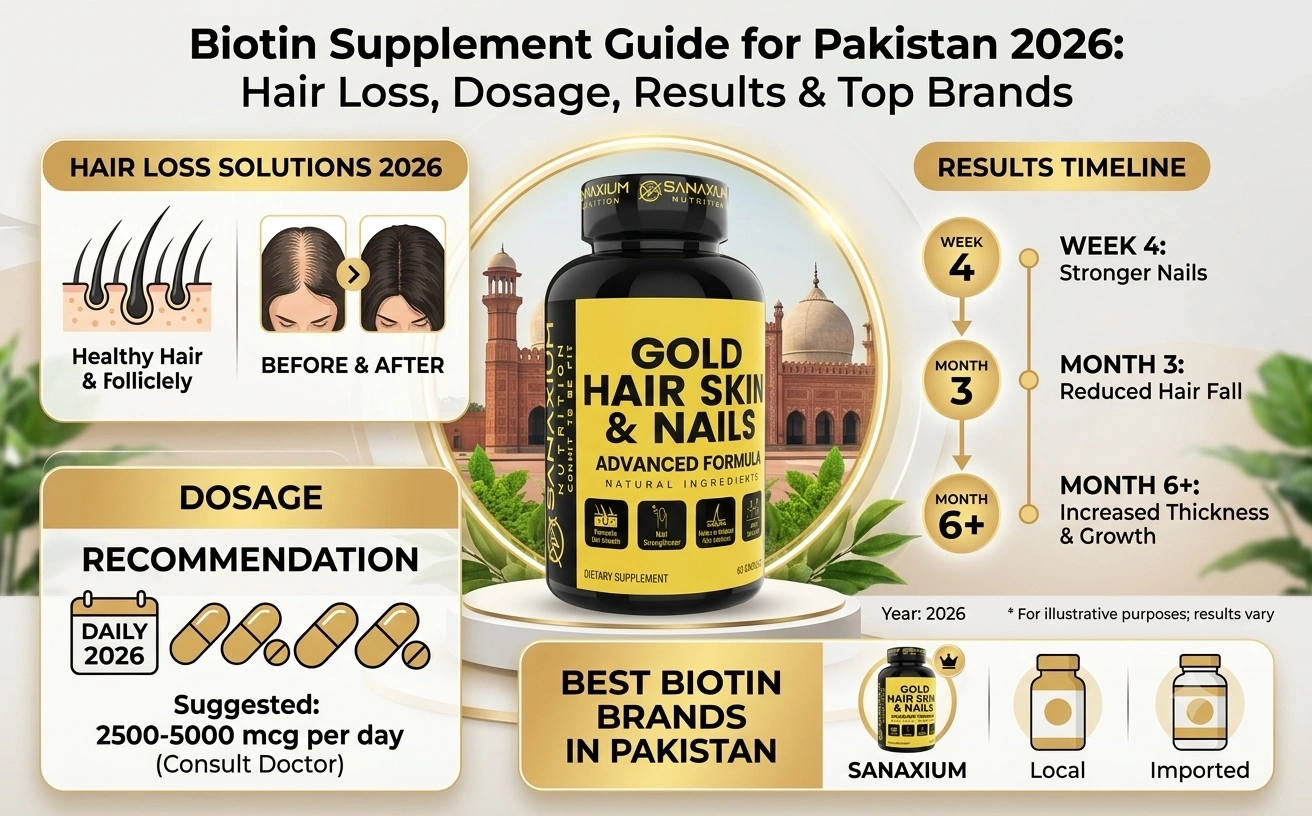
Biotin searches in Pakistan are driven almost entirely by one concern: hair loss in women. Thinning at the crown, increased shedding on the pillow, and weakening strands after pregnancy have pushed biotin to become one of the most Googled health supplements among Pakistani women under 40. The problem is that most of the information circulating online treats biotin as a guaranteed fix for all hair loss, which it is not. This guide gives you the honest version: what biotin actually does, who it genuinely helps, the correct dosage, a realistic results timeline, and which products on NutritionalWorld.com.pk are verified and halal certified.
Table of Contents
What Biotin Is and What It Actually Does
Biotin is Vitamin B7, a water-soluble B vitamin that your body uses as a cofactor for enzymes involved in metabolizing fats, carbohydrates, and amino acids. Its connection to hair, skin, and nails comes from one specific function: biotin is required for the synthesis of keratin, the structural protein that makes up hair strands, nail plates, and the outer layer of skin.
When biotin levels are genuinely low, keratin production is compromised, leading to brittle nails, dry skin, and hair that breaks at the shaft rather than falling from the root. Supplementing biotin in a deficient person restores keratin production and visibly improves hair strength and thickness over several months. The issue is that true biotin deficiency is actually uncommon in Pakistan, and the connection between supplementation and results depends heavily on whether deficiency is the actual cause of the problem.
Where Biotin Sits in the Vitamins and Essentials Cluster
Biotin belongs in the same foundational cluster as Vitamin D, zinc, magnesium, and collagen. It is not a standalone miracle ingredient but one component of a broader micronutrient picture. The guide on targeted nutrients for hair thinning and brittle nails places biotin alongside iron, zinc, Vitamin D, and collagen as the five most relevant micronutrients for Pakistani women experiencing hair quality issues, which is a more complete picture than biotin alone.

Will Biotin Fix Hair Loss? The Honest Answer
This is the question most Pakistani women actually want answered, and it deserves a direct, honest response rather than vague encouragement.
Biotin helps with hair loss only if biotin deficiency is the cause. Most female hair loss in Pakistan is driven by iron deficiency anaemia, thyroid dysfunction (both hypo and hyperthyroid), post-pregnancy hormone shifts, PCOS-related androgen excess, or chronic psychological stress. If any of these is your root cause, biotin will not stop the shedding. It may improve the texture and breakage of existing hair, but the underlying loss will continue until the real cause is addressed.
Getting a blood panel that includes ferritin, TSH, and a complete blood count before spending on biotin supplements is genuinely the most useful first step for any Pakistani woman dealing with significant hair loss. Biotin can still be a reasonable add-on once deficiency-driven causes are ruled out, but it should not replace proper diagnosis.
What Biotin Is Genuinely Useful For
- Reducing hair strand breakage and split ends caused by keratin weakness
- Improving nail strength and reducing brittleness and peeling
- Supporting skin hydration and texture at a cellular level
- Metabolic energy support alongside the other B vitamins
- Post-pregnancy recovery support when multiple nutritional gaps are being addressed together
Biotin Dosage Guide: How Much Is Actually Needed?
The dosage question is where most Pakistani supplement buyers get confused. Products range from 500 mcg to 10,000 mcg per serving, and it is not always clear which dose category actually delivers results versus which is pure marketing.
| Dose Range | Purpose | Who It Is For | Notes |
| 30 to 100 mcg | Daily nutritional requirement | General adult maintenance | Found in most multivitamins |
| 1,000 to 2,500 mcg | Mild supplementation | Beginners or those with mild concerns | Good starting point |
| 2,500 to 5,000 mcg Recommended | Hair, skin, and nail support | Women with hair quality concerns | Most studied range for cosmetic benefit |
| 5,000 to 10,000 mcg | High-dose therapeutic use | Clinically supervised only | Can interfere with thyroid and cardiac lab tests |
The 2,500 to 5,000 mcg range is the most commonly studied for hair and nail outcomes and the range most dermatologists reference when recommending biotin supplementation for cosmetic purposes. Going above 5,000 mcg without medical guidance is not advisable, particularly because high-dose biotin is known to interfere with thyroid function tests and cardiac biomarker assays, which is a meaningful concern for Pakistani women who may also be monitoring thyroid health.
Tablet vs Gummy: Which Form Is Better?
Biotin gummies have become popular in Pakistan largely due to marketing and palatability, but the form comparison is not equal. Before choosing a delivery format, it is worth understanding what each one actually delivers per serving.
| Form | Dose Accuracy | Sugar Content | Halal Risk | Cost per mcg |
| Tablets / Capsules Preferred | High, consistent | None | Low (veggie caps available) | Lowest |
| Gummies | Variable | High (2 to 5g per serving) | Moderate (gelatin binders common) | Highest |
| Powder (in collagen) | High when combined | Low to none | Depends on source | Good value as a combo |
For Pakistani women who are mindful of halal ingredients and added sugars, tablets or powder-based formulas that combine biotin with other hair-supportive nutrients are the practical choice. Gummies often use gelatin derived from pork or non-halal bovine sources as a binding agent, which makes halal verification especially important in that format.
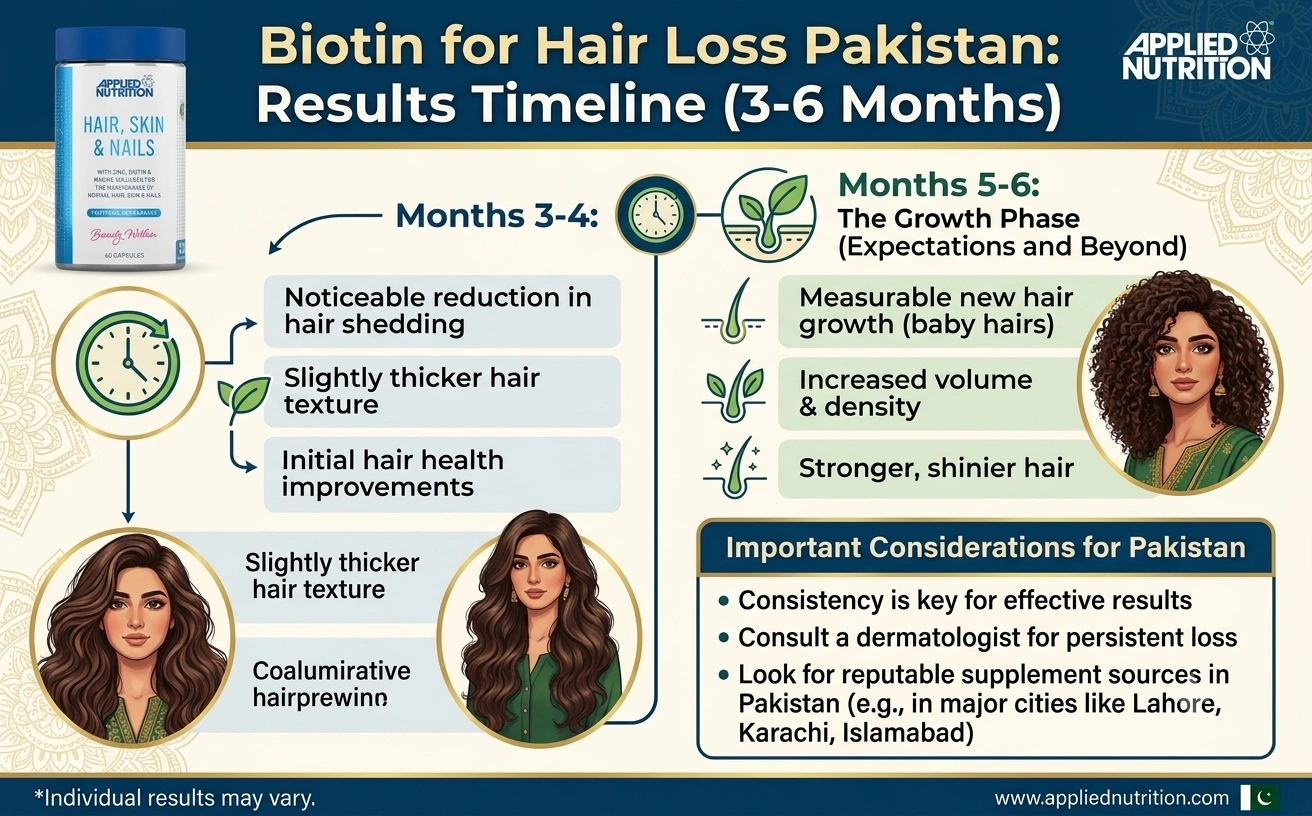
Results Timeline: What to Realistically Expect at 3 to 6 Months
The single most important thing to understand about biotin supplementation is that hair growth is physiologically slow. Results happen on a timeline measured in months, not weeks. Setting accurate expectations from the start is the difference between staying consistent and abandoning supplementation too early.
Weeks 1 to 4
No visible hair changes. Nail strengthening may begin. Energy and skin texture improvements are sometimes reported first.
Weeks 5 to 8
Reduced hair breakage at the shaft. Nails become noticeably harder. Skin may appear more hydrated.
Weeks 9 to 16
First visible improvements in hair thickness and strand strength. Less hair on the comb or shower drain from reduced breakage.
Weeks 17 to 24
Full hair growth cycle completed. Most users who will respond to biotin see their clearest results in this window.
If there is no improvement after 6 months of consistent daily supplementation at an appropriate dose, biotin deficiency is unlikely to be a contributing factor in your hair concerns and a medical consultation is the right next step. Continuing to buy supplement after supplement without addressing the root cause is both expensive and ineffective.
Biotin in Pakistani Diet: Food Sources Worth Knowing
Before reaching for a supplement, understanding whether your diet provides adequate biotin is useful. Several foods eaten regularly in Pakistan contain meaningful amounts of biotin, though cooking and processing reduce the bioavailability of some of them.
- Eggs are the single best dietary source of biotin in Pakistan. The yolk contains the biotin, so whole eggs rather than whites are what count. Raw egg whites actually block biotin absorption due to a protein called avidin, but cooked eggs do not have this issue.
- Chicken liver is extremely high in biotin and widely available in Pakistan. It is one of the most underutilized superfoods for hair health in the local diet.
- Almonds and peanuts are good plant-based sources and commonly eaten as snacks in Pakistani households.
- Whole wheat and oats contain moderate biotin but, as discussed in the zinc article, also contain phytates that can reduce overall mineral absorption from the same meal.
- Sweet potato provides a decent amount of biotin alongside beta-carotene, which independently supports scalp health.
Women who eat eggs daily, include liver in their diet occasionally, and snack on nuts are likely getting a reasonable dietary intake. Supplementation adds the most value for those on predominantly grain and vegetable-based diets with limited animal protein.
Available Product at NutritionalWorld Pakistan: Verified Price 2026
NutritionalWorld Pakistan does not currently list a standalone high-dose biotin capsule as a separate product. What it does carry is the Applied Nutrition Collagen Powder, which contains biotin as part of a comprehensive hair, skin, and nails formula alongside 5,000 mg collagen, Vitamin C, and Hyaluronic Acid. For women seeking a complete hair and skin support product rather than biotin in isolation, this is actually the stronger option because collagen supports hair structure from a different mechanism than biotin, and Vitamin C enhances both collagen synthesis and iron absorption simultaneously.
Applied Nutrition Collagen Powder 165g Flavoured (Biotin + Collagen + Vitamin C + Hyaluronic Acid)
A bio-active, high-purity Type 1 bovine collagen peptide from grass-fed cows, enriched with biotin, Vitamin C, and Hyaluronic Acid. Available in Strawberry and Raspberry or Citrus Twist flavour. Mixes easily in cold water, smoothies, or yoghurt. One scoop (5.5g) provides 5,000 mg collagen with the full biotin and Vitamin C supporting complex. Free from fat, sugar, cholesterol, soy, and dairy. Imported from the UK, halal certified, and tested in a GMP-certified facility. Suggested use is one to two scoops daily, preferably with breakfast or after exercise.
The reason a collagen plus biotin combination makes more clinical sense than biotin alone for Pakistani women dealing with hair concerns is that hair loss is rarely caused by a single nutrient gap. Collagen peptides provide the amino acid building blocks for keratin, Vitamin C supports iron absorption, and biotin supports the enzymatic pathway that uses those amino acids to build hair structure. The full breakdown of how collagen affects both skin and structural health covers this interaction in more detail.
For those comparing powder versus capsule collagen delivery, the practical differences in bioavailability and mixing habits are addressed in the guide on choosing between powdered and capsule collagen formats.
Stacking tip: Women dealing with hair thinning alongside brittle nails and dull skin will get the most from combining the collagen powder with a Vitamin D3 supplement, since Vitamin D deficiency is a commonly overlooked driver of diffuse hair shedding in Pakistan. The Applied Nutrition Vitamin D3 90 Tabs at PKR 2,480 from NutritionalWorld is available alongside the collagen powder for this purpose.
Frequently Asked Questions
Will biotin fix my hair loss?
Biotin helps hair loss only when biotin deficiency is the cause, which is less common than most Pakistani women assume. The majority of female hair loss is driven by iron deficiency, thyroid issues, PCOS, hormonal shifts after pregnancy, or prolonged stress. Biotin will not stop loss from these causes. It can improve hair strand quality and reduce breakage, which is still useful, but a blood test to identify the actual root cause is the most important first step before investing in any supplement.
What is the biotin price in Pakistan in 2026?
The Applied Nutrition Collagen Powder 165g, which includes biotin alongside 5,000 mg collagen, Vitamin C, and Hyaluronic Acid, is listed at PKR 6,120 on NutritionalWorld Pakistan, discounted from PKR 7,650. It is currently out of stock but check the product page for restocking updates. A standalone high-dose biotin capsule is not separately listed on the site at this time.
How long does biotin take to show results?
The realistic timeline is 3 to 6 months of daily supplementation. Hair grows approximately 1.25 cm per month, and biotin must support several complete growth cycles before changes become visible. Most women notice reduced breakage and stronger nails within 6 to 8 weeks, but meaningful hair density improvements typically require 16 to 24 weeks of consistency. Anyone expecting visible results within a month is likely to be disappointed and should adjust their expectations before starting.
Which is better: biotin tablets or gummies?
Tablets and capsules are better for consistent dosing, no added sugar, lower cost per microgram, and easier halal verification. Gummies deliver variable doses, add sugar, and often use gelatin binders that may not be halal. For Pakistani women concerned about ingredient transparency and dietary compliance, tablets or powder-based biotin formulas like the Applied Nutrition Collagen Powder are the more reliable choice in both quality and value terms.
Are biotin supplements halal in Pakistan?
It depends on the product. The Applied Nutrition collagen powder containing biotin available at NutritionalWorld Pakistan carries full halal certification and uses no soy, dairy, or animal derivatives outside of halal-certified bovine collagen. For any standalone biotin capsule purchased elsewhere, check whether the capsule shell is plant-based. Gelatin capsules derived from pork or non-certified bovine sources are common in imported biotin products and are not halal compliant.
Final Recommendation: What to Actually Buy
For Pakistani women specifically searching for a biotin supplement in Pakistan to address hair quality, breakage, or nail strength, the most effective and halal-verified option available at NutritionalWorld Pakistan is the Applied Nutrition Collagen Powder 165g at PKR 6,120. It delivers biotin within a multi-nutrient formula that also addresses the collagen and Vitamin C components of hair and skin health simultaneously, which is a more complete approach than biotin in isolation.
Set a realistic timeline of 3 to 6 months before evaluating whether it is working. Rule out iron deficiency, thyroid issues, and Vitamin D deficiency through a blood test if you are dealing with significant shedding rather than just breakage. And take the supplement consistently daily rather than intermittently, since biotin is water-soluble and the body does not store reserves.
For a broader understanding of which nutrients are most commonly deficient in Pakistani women and how to address them together, the guide on essential food supplements for Pakistani women in 2026 provides a prioritized starting framework that places biotin in proper context alongside iron, Vitamin D, zinc, and omega-3.